Response
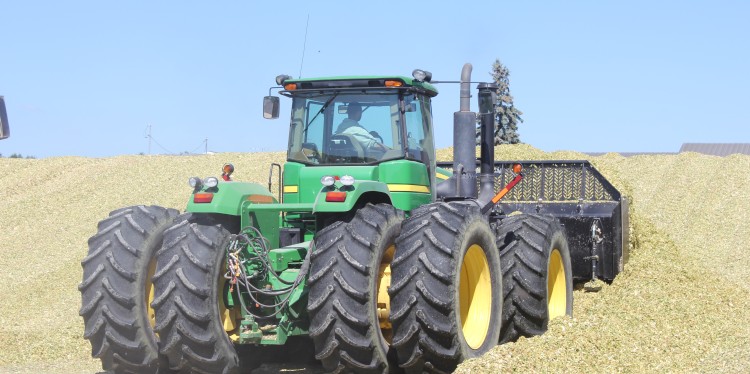
Cornell University’s Nutrient Management Spear Program faculty, staff and students collaborated with eight dairy farms across New York State to evaluate nitrogen and phosphorus balances on 994 corn silage fields. PhD student Agustin Olivio took the lead on data collection and analyses. Based on these data, the team developed the Green Operational Outcomes Domain (GOOD) framework, a science-based tool that integrates field-level nitrogen balances with manure nutrient use indicators. The research team shared findings and the GOOD framework through extension publications, workshops, and advisory committee meetings with farmers, crop consultants, and state agency staff to support practical implementation and policy alignment.
Results
The GOOD framework established performance cutoffs, defined as maximum allowable values, including nitrogen removal-to-supply ratios no greater than 50 percent and field nitrogen balances of 142 pounds per acre or less. By using existing farm records, farmers can now evaluate nutrient use efficiency without additional soil or plant sampling, reducing labor demands while improving consistency and accuracy. In January 2025, the GOOD framework was formally adopted into New York State’s Adaptive Nitrogen Management policy, providing dairy farmers with a new compliance pathway. Project findings were disseminated through three peer-reviewed journal articles, three extension publications, and three fact sheets, and numerous extension presentations, supporting broader adoption and application.
Public Value
This project equips dairy farmers with a practical, science-based tool to improve nitrogen management while protecting water resources. By reducing nutrient losses and regulatory burden, the GOOD framework supports environmental stewardship, farm profitability, and the long-term sustainability of New York’s dairy industry.