Back

Discover CALS

See how our current work and research is bringing new thinking and new solutions to some of today's biggest challenges.

Share
  • Cornell Cooperative Extension
Impact: Youth, Family, & Communities

Relevance

Many young people today experience limited access to nature-based learning, reducing opportunities to build science literacy, leadership skills, and environmental awareness. Educators have expressed a need for engaging, hands-on curricula that connect youth with the outdoors while introducing scientific practices. There is also a growing demand for culturally inclusive, bilingual resources that foster a sense of belonging in science for all learners. To address these gaps, Cornell researchers developed a new educational approach that integrates outdoor exploration, technology, and youth-led action.
Response

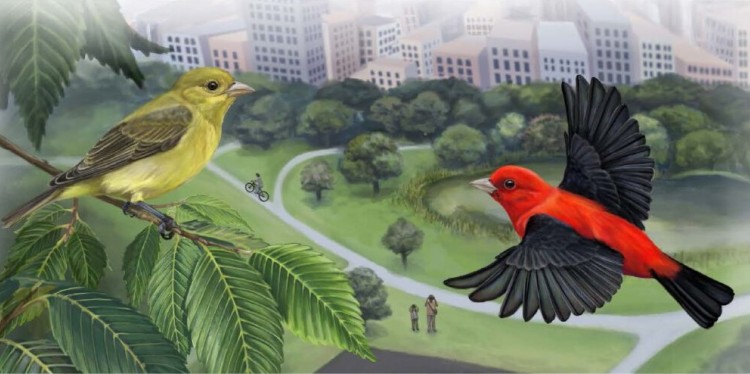
The Cornell Lab of Ornithology collaborated with Cornell Cooperative Extension and the New York State Network for Youth Success to create eBird Explorers: Youth Action for Birds, a bilingual STEM curriculum focused on bird observation and conservation. The ten-lesson program includes outdoor learning, data use through the eBird citizen science platform, and community action projects designed by youth. The curriculum was distributed nationally, accompanied by multimedia educator resources and training opportunities through live and recorded webinars.

Results

The curriculum reached broad audiences, with 750 printed copies distributed and over 630 downloads nationwide. Fifty-eight educators received direct training, and recorded webinars were viewed more than 125 times. Program evaluation at six sites with 62 youth participants showed statistically significant improvement in their ability to use eBird data to answer scientific questions (p = .021). Educators reported improved bird identification skills and noted increased youth engagement in science, particularly among those who had not previously identified with science learning. Youth participants also developed and led local conservation projects, linking environmental education with real-world community impact.

Public Value 

This program connects youth to nature, strengthens science and technology skills, and promotes inclusive participation in conservation. Through data-driven learning and youth-led action, the project cultivates scientific curiosity, environmental responsibility, and civic engagement. These outcomes support thriving youth, healthier communities, and a more diverse next generation of scientists and environmental stewards.

Keep Exploring

Illustration of three piles of manure with a photo of a gardener with soil in their hands

News

Waste could fulfill 102% of nitrogen and 50% of phosphorus needs for the nation’s agriculture, and significant amounts could be distributed locally and sustainably.

  • Ashley School of Global Development and the Environment
  • Global Development Section
  • School of Integrative Plant Science
Mariel Pfeifer landscape

Spotlight

Academic focus: Biology education research/discipline-based science education research Research summary: My lab is called the EQUIP lab, and we study how STEM environments can better support all students and faculty. A major focus of our work is...
  • School of Integrative Plant Science
  • Horticulture