Back

Discover CALS

See how our current work and research is bringing new thinking and new solutions to some of today's biggest challenges.

Share
  • Center of Excellence in Food and Agriculture
  • Cornell AgriTech
A passion for fitness and nutrition and a lifelong urge to be an entrepreneur led Rebecca Hale to leave her job at one of the world’s largest banks and pursue a different, unexpected path: pudding.

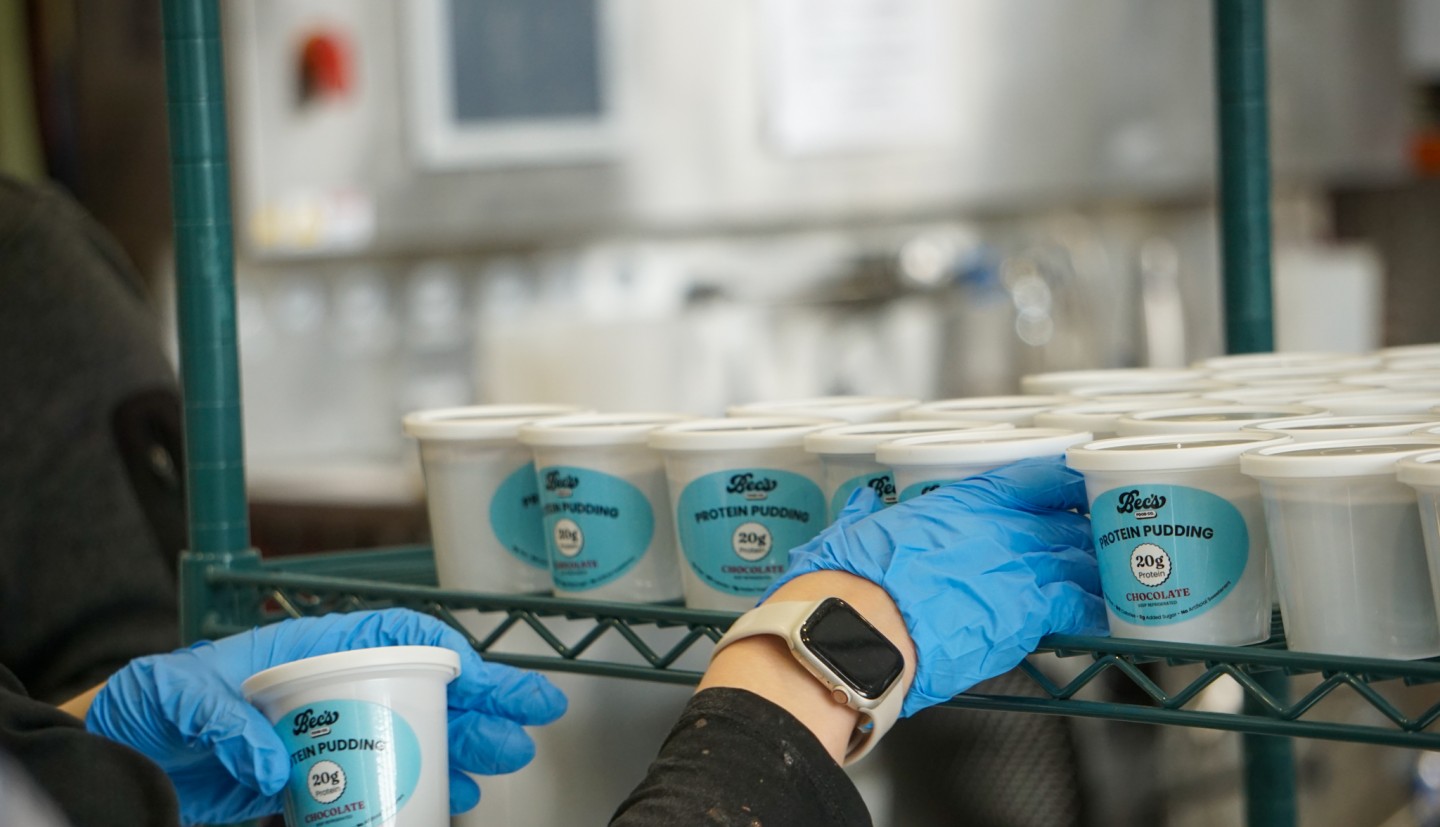
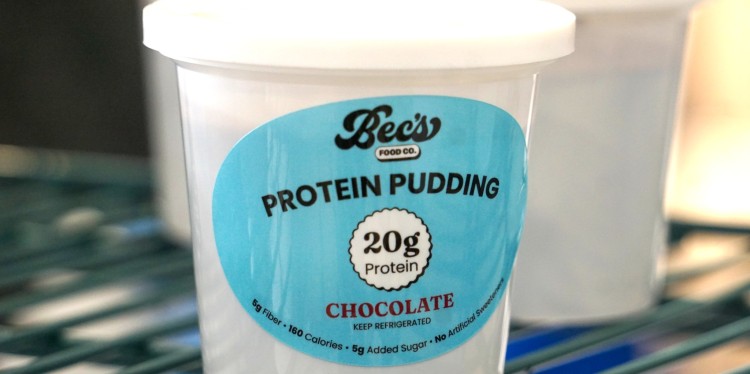
Hale’s product isn’t your average pudding – it’s a low-sugar, high-protein treat catering to fellow fitness enthusiasts and others looking to incorporate more protein into their diet. 

While traveling in Europe, Hale came across more than a dozen high-protein pudding snacks. Many used artificial sweeteners and flavors and other ingredients Hale didn’t love, so when she got home, she got to work researching recipes and developing her vision of a better, protein-rich pudding. 

Her pudding contains about as much protein as an average protein bar, without any of the chalkiness or off flavors that plague many protein snacks. 
Connecting with Cornell

Hale, who graduated from Columbia University with a degree in computer science in 2023, had no prior food manufacturing experience. Through a serendipitous Google search, she learned about the Dairy Runway Program. Administered through Cornell’s Center for Regional Economic Advancement (CREA), the free program offers instruction and mentorship from industry experts and food entrepreneurs, as well as an opportunity to work hands-on with Cornell food science experts in university facilities for product development. 

She was accepted into the spring 2025 cohort and thus, Bec’s Food Co. began. 

“The Dairy Runway program fell right into my lap,” Hale said. 

Not long after the program started, she decided to go all in and left her job at J.P. Morgan Chase to focus full-time on Bec’s Food Co.

Perfecting the Recipe

Hale joked that she made around 100 batches of pudding before she decided she needed help. She connected with Bruno Xavier, associate director of the Cornell Food Venture Center, who talked with Hale about how the proteins in the milk would interact with certain thickeners and sweeteners.

Along the way, Hale has worked with Alysia Ericsson, business development specialist at the New York State Center of Excellence for Food and Agriculture (CoE), who served as her Dairy Runway coach – and “food angel,” as Hale called her. 

“She’s been an incredible resource,” Hale said. “I’m so lucky to have her as a coach.”

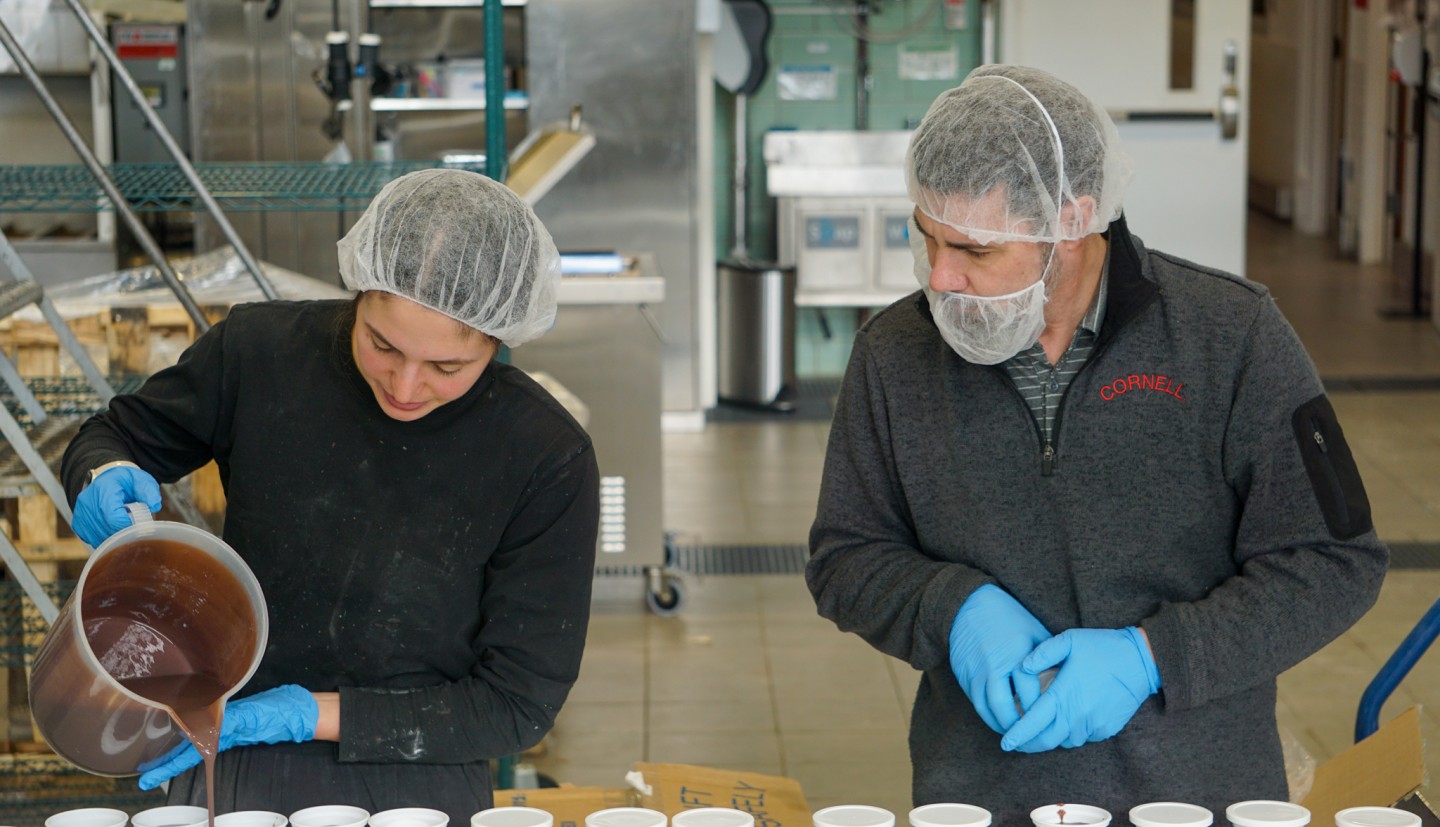
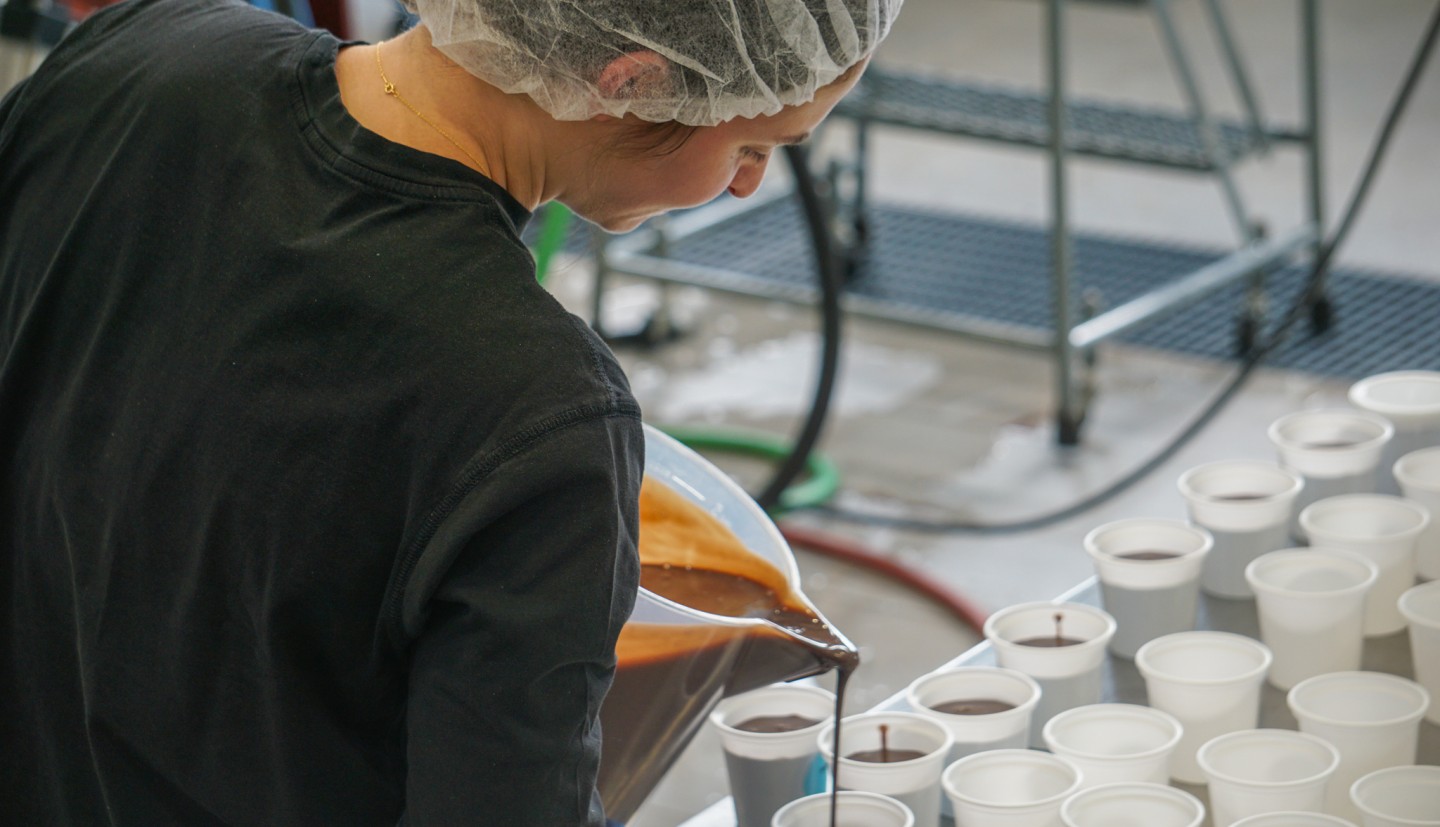
As part of the Dairy Runway program, Hale has completed two production runs at the Seneca Foods Foundation Pilot Plant at Cornell AgriTech in Geneva, where she’s worked with plant manager Roger Morse to learn what equipment she’ll need for commercial production and worked with the CFVC and Pilot Plant teams to fine-tune her recipes. 

Launching the Business

With her formula just about set, Hale is almost ready to hit the market. Her goal is to have her puddings hit store shelves by summer 2026. Based in New York City, Hale said she’s targeting smaller, independent retailers in New York City first, before hopefully expanding into supermarkets across the Northeast. 

She’s launching with chocolate, but plans to expand to vanilla and other flavors after that. Eventually, she wants to expand Bec’s Food Co. to include other protein-packed snacks and desserts. 

High-protein foods are one of the hottest current food trends. Even Starbucks now serves protein lattes and cold drinks topped with protein cold foam. For a fitness enthusiast like Hale, a track star who was once a junior Olympian in the javelin throw, protein has always been an important part of her diet. 

Hale’s mission is for people to rethink what it means to have a sweet tooth, creating something that is both healthy and indulgent. Is it possible? Of course. The proof is in the pudding. 

Jacob Pucci is the marketing and communications coordinator at the New York State Center of Excellence for Food and Agriculture at Cornell AgriTech.

Keep Exploring

A monarch butterfly on milkweed.

News

Monarch butterflies and other pollinators are essential to ecosystems and agriculture, supporting the reproduction of flowering plants and the production of fruits and vegetables. But decades of habitat loss, pesticide use and the disappearance...
  • Cornell AgriTech
  • School of Integrative Plant Science
  • Horticulture Section
Close up of wheat in a field

News

Growing climate-smart crops is half the battle. Consumers need to understand sustainability claims and, more importantly, be willing to pay a premium for them.

  • Charles H. Dyson School of Applied Economics and Management
  • School of Integrative Plant Science
  • Soil and Crop Sciences Section