Back

Discover CALS

See how our current work and research is bringing new thinking and new solutions to some of today's biggest challenges.

Share
  • Cornell University Agricultural Experiment Station
  • Ecology and Evolutionary Biology
  • School of Integrative Plant Science
  • Biodiversity
  • Environment

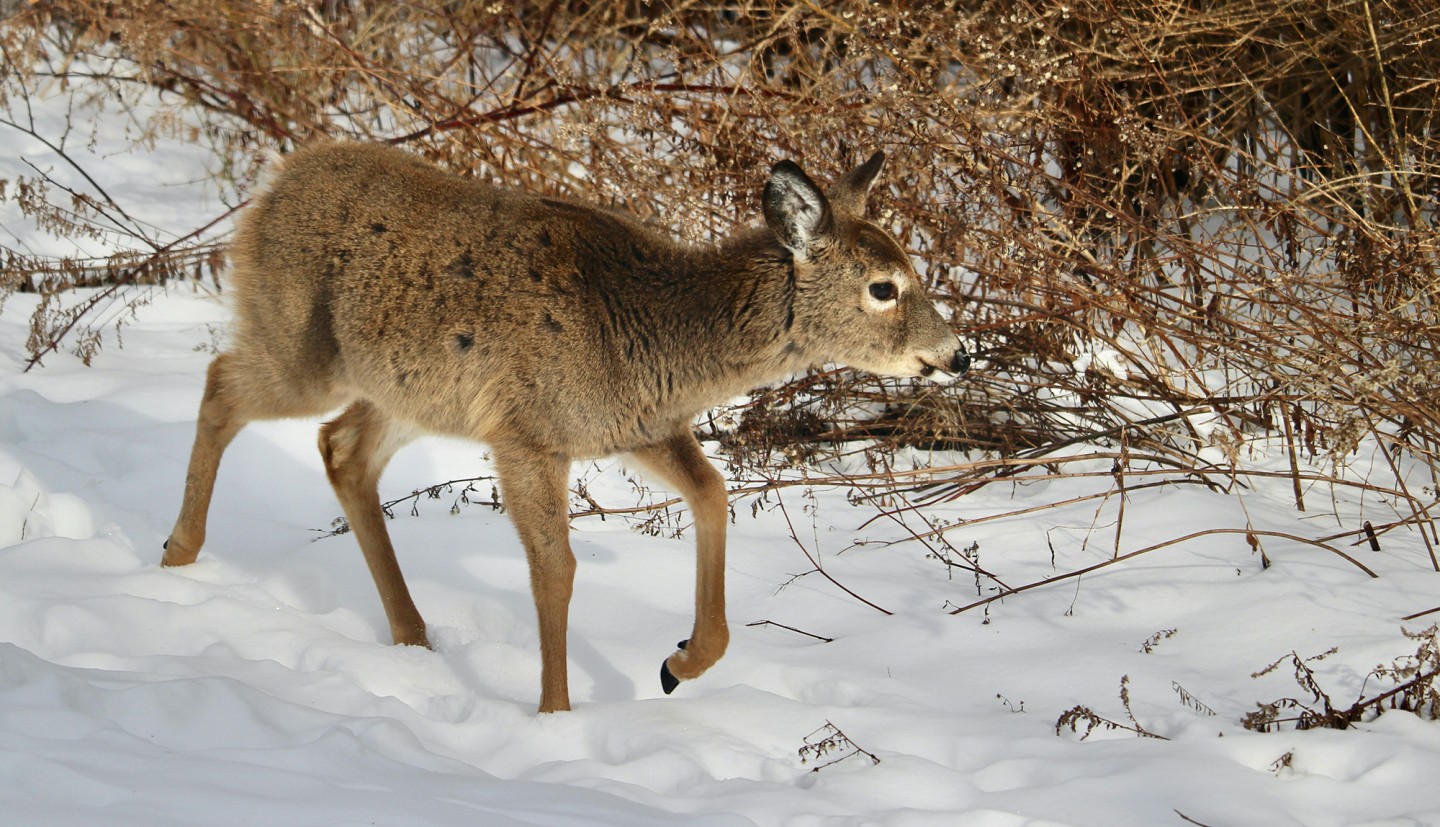
At high densities, white-tailed deer inhibit growth of trees but increase the overall diversity of smaller plant and weed species, according to a long-term study published Dec. 23 in PLOS One.

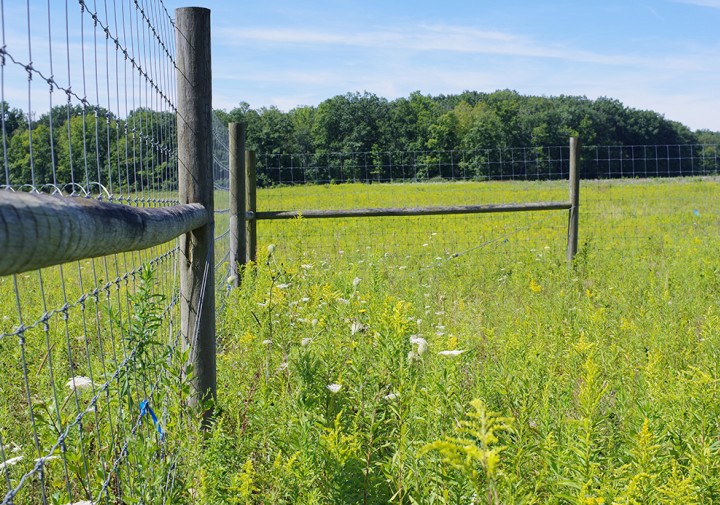
Twenty years ago, Cornell researchers established experimental plots meant to mimic abandoned agricultural land on university-owned parcels in Dryden, NY. Half of the plots were surrounded by fencing that excludes deer, and half were left open. 

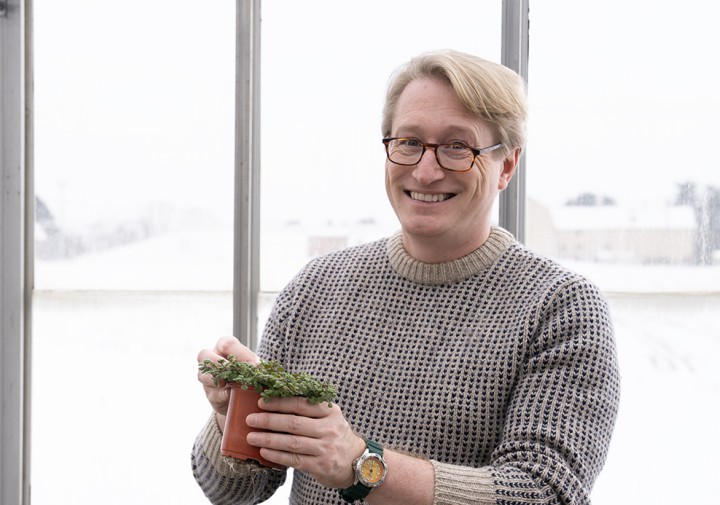
“All six of our plots where deer have been excluded by fencing have trees in them now, and in our open plots that deer can access, we have almost no visible trees,” said Anurag Agrawal, study co-author and the James A. Perkins Professor of Environmental Studies. “Deer prefer woody things and often forage in the wintertime and eat woody stems. So even when you get small saplings starting to grow, they’re not persisting.”

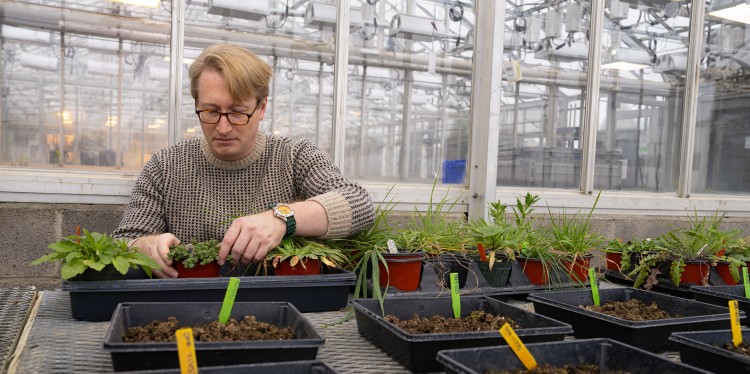
Agrawal and Antonio DiTommaso, associate dean and director of the Cornell University Agricultural Experiment Station (Cornell AES), began the experiment 20 years ago. (The findings reported in PLOS One cover 18 years of their data.) Agrawal, who studies ecology and evolution of interactions between plants and animals, took the lead in assessing changes to the above-ground vegetation. DiTommaso, who is also a weed ecologist in the School of Integrative Plant Science, and his lab oversaw analysis of the seedbank – the term for all the viable, dormant seeds stored in soils. Though there have been many studies on how deer impact vegetation, this project is among the first to examine the impact of deer on the seedbank, DiTommaso said. The researchers also published a 2014 PLOS One study on their first seven years of data. 

“A seedbank is a testament to the past and the plants that used to exist somewhere, it gives you an idea of the quantity and diversity of different species that exist in the present, and it also foreshadows the future,” he said. “Not only did we not see any trees in our open plots where deer can browse, we saw very few tree species in the seedbank, either. If we’re hoping that we can just let nature take its course and forests will naturally regrow? Not with these densities of deer.”
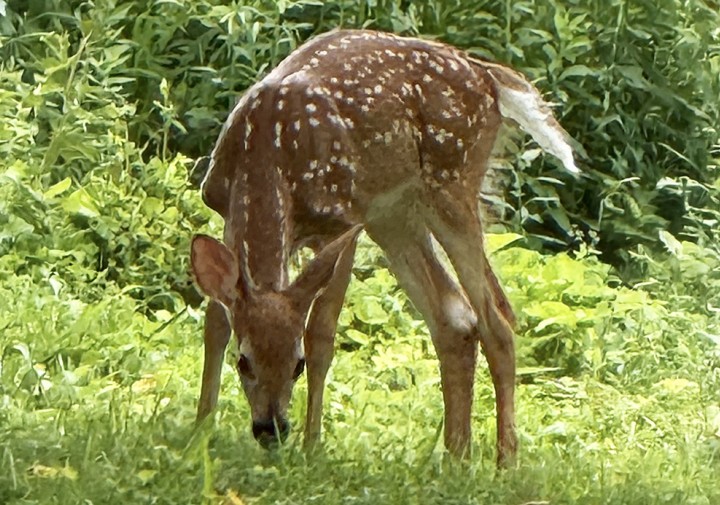
According to separate Cornell research, there are 1.7 million acres of abandoned agricultural land in New York, which could grow back into forest. State leaders have sought to incentivize reforestation as part of New York’s efforts to combat climate change. However, at very high densities, deer will likely prevent reforestation without active management to protect saplings, DiTommaso said. In the Ithaca area where these experiments were conducted, deer abundance has been estimated at 39 deer per square kilometer, roughly 10 times as abundant as before European colonization. 

While the researchers found that deer inhibit forest growth, they also found that the presence of deer increases the overall diversity of smaller plant species. The measure of diversity used by the researchers takes into account both the total number of different species found and their relative abundance – a habitat where several plants are present but one species dominates is considered less diverse than one where different plants are more equally represented, Agrawal said. They suspect deer improve this diversity by eating a lot of the plant species that would otherwise become dominant, he said. 

“Without predators like deer, there are often one or two plant species that dominate a system. And those also tend to be the plants that are most edible,” Agrawal said. 

Agrawal and DiTommaso emphasized that they are not in this paper advocating for any particular forest or deer management strategies, but providing information that private land owners or public forest managers can use to make decisions.

First author of the new paper is Sophie Westbrook, Ph.D. ‘24, formerly a graduate student in DiTommaso’s lab and now a research assistant professor at Kansas State University. Additional co-authors are: Aleah Butler-Jones, a graduate student at Cornell AgriTech; Scott Morris, a technician in DiTommaso’s lab; and Max Goldman ’24, a former undergraduate researcher in Agrawal’s lab. 

Initial research funding support to launch the project 20 years ago came from federal capacity funds to land-grant universities, which Cornell AES manages on behalf of New York State. The research plots are on Cornell AES-managed lands in Dryden, NY. 

“It would have been very difficult to do a long-term, decades-long project like this with private land, because ownership changes hands, or people may choose to do something different with their property,” Agrawal said. “Having these university land resources available has been crucial.”
 

Krisy Gashler is a freelance writer for the Cornell University Agricultural Experiment Station.

Keep Exploring

burned area of forest

News

New research from the USDA Forest Service, Cornell Lab of Ornithology, and University of New Mexico identifies where future high-severity fires threaten biodiversity hotspots in the western United States using observations from bird watchers and...

  • Lab of Ornithology
  • Biodiversity
  • Climate Change
person hauling in a tow net

News

The Great Lakes Fishery Commission recently funded a Cornell DNRE and CBFS group for a new two-year project “Evaluating mysid abundance in Lake Michigan using two decades of fisheries acoustic data.” This project will involve DNRE graduate...
  • Biological Field Station
  • Ashley School of Global Development and the Environment
  • Natural Resources and the Environment Section