by Jackie Swift
Farms generate huge amounts of data. A dairy farm in the United States, for instance, will typically produce data that tracks herd health and breeding, and milk production and quality, for a start. If the farm also grows its own crops, for example corn and hay for the cows, there’s also data covering everything from fertilizer usage and crop yield to weather observations.
All that data could be a gold mine for informed decision making, especially if farms want to harness the potential of artificial intelligence (AI) to analyze and predict future situations. Yet most farms aren’t able to utilize the potential.
“Modern farm data is highly fragmented and inconsistent,” said Yunxi Shen PhD’29, computer science. “Farmers and researchers have to spend significant time preparing the data before it is usable. Even then, it is difficult to cross-reference data collected from different sources for holistic analysis.”
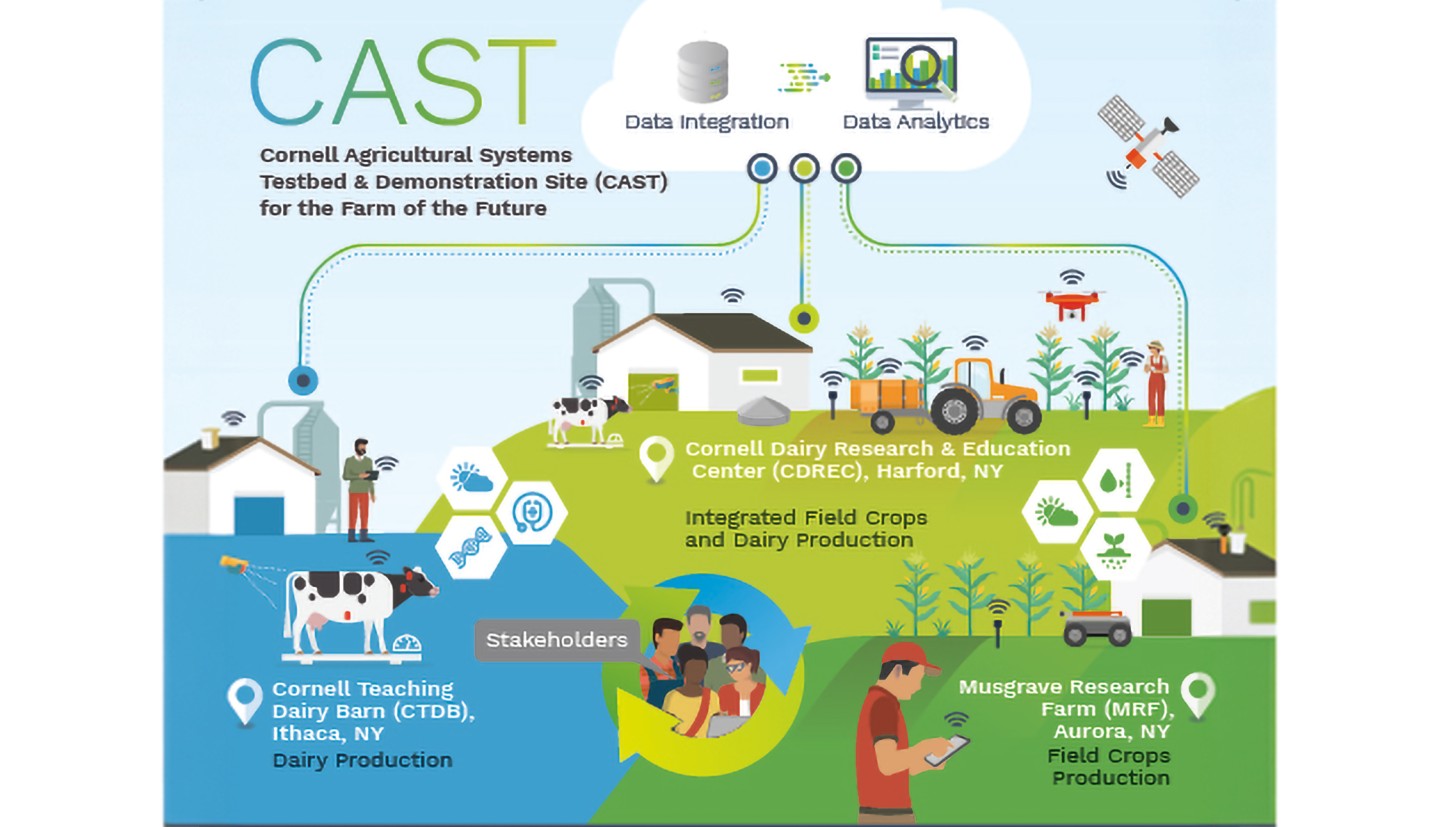
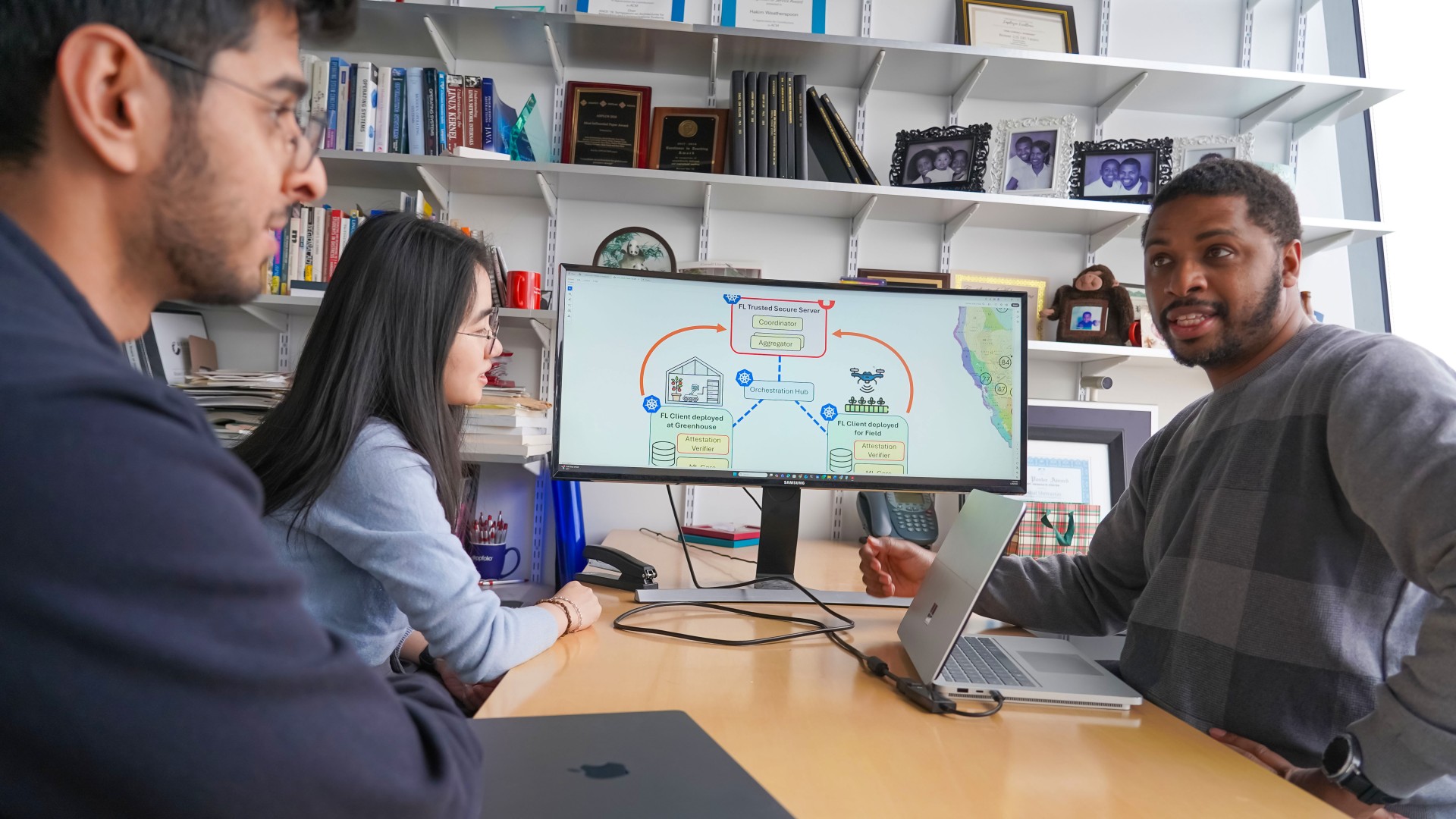
Shen works with Hakim Weatherspoon, professor in the department of computer science. The Weatherspoon lab is collaborating with the Cornell Agricultural Systems Testbed and Demonstration Site (CAST) for the Farm of the Future to tackle the issue of farm data integration and analytics.