Back

Discover CALS

See how our current work and research is bringing new thinking and new solutions to some of today's biggest challenges.

Share
  • Cornell Cooperative Extension
Impact: Crop Management, Ecosystem Services, Food Systems, Precision Agriculture

Purpose

The public reaps substantial advantages as the regular moth counts serve as a prompt for growers to actively monitor their fields. This vigilance empowers growers to make informed decisions regarding control measures, resulting in a more judicious use of insecticides. By minimizing the reliance on chemical treatments, there is a reduction in the overall amount of sprayed insecticide released into the environment. This eco-friendly approach to pest control aligns with sustainable practices, promoting a healthier and more balanced ecological system.

Relevance 

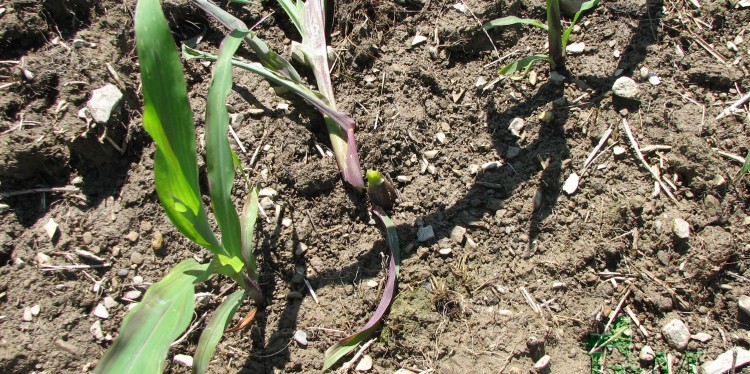
The NYS Corn Pest Monitoring Network project conducted a thorough evaluation of stakeholder requirements utilizing an online survey, revealing that black cutworm and true armyworm were identified as particularly detrimental pests during the early stages of the season. In response to the emerging threat posed by the western bean cutworm, the project team actively engaged in comprehending and quantifying the potential damage inflicted by this invasive pest on New York State (NYS). To proactively address this challenge, the team implemented a pheromone trapping system. This system serves as an early warning mechanism, enabling prompt notifications to extension educators and crop consultants regarding the migration flights of the moths.
Response

From 2021 to 2023, the NYS Corn Pest Monitoring Network project set up a widespread system of traps to protect field corn across 28 counties. We placed 122 traps for western bean cutworms, 75 traps for true armyworms, 75 traps for black cutworms, and 20 traps for fall armyworms. A team of 20 collaborators from Cornell Cooperative Extension, including professionals from regional extension teams and county-based staff, actively took part in setting up these traps. Their key role was to help farmers understand the movement patterns and potential risks of insect pests in field corn. This initiative proved successful in providing real-time information about pests to corn growers and crop consultants. By having this information on hand, growers could make informed decisions, preventing damage and saving costs by avoiding unnecessary insecticide spraying.

Results

The NYS Corn Pest Monitoring Network project team engaged growers through collaboration with extension specialists and crop consultants, establishing a proactive strategy. The project approach involved offering weekly updates on moth counts and pinpointing areas across the state with potential infestations. Leveraging survey results, we employed a multiplier effect through cooperators to disseminate crucial information to growers effectively. Subsequently, growers and crop consultants monitored insect populations in the fields, allowing for informed decision-making. This comprehensive process enabled growers to sidestep potential losses caused by insect pests and make cost-effective choices by refraining from unnecessary insecticide applications in unaffected fields.

Keep Exploring

monkeyflower poking out from rocks

News

In response to extreme drought, scarlet monkeyflower populations rapidly evolved and recovered, providing a window into climate change adaptation.

  • School of Integrative Plant Science
  • Plant Biology Section
  • Evolution
Assorted bottles of penicillin

News

A new study reveals for the first time the metabolic changes that allow bacteria to survive high doses of penicillin, a classic β-lactam antibiotic. The study also uncovered a weakness in how the bacteria survive, which may help scientists find...

  • Microbiology
  • Disease
  • Medicine