Back

Discover CALS

See how our current work and research is bringing new thinking and new solutions to some of today's biggest challenges.

Share
  • Biological and Environmental Engineering
  • Microbiology
  • School of Integrative Plant Science
  • Agriculture
  • Horticulture

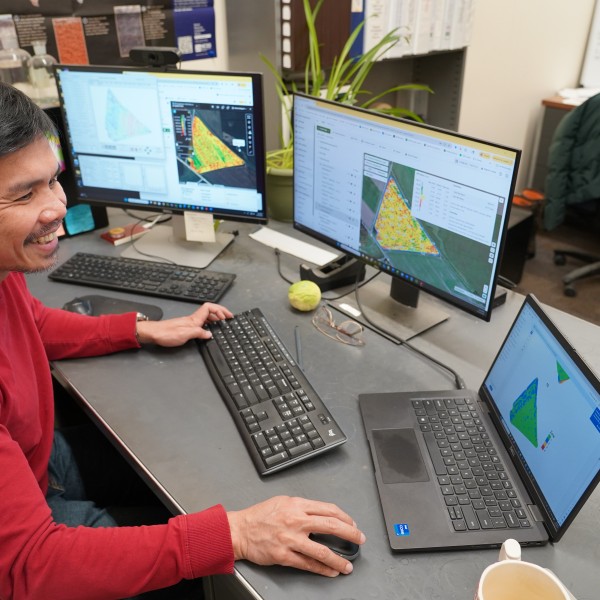
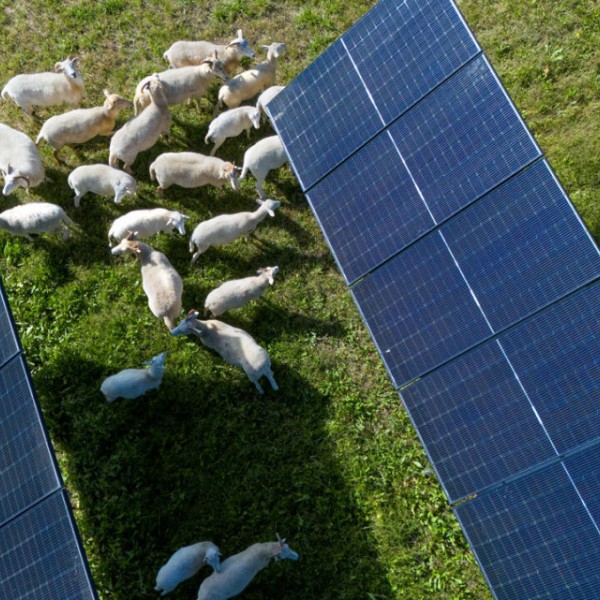
AI-powered precision farming systems, smart insect traps for pest control and nutrient-enhanced crops were some of the projects showcased at the second CALS Innovation Day, hosted by the College of Agriculture and Life Sciences’ Research and Innovation Office (RIO) Oct. 7 in Stocking Hall.

Celebrating the extraordinary science, creativity and groundbreaking ideas shaping the future of agriculture and life sciences, the event supports the college’s Roadmap to 2050 strategic objective to transcend conventional boundaries with transdisciplinary research.

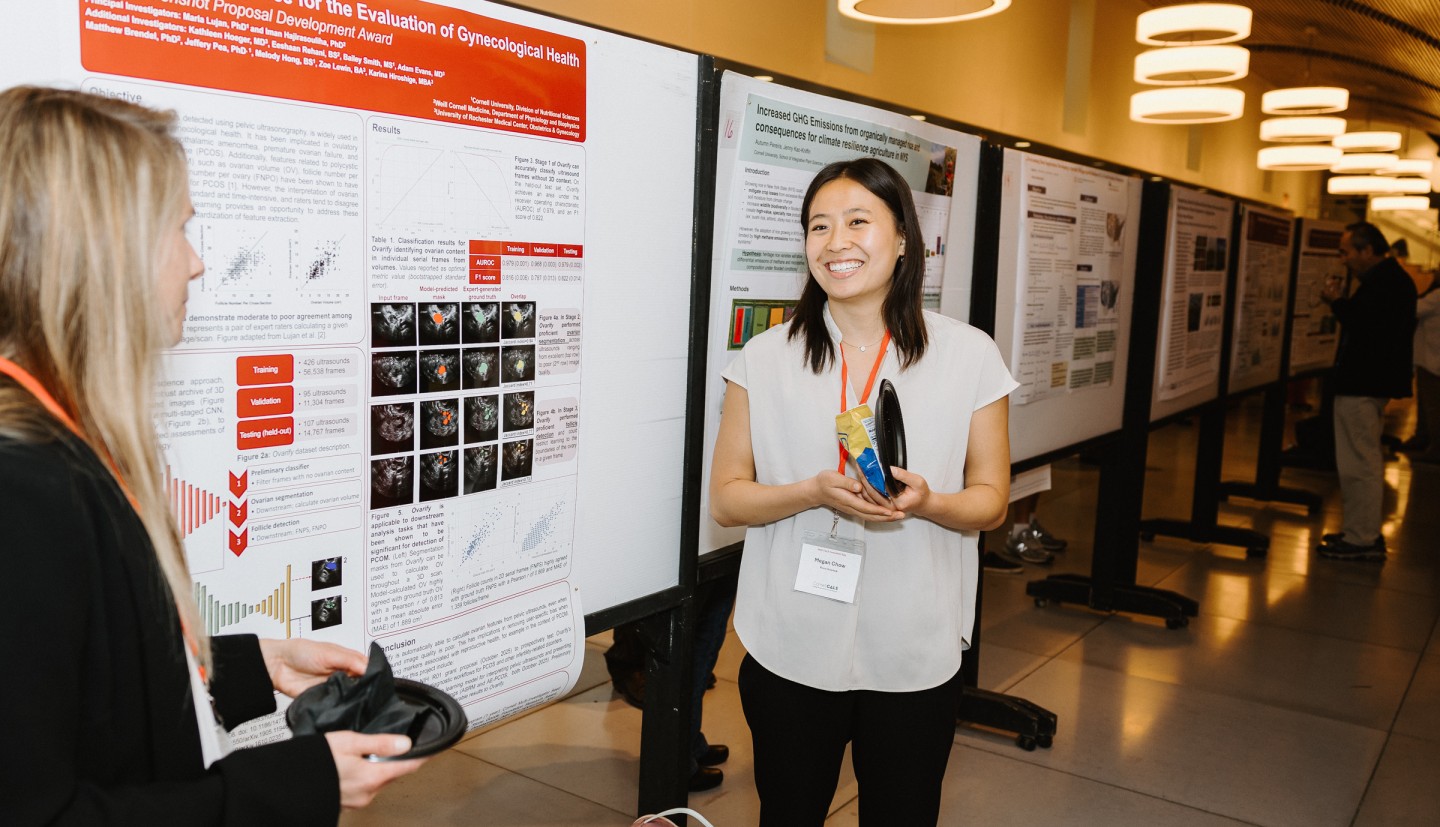
Through lightning talks and poster sessions, attendees heard from CALS researchers who are partnering with industry leaders to bring breakthrough solutions in agriculture, sustainability and biotech to market, including participants in the Moonshot Seed Grant Program

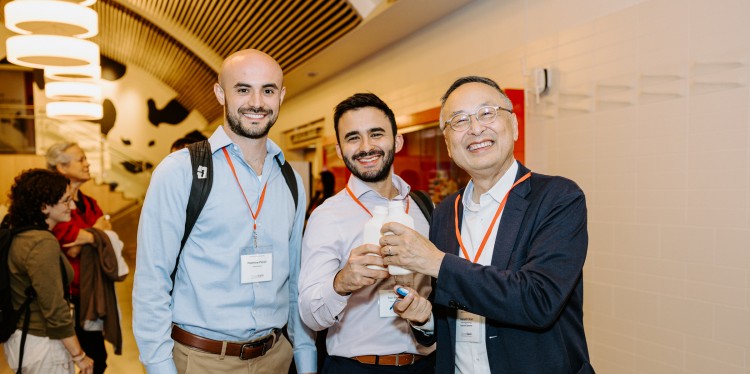
Benjamin Z. Houlton, the Ronald P. Lynch Dean, welcomed Gerald Chan, a renowned visionary, philanthropist, scientist and co-founder of the Morningside Group, as the featured keynote speaker.

In his opening remarks, Houlton recognized that in confronting “unprecedented global challenges in food security, environmental sustainability and human health, the need for innovative solutions has never been greater,” adding, “Dr. Chan represents exactly what we strive to instill in our CALS community – the ability to identify breakthrough scientific opportunities and transform them into solutions that benefit society.”

Chan’s address focused on the democratization of innovation and its role in university education, calling for a greater focus on real-world applications for students as AI continues to increase our collective access to knowledge.

“The world has changed. It is no longer about what you know but what you can put into action with that information,” he said. “To stay relevant, higher education must prepare students to solve messy, real-world problems by asking the right questions, not just recalling answers.” 

The day concluded with a ceremony recognizing the recipients of RIO’s inaugural Innovation Awards, honoring outstanding contributions in innovation by faculty, students and industry partners. Award winners were:

  • Best Patent and Technology Award: Joseph Peters, professor of microbiology, for his “Programmable CRISPR - Associated Transposons for Targeted Gene Integration.”
  • Best Entrepreneurship and Engagement Award: Buz Barstow, associate professor of biological and environmental engineering, for his research on “Applying Biology to the Challenge of Sustainability.”
  • Student Entrepreneur of the Year: Seongmin Shin, Ph.D. candidate in the field of development studies, for his work on “C-BRIDGE: Faster, Trustworthy Carbon Credit with LiDar.”
  • Best Partnership Award: Angry Orchard Cider Co. in recognition of its ongoing collaboration with CALS researchers, including Gregory Peck, associate professor of horticulture.


“Honoring our faculty and industry partners is a celebration of curiosity, creativity and impact” said Xingen Lei, associate dean of RIO and organizer of the Innovation Awards. “Their work transforms ideas into real-world solutions that make a lasting difference.”

Katie Thomas is the creative content specialist for the College of Agriculture and Life Sciences. 

Keep Exploring

Components of the SSEA tool input and output with a faded background of a corn field.

News

One of the best ways to connect science to practice is through on-farm research. On-farm research can help farmers make informed decisions about how to efficiently use their resources (like fertilizer and seed) to grow high-yielding, high...
  • Agriculture
  • Digital Agriculture
  • Dairy
A man standing in a crop field.

Field Note

Soil testing is a crucial part of efficient, effective crop production, allowing for farm decision-makers to consider different nutrient management strategies based on their soil test results. Cornell’s Nutrient Management Spear Program (NMSP)...
  • Statistics and Data Science
  • Agriculture
  • Field Crops