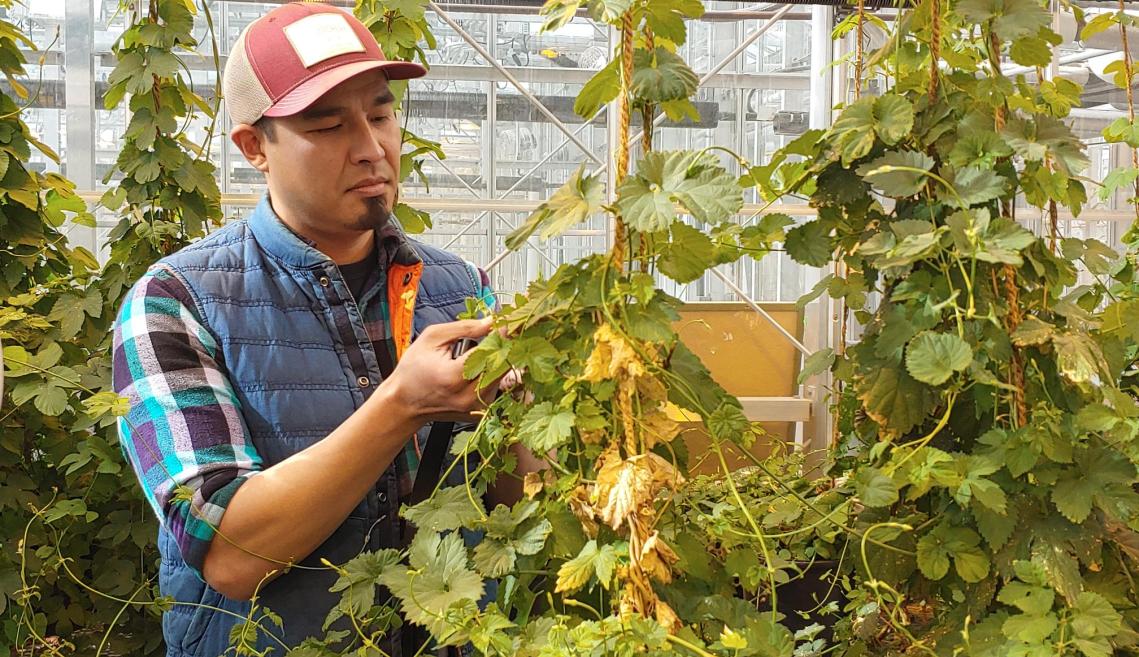
Did you always dream of managing greenhouses?
My original career aspiration was to be a wildlife biologist, but life had different plans. I was born and raised in Nepal and came to the U.S. to go to Keuka College. While I was working on my bachelor’s degree I took a biochemistry class with Dr. Wlodzimierz Borejsza Wysocki who happened to be working part time at Cornell AgriTech. He informed me about an internship opportunity in Dr. Herb Aldwinckle’s lab, and that is how I first started working with plants and research. Herb later helped me land a part-time technician position. From there, I worked my way up the ladder and landed a lead technician position at Dr. George Abawi’s lab. For 5 years, I rubbed elbows with professors and technicians learning about plants and the inner workings of what it takes to do research. Eventually, my hard work paid off, and I was hired as a growth chamber coordinator and integrated pest management (IPM) specialist for buildings and properties at Cornell AgriTech. I learned about pest and diseases, how to take care of growth chambers and greenhouses, cultural practices that comes with greenhouse research, the financial and budget part, but most importantly I learned the customer service aspect of the job.
I love my job because it gives me the freedom to work with science and be a vital part of research but at the same time handle accounting, coordinate and strategize with the whole AgriTech community. Essentially, my job is challenging and has so many facets to it.
What responsibilities fall under your role?
My primary responsibility is to keep research plants alive, which means that IPM is key. Having constant communications with researchers is also important. At the end of every week, I generate individual reports for all 61 greenhouses that inform our users of the level of pests present on the plants, the health of the plants, actions my greenhouse crew has taken and recommendations for researchers. Then I coordinate with researchers on the best plan of action for their plants. This can range from training and trimming the plants to changing environmental settings, using pesticide/beneficial insect applications or modifying the growth facility.