

The College of Agriculture and Life Sciences (CALS) welcomed six new faculty members this spring, advancing the college’s commitment to pursuing purpose-driven science and improving the lives of people across New York state and around the world.
Confronting complex challenges and pioneering new solutions are key facets of the college’s mission. Learn more about all our new faculty members in the profiles below.
Confronting complex challenges and pioneering new solutions are key facets of the college’s mission. Learn more about all our new faculty members in the profiles below.

Joyce G. Chery
Assistant professor, Plant Biology Section in the School of Integrative Plant Science

J. Brooks Crickard
Assistant professor, Department of Molecular Biology and Genetics

Heather Feaga
Assistant professor, Department of Microbiology

Lori Huberman
Assistant professor, Plant Pathology and Plant-Microbe Biology Section in the School of Integrative Plant Science

Matt Marx
Bruce F. Failing Sr. Professor of Entrepreneurship, Charles H. Dyson School of Applied Economics & Management

Virginia Moore
Assistant professor, Plant Breeding and Genetics Section in the School of Integrative Plant Science
Keep Exploring
Field Note
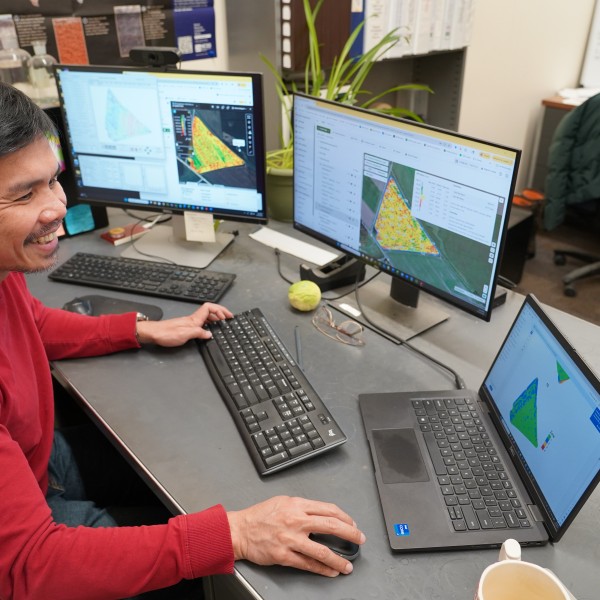
With hundreds of thousands of acres of corn in New York, it's crucial to support farmers’ efforts to optimize crop production. Yield varies in crop fields for many reasons, including soil fertility and topography. In a recent study, Cornell CALS...
News
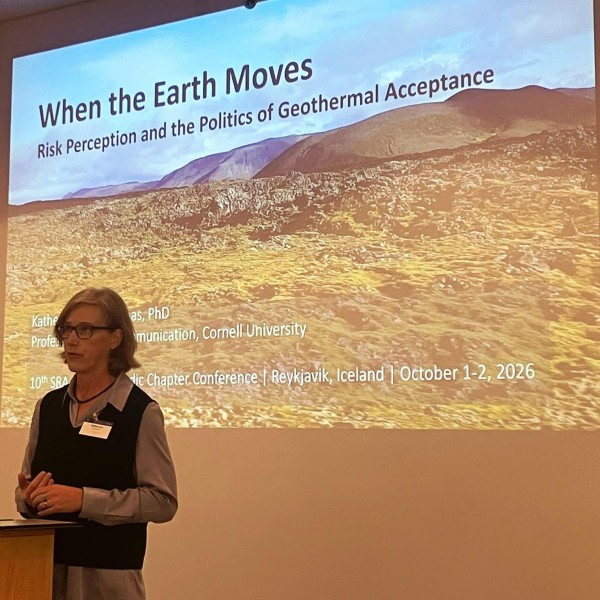
October 15, 2026 Conferences Graduate student Amanda Vilchez, with Yael Silver and Professor Bruce Lewenstein, presented “Trust, Relational Learning, and Boundary-Work in Citizen Science across Knowledge Systems” at the PCST symposium Building...

We openly share valuable knowledge.
Sign up for more insights, discoveries and solutions.
Please enter a valid email address to subscribe to the newsletter.