The U.S. rare-earth industry was thriving 30 years ago, but subsequently suffered due to a lack of new development and poor economics. With the promise of clean, new biological ways to extract these elements, an entire domestic industry could be revived, according to Barstow.
“This could demonstrate the potential for engineering microbes to address problems across sustainable energy – including artificial photosynthesis, rejuvenation and recycling of batteries, biofuel production, as well as carbon dioxide capture and sequestration,” Barstow said. “This could enable rapid expansion of sustainable energy technology adoption.”
The group will start by engineering a microbe (Gluconobacter oxydans) to dissolve monazite, a phosphate rock that contains the rare-earth elements erbium, thorium and lanthanum. They form during the crystallization of magma and can accumulate later in sedimentary deposits.
“We will be taking a microbe that’s able to dissolve the minerals in rocks, and we can make the microbe digest these minerals faster and more completely,” Barstow said. “We are able to remove rare-earth minerals more selectively.”
Allowing biology to break down minerals is nothing new, Gazel said. Water runs over rocks, freeing minerals that nourish soil and find their way into rivers and, eventually, the sea.
Holycross and Gazel will grow synthetic monazite crystals “ore” in a furnace with a known concentration of rare-earth elements. These crystals will be provided to the synthetic biology team for leaching experiments with different strains of gluconobacter.
The goal is to test the efficiency of these synthetized organisms in releasing the rare-earth elements from ore. “This process happens in nature, but very slowly. For example, metals leach from the minerals by weathering processes and some are mediated by biology, which is the reason why the seawater is salty,” Gazel said. “It’s sodium from the continents that made the oceans salty.
“It’s a big part of the evolution of the planet and the natural cycles of elements,” Gazel said. “So, we are joining forces in a completely new field that is putting together synthetic biology experiments with our understanding of minerals to solve the challenges of the 21st century.”
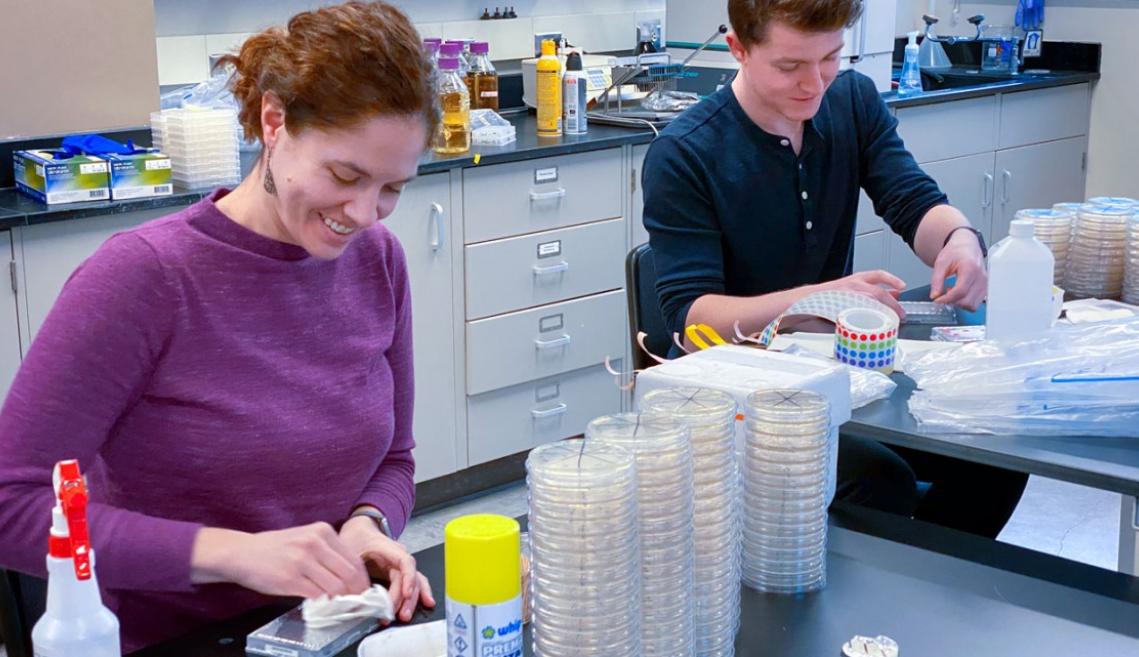
Postdoctoral fellow Alexa Schmitz Ph.D. '18, postdoctoral research associate J. Brian Balta, doctoral student Sean Medin and laboratory technician Brooke Pian have joined the project.
Gazel, Wu and Barstow are fellows at the Cornell Atkinson Center for Sustainability; Gazel and Barstow met by chance in 2018 at a Cornell Atkinson brown-bag lunch on energy challenges, which led first to a Cornell Atkinson Academic Venture Fund seed grant in 2019, and now to the federal grant.
This article also appeared in the Cornell Chronicle.
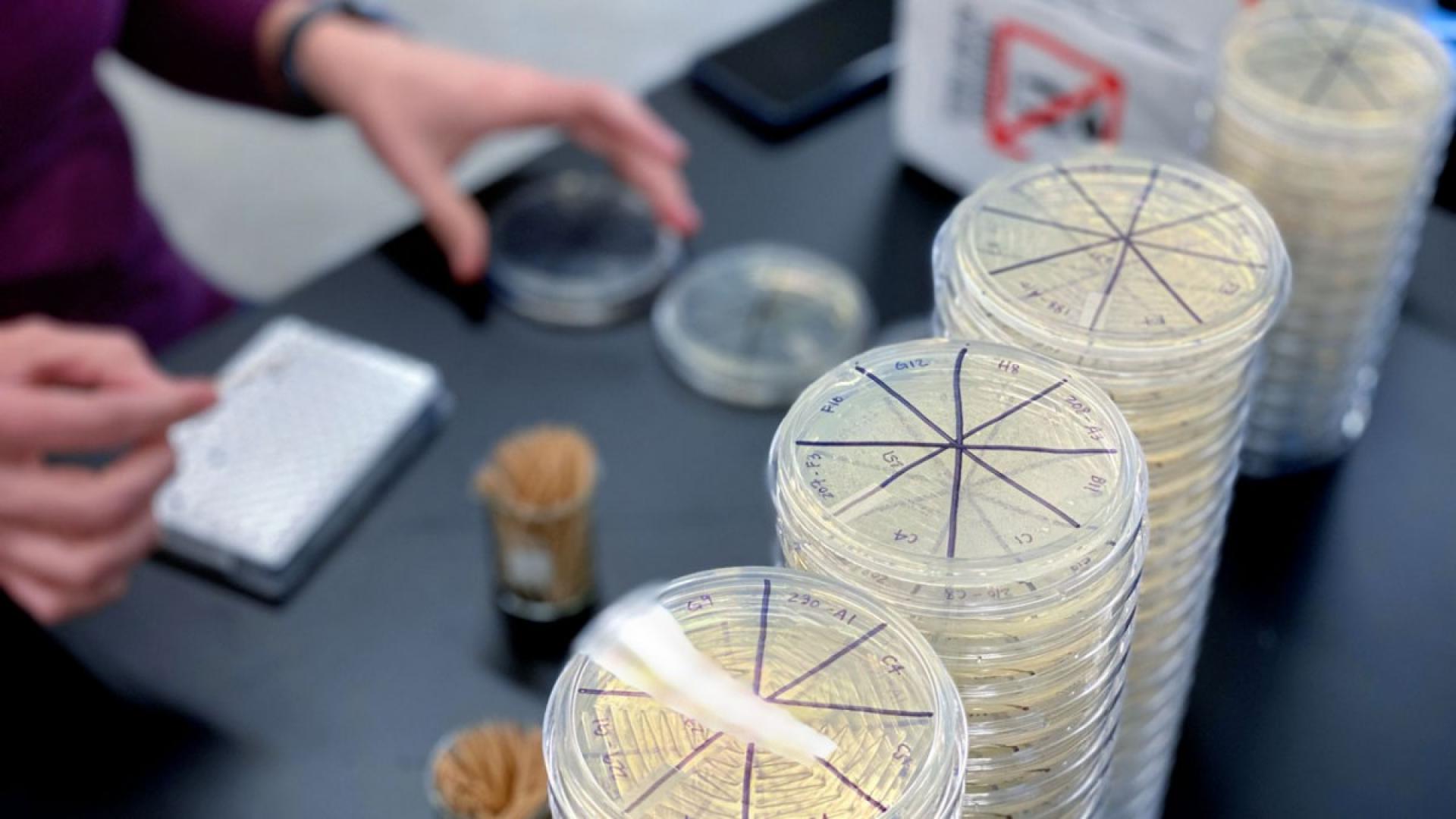
Header image: Petri dishes containing the microbe Gluconobacter Oxydans will eventually be used to dissolve the mineral monazite for extracting rare-earth elements. Photo provided