Sharks! Global Biodiversity, Biology, and Conservation has introduced more than 32,000 people from 182 countries to sharks, rays and chimaeras – also known as “ghost sharks.”
“Before the first offering of the shark MOOC in the summer of 2016, I had expected perhaps 100 or maybe 500 students,” said Willy Bemis, professor in the Department of Ecology and Evolutionary Biology and lead creator for the MOOC.
Bemis underestimated by just a little: More than 15,000 people from all over the world signed up for the MOOC’s initial offering, he said.
This year, more than 4,300 registered for the course, which covers shark habitats and distributions; evolutionary history; functional anatomy; sensory biology; reproduction and behavior; ecological roles; shark-human interactions; human impacts on sharks; and how students can promote shark conservation.
The course also taps into technology integrated with satellite tracking for following sharks on Twitter.
Enrollment in the course is free, and does not count for college credit, but students who complete it can get a certificate of completion for their resumes. The next offered shark MOOC will be in July 2021.
The course was developed with technical and ongoing support and guidance from the Center for Teaching Innovation.
Joshua Moyer M.S. ’14, who helped with early development of the MOOC, will be taking over leadership of the course.
This article also appeared in the Cornell Chronicle.
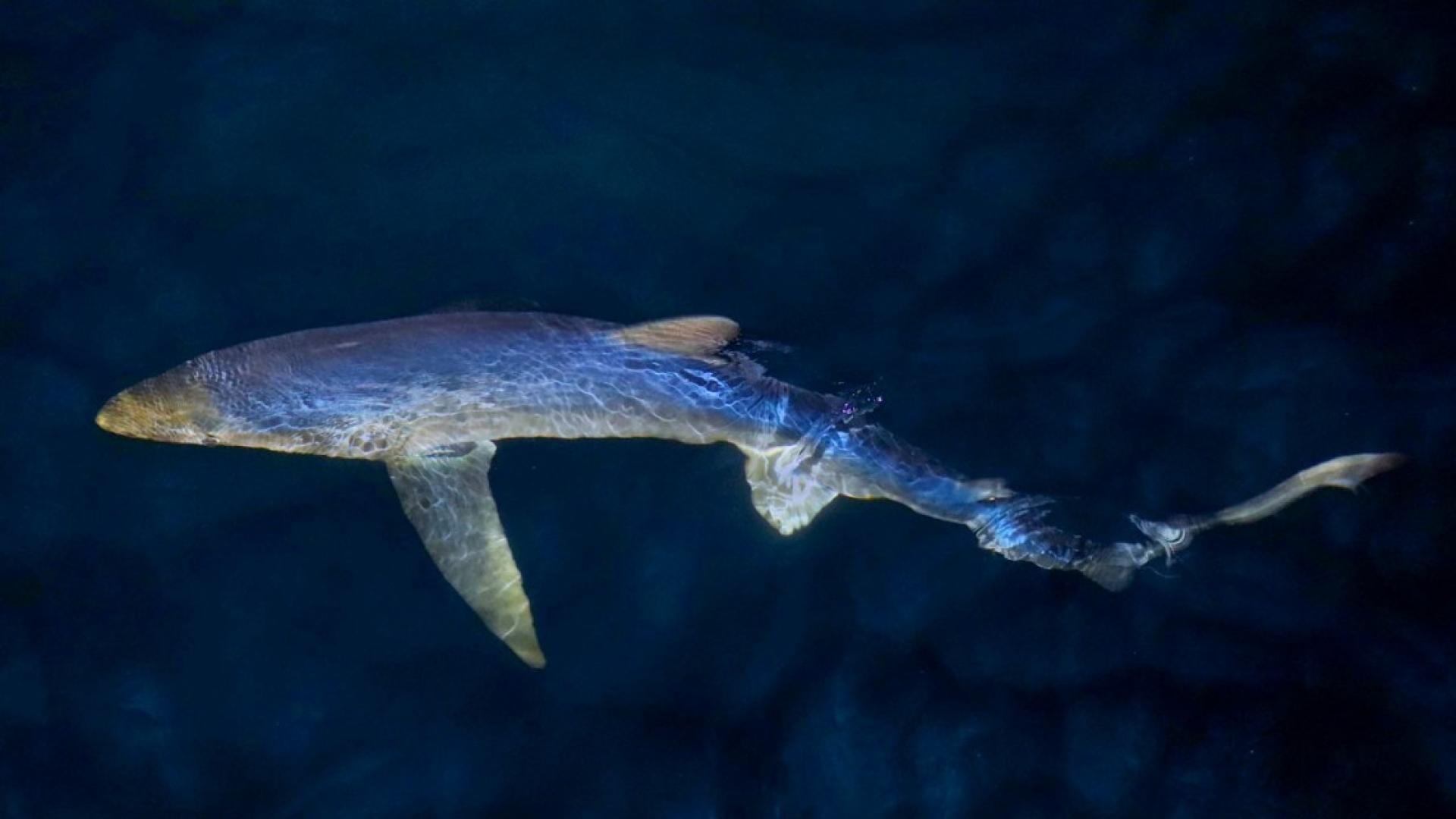
Header image: A Blue shark, Prionance blanca by Joshua Moyer, M.S. '14 (provided)