Back

Discover CALS

See how our current work and research is bringing new thinking and new solutions to some of today's biggest challenges.

|
By Jeri Wall
  • Lab of Ornithology
  • Charles H. Dyson School of Applied Economics and Management
  • Natural Resources and the Environment Section
  • Agriculture
  • Animals
  • Applied Economics
  • Biodiversity
  • Environment
  • Nature
  • Landscape
  • Natural Resources
  • Land
  • Ecosystems
  • Food
  • Beverages
  • Global Development
  • Development
  • Plants
  • Crops
Share
For ecologist and conservation biologist Amanda Rodewald, migratory birds are emblematic of a world on the move. In one year, a single warbler may spend 80 days in boreal forests in Canada, 30 days in the United States resting and refueling during migration, and more than 200 days in Central America.

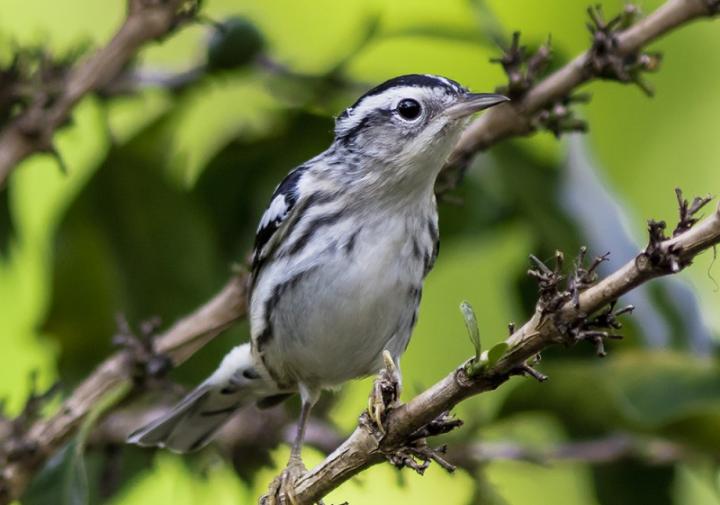
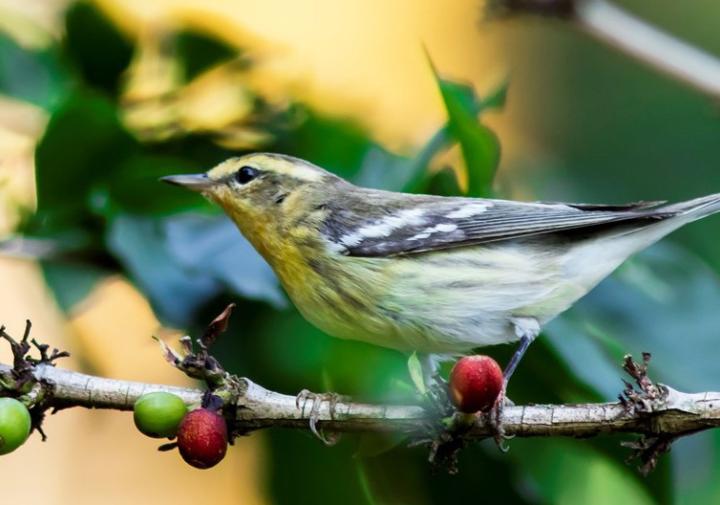
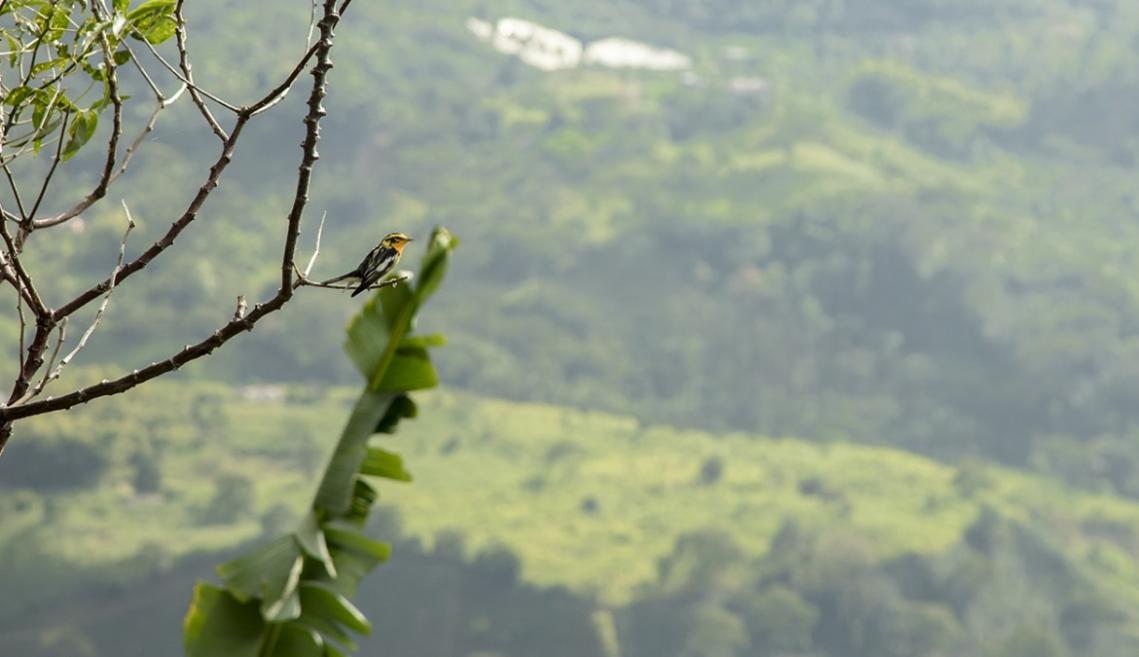
Warblers and other neotropical migratory birds, which breed in North America and winter in Central and South America as well as the Caribbean, are of special interest to Rodewald, a member of the Cornell Global Grand Challenge’s Migrations initiative to study the complex global issue of migration.

She and her colleagues study birds and the ecosystems on which they depend, the impact of human activities and global change on their populations, and ways to safeguard the healthy environments they – and we – require.

Rodewald, the Garvin Professor of Ornithology in the Department of Natural Resources, looks for win-win outcomes for people and the planet. This approach turned her attention to coffee farms.

Growing coffee under trees – a traditional practice called shade-grown coffee – results in a wide variety of social and environmental benefits.

“Whether you care about supporting the livelihoods of farmers, conserving biodiversity, maintaining productive and healthy environments, or enjoying a great-tasting cup of coffee, it all points to shade-grown coffee,” said Rodewald, who is director of conservation science at the Cornell Lab of Ornithology.

Coffee and sustainable ecosystems

Many migratory birds spend the winter on shade-coffee farms, returning to the same farms year after year. But widespread deforestation and agricultural intensification has reduced the amount of habitat for migrating birds and other species. As forests were cleared and shade-grown coffee gave way to environmentally harmful monocultures of “sun coffee,” migratory birds have suffered.

For example, the population of one vulnerable songbird species, the small blue-and-white cerulean warbler, has declined by 70% in the past 50 years, coinciding with the widespread conversion of shade to sun coffee.

Fortunately, shade-grown coffee is making a comeback.

Rodewald’s collaborative research demonstrates the benefits for farmers and their families. Trees improve soil health and farm conditions, and shade-grown coffee beans are a higher quality, which can bring the farmer a higher price. With the forest acting as natural fertilizer, there is little need for chemicals, which improves water quality. And coffee plants grown under trees produce beans two or three times longer than sun-grown coffee plants.

“We’re focused on finding ways to conserve species and protect biodiversity,” Rodewald says. “To do that, we need to understand the migratory patterns of birds. We also need to understand the social and economic choices that people make, and the full impacts of those choices. Then we can recommend sustainable solutions – changes to systems, resources and incentives at local and global scales – that will contribute to the health of the planet for all species.”

Holistic views, workable solutions

Rodewald’s research touches on a variety of subdisciplines: conservation biology, community ecology, landscape ecology, population demography, behavioral ecology, ecological restoration and sustainability science. “This may surprise people” she says, “but some of our most important partners here at Cornell are in the social sciences, including economics and business.”

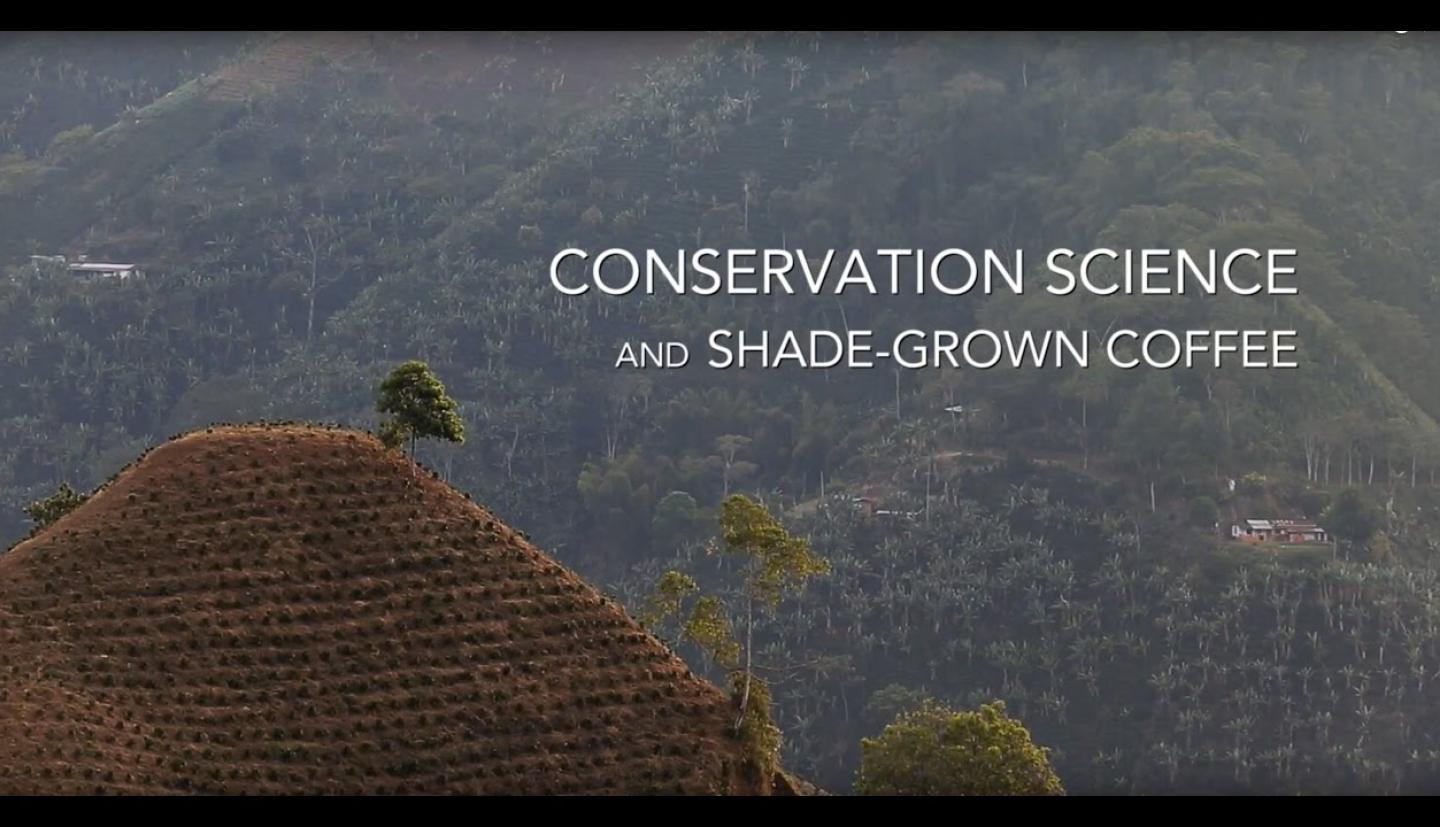
In the five-minute video Conservation Science and Shade-Grown Coffee by the Lab of Ornithology, Rodewald explains how conservation can work for people and the planet.

“If we want to fully understand the realities and the possibilities for change,” she says, “then we need to be taking a more holistic view of the interactions of all the players in the ecosystem.”

The Migrations initiative facilitates new collaborative projects that consider these connections – between humans, animals, plants and nonliving things.

“We’ll be funding faculty and student projects that will demonstrate how to work in interdisciplinary space,” Rodewald says. “This will make explicit the connections, the causes and consequences. It will give us, as researchers, a more holistic view. There is power in that systems-level approach.”

In a new project with Ivan Rudik, assistant professor in the Charles H. Dyson School of Applied Economics and Management; Alison Johnston, research associate at the Cornell Lab of Ornithology; and Catherine Kling, Tisch University Professor in the Dyson School, Rodewald will study the Farm Bill’s Conservation Reserve Program, which pays farmers to take farmland out of rotation.

“We will quantify the ways in which the program contributes to bird conservation,” she says, “and provides other benefits such as clean air and water, habitat protection and recreation.” They’ll also investigate how benefits might flow across states, changing with enrollment patterns and moving with migratory birds.

In another project, led by Filiz Garip, professor of sociology in the College of Arts and Sciences, Rodewald and colleagues focus on human movement ecology. They study how different environmental shocks or changing climates in Mexico affect individual decisions about migrating, and ultimately aims to inform policy and humanitarian efforts.

“Finding working solutions to real-world problems is both a challenge and a fascination for me,” Rodewald says. “Through authentic ways, how can we increase caring and therefore positive action? It’s about building empathy.”

This article is adapted from the original, “How Global Actions Can Benefit Multiple Ecosystems,” by Jeri Wall, former director of communications for Global Cornell.

Header image: Amanda Rodewald holds a Mourning Warbler captured as part of her research; her collaborating biologist, Nick Bayly of the Colombian conservation science group Selva, looks on. Photo by Guillermo Santos/Provided

This article also appeared in the Cornell Chronicle.

Keep Exploring

Hand watering a small sprout in the ground

News

New York Attorney General Letitia James has directed $1.1 million to support the new Cornell College of Agriculture and Life Sciences New York Soil Health Climate Smart Agriculture Fund, aimed at working with farmers to promote healthy soils.

  • School of Integrative Plant Science
  • Soil
three woman stand together eating orange slices

Field Note

by Harley Wolfanger '28 Where does our food really come from? That question followed our group throughout our agricultural expedition to California this past January. I decided to embark on this trip because I wanted to understand how the...
  • Dairy Fellows Program
  • Animal Science
  • Agriculture