Back

Discover CALS

See how our current work and research is bringing new thinking and new solutions to some of today's biggest challenges.

  • Cornell Cooperative Extension
  • Agriculture
  • Food
  • Dairy
Share
|
By Melissa Jo Hill
Cornell Cooperative Extension’s ties to the dairy community are as deep and as strong as they ever were, and even in the midst of the COVID-19 pandemic, educators are finding ways to connect the community with fresh and nutritious New York dairy products.
Cornell Cooperative Extension
Putting knowledge to work in pursuit of economic vitality, ecological sustainability and social well-being across New York state.

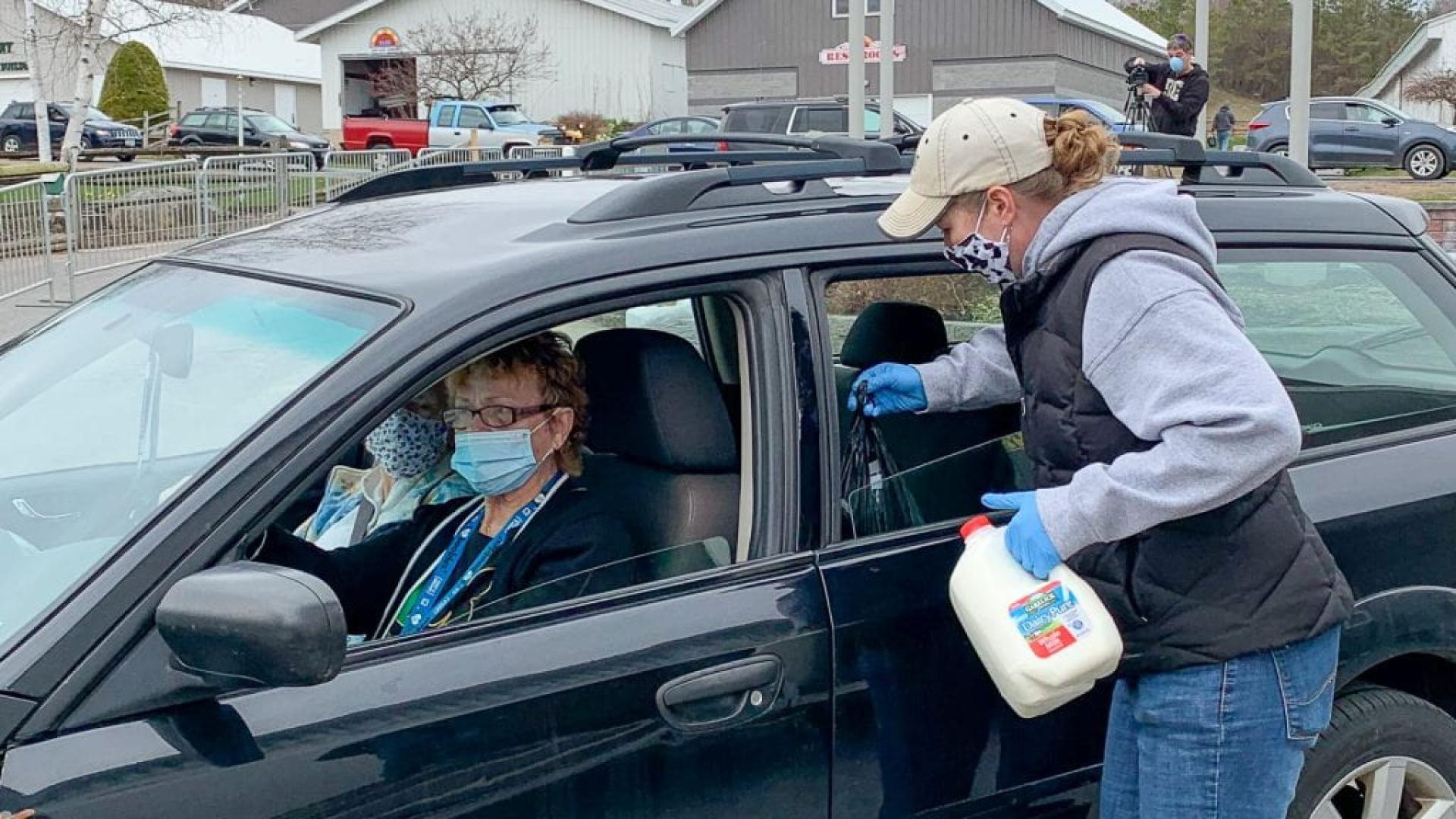
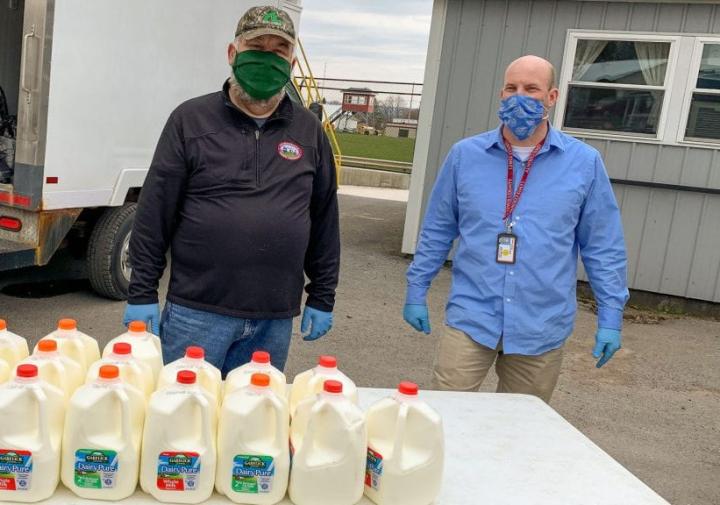
In Lewis County, CCE organized a dairy drive through in Lowville. The event, pulled together in just a week, distributed 500 gallons of milk plus dairy products donated from the American Dairy Association Northeast, Kraft Heinz, and the Adirondack Beef Company, to area families who lined up in vehicles at the Lewis County Fairgrounds. Black River Valley Naturals, Cummings Creamline Milk, and Widrick Electrical donated the use of refrigerated trucks to keep the products cold during the giveaway.
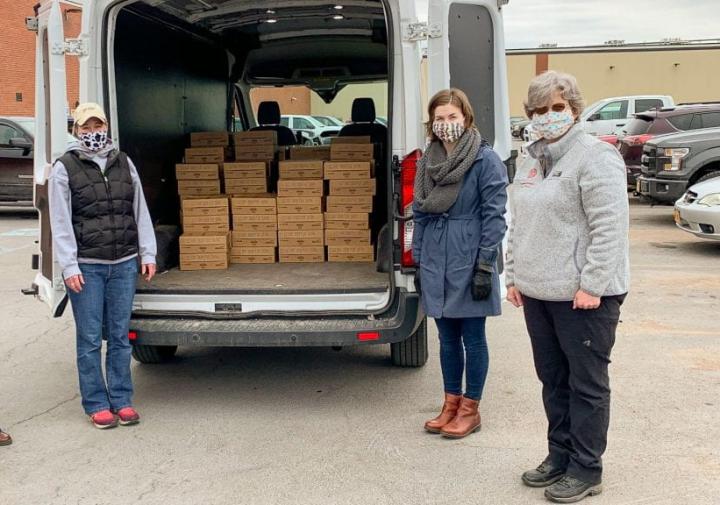
In Allegany County, 4-H Project Clover has been coordinating with farmers to redistribute dairy where it’s needed most. Partnering with Barney Farms, CCE has been able to distribute bags of milk, sour cream, cottage cheese, buttermilk, string cheese, and yogurt to 250 families, and will be hosting a second dairy drive through in May.

But even when CCE isn’t leading the charge, our educators and staff are busy volunteering at other dairy drives in the state, like Madison County 4-H Youth Development Educator, Craig T. Brown. Brown has been volunteering at the SUNY Morrisville dairy drives.

“As a volunteer, I have seen the outpouring of appreciation and community support for our dairy farmers,” said Brown. “As CCE educators, we must now do everything we can to ensure they are supported.”

Keep Exploring

Charles Midega (left) and Roy Odawa display the Kontiki kiln they modified to make biochar from human feces. Credit: Rebecca Nelson

News

Cornell researchers and Kenyan partners have developed a fertilizer made from human excreta. The product improves soil health and food production, while preventing pollution in informal settlements and the aquatic environment.

  • Ashley School of Global Development and the Environment
  • Global Development Section
  • Agriculture
Edward Harbes IV planting a new apple orchard in 2014.

News

Harbes Farm on Long Island relies on a mutually beneficial collaboration with Cornell researchers, a partnership that has made the family’s three farms key destinations for Long Island agritourism.

  • Cornell AgriTech
  • Cornell Cooperative Extension
  • Cornell Integrated Pest Management