Back

Discover CALS

See how our current work and research is bringing new thinking and new solutions to some of today's biggest challenges.

|
By Krishna Ramanujan
  • Soil and Crop Sciences Section
  • Food Science
  • Food
  • Soil
  • Land
Share
A Cornell researcher is part of a multi-institution team helping upstate New York organic farmers grow and increase profitability of perennial grain crops, which can be planted once and will yield grain for multiple years.

The crops’ environmental benefits have led to commercial interest in using these grains in breads, cereals, beer and even whiskey.

Perennial grains are environmentally friendly thanks to their large root systems and because they don’t require annual tilling, which leads to soil erosion and degrades soil health. Perennial grains also need fewer fertilizers and pesticides and reduce agricultural runoff into waterways.

But current low yields for the grains – such as Kernza, a brand name for Thinopyrum intermedium, a domesticated version of intermediate wheatgrass – has led researchers to explore dual uses to increase profitability, such as using the plants as forage for animals.

Cornell is now a partner on a four-year, $1.77 million U.S. Department of Agriculture (USDA) Organic Research and Extension Initiative grant, awarded to develop growing guidelines for farmers and investigate dual uses for the organic crop.
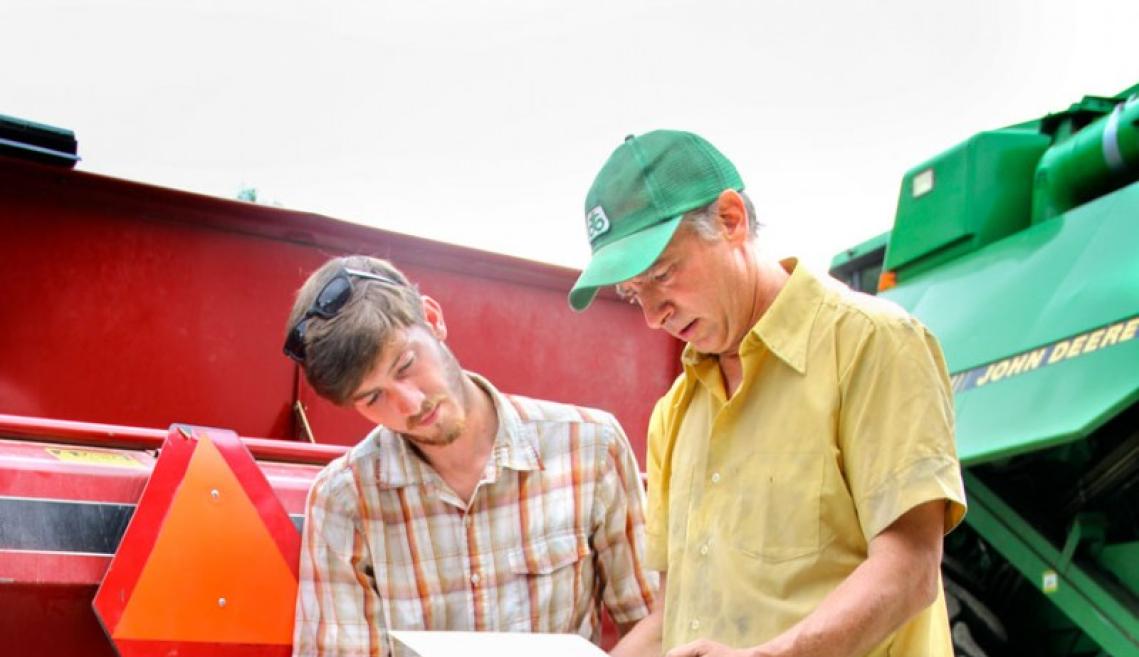
Steve Culman, Ph.D. ’08, an agronomist at The Ohio State University, is director of the project, titled “Organic Dual-Use Perennial Grain Crops: Pathways to Profitability and Soil Health.”

Matt Ryan, an associate professor of soil and crop sciences in the College of Agriculture and Life Sciences, leads a subcontract on the grant and will receive $313,200. He and colleagues at the University of Minnesota and at The Land Institute in Kansas, where Kernza was developed, will be developing management guidelines for farmers on growing and increasing profitability.

“We think that this has a lot of potential in terms of improving the sustainability of our cropping systems,” Ryan said. “We want to facilitate that and show how to make it profitable.”

The researchers are exploring the practice of letting animals, such as beef cattle, graze on leaves in the spring, then letting the plants to grow grain until harvest in August. After the harvest, animals could graze on the remaining grain straw, which has a higher forage quality than wheat straw. “That work has been promising,” Ryan said.

Or the stalks could be collected and stored for winter forage, which adds value to the crop. While most annual grains – such as wheat, oats and barley – dry from the bottom up, Kernza does the opposite. When farmers harvest the grain, they can cut it high, leaving green material that makes for usable forage.

Ryan and colleagues will also investigate and share best practices for growing perennial grains, such as seeding rates, row spacing, how much nitrogen fertilizer crops might need, and where to sell the crop.

The USDA project is a continuation of a Northeast Sustainable Agriculture Research & Education grant that Ryan leads. It’s an effort to build a Northeast niche market for perennial grains.

Ryan and colleagues have partnered with Farmer Ground Flour, a farmer-owned mill, and Wide Awake Bakery, both in Trumansburg, New York, to mill Kernza flour, test different bread recipes, and evaluate customer interest. 

Also, Van Brunt Stillhouse in Brooklyn, a whiskey and rum distiller, has used higher yielding perennial cereal rye that farmer and project collaborator Thor Oeschner grew in Newfield, New York, to make a limited run 100% rye whiskey.

Taste tests show promise for sustainable kernza bread

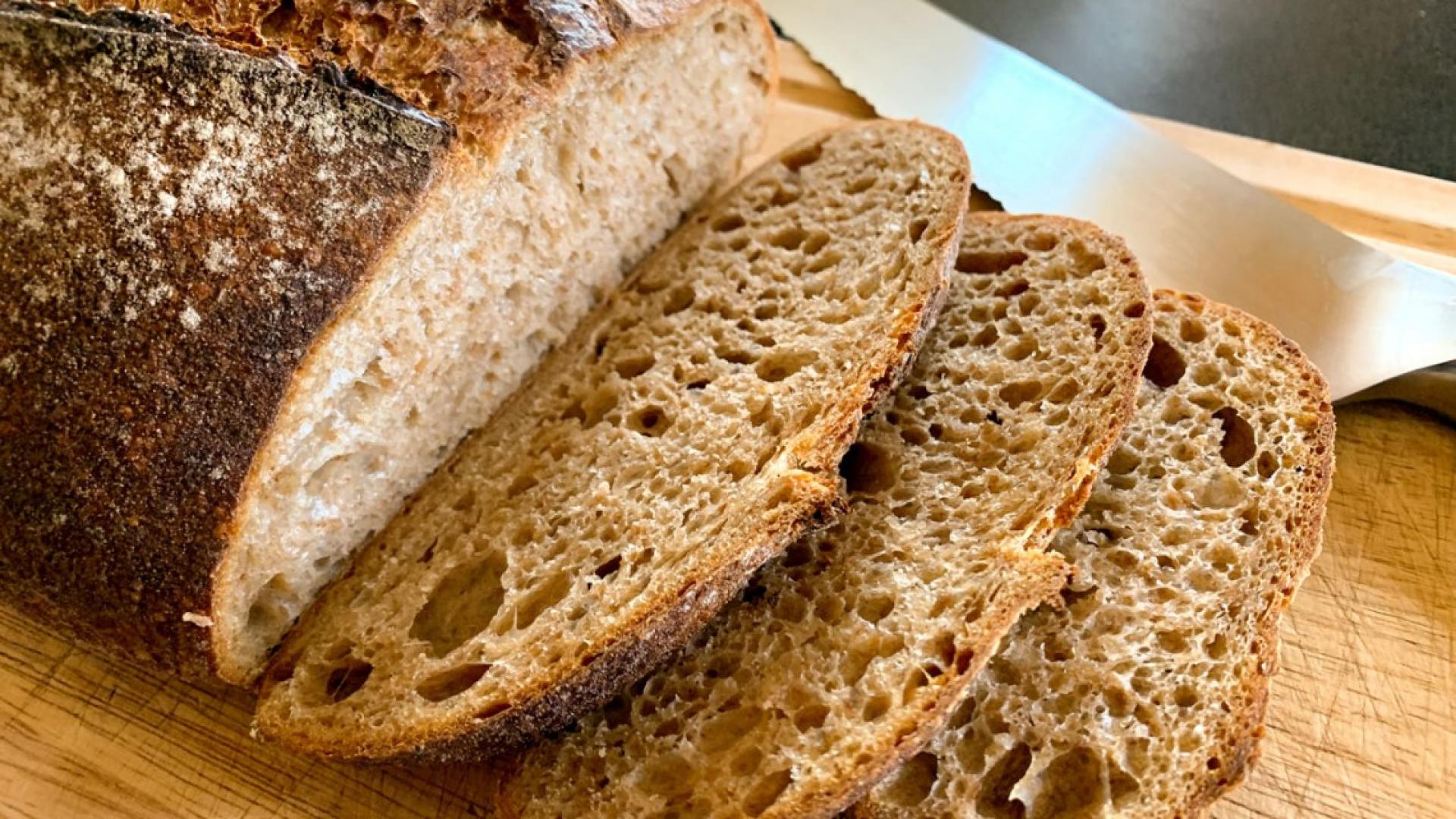
Wide Awake Bakery in Trumansburg, New York, has been experimenting with Kernza as an artisan flour in their breads.

To gauge consumer interest in bread made with Kernza, associate professor Miguel Gómez, research associate Jie Lie and graduate student Nima Homami, all at the Charles H. Dyson School of Applied Economics and Management, ran consumer experiments last fall with 221 participants including Ithaca residents and Cornell staff and faculty members.

The team investigated consumers’ willingness to pay for four artisan breads, each with different flours: spelt; whole wheat; whole wheat with 15% Kernza; and whole wheat with 25% Kernza.

In one round of taste tests, subjects were not informed about Kernza’s environmental benefits. Preliminary results showed that people would pay 10% less for 15% Kernza bread  and 20% less for the 25% Kernza bread (compared to spelt and whole wheat breads).

“This is not surprising,” Gómez said, “given that the taste of bread with Kernza is different.”

When subjects were informed about Kernza’s environmental benefits, they were willing to pay slightly more for 15% Kernza bread, and the same price for 25% Kernza bread (compared to spelt and whole wheat breads).

“I am convinced,” Gómez said, ”that at a reasonable price and with the appropriate marketing communication strategy, Kernza bread will be a market success in the artisanal bread product category.”

Header Image: Kernza bread made for CSA customers from Wide Awake Bakery in Trumansburg, New York. Photo by Sandra Wayman/Provided

This article also appeared in the Cornell Chronicle.

Keep Exploring

Maple sap is boiled down at Cornell’s Arnot Teaching and Research Forest in Van Etten, New York.

News

A new low-cost, do-it-yourself method allows maple syrup producers to cool and hold sap before boiling, giving greater flexibility and preventing all-nighters.

  • Arnot Teaching and Research Forest
  • Uihlein Research Forest
  • Food
Jason A. Hunt speaks at 2026 Northeast Dairy Management Conference

News

Nearly 350 dairy producers and industry professionals from across the Northeast gathered in East Syracuse, NY last week for two days of collaboration, learning and forward-looking discussions. Hosted by Cornell CALS PRO-DAIRY and the Northeast...
  • Cornell Cooperative Extension
  • PRO-DAIRY
  • Animal Science