Back

Discover CALS

See how our current work and research is bringing new thinking and new solutions to some of today's biggest challenges.

  • Cornell Cooperative Extension
  • Agriculture
Share
|
By Melissa Jo Hill
You can admit it now. You cracked. You stress bought chickens. Turns out, you’re not alone.

A backyard brood, once a staple of the rural and urban homesteading movement, is now trending. But unlike that innocuous sourdough starter molding in a jar on the countertop, your new chicks require specialized and dedicated care and equipment. Luckily, your local CCE association has been educating New Yorkers on the basics of raising chickens since before it was a hashtag, and is now delivering that content in an easily accessible online format.

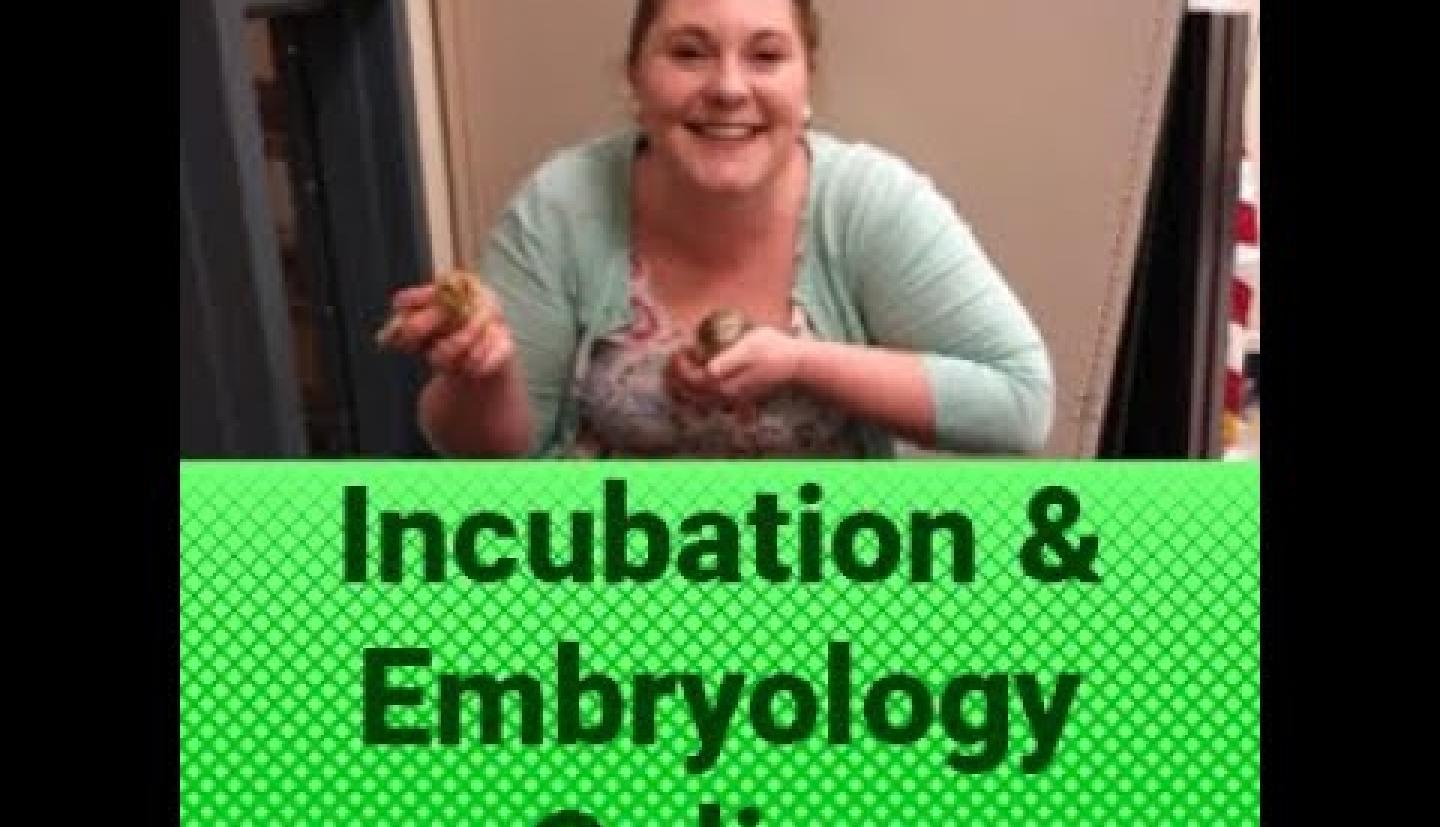
At CCE Orange County, 4-H Animal Science Program Manager Maggie Smith, is offering a series of videos on Incubation and Embryology, just in case you want to turn your homestead experiment into a homeschool experience. Here’s a sneak peek at parts of the egg:
Meanwhile, CCE Chautauqua County has started a “What’s The Coop” group on Facebook, where locals can learn through weekly videos and discuss their chicken-rearing challenges and successes with each other.

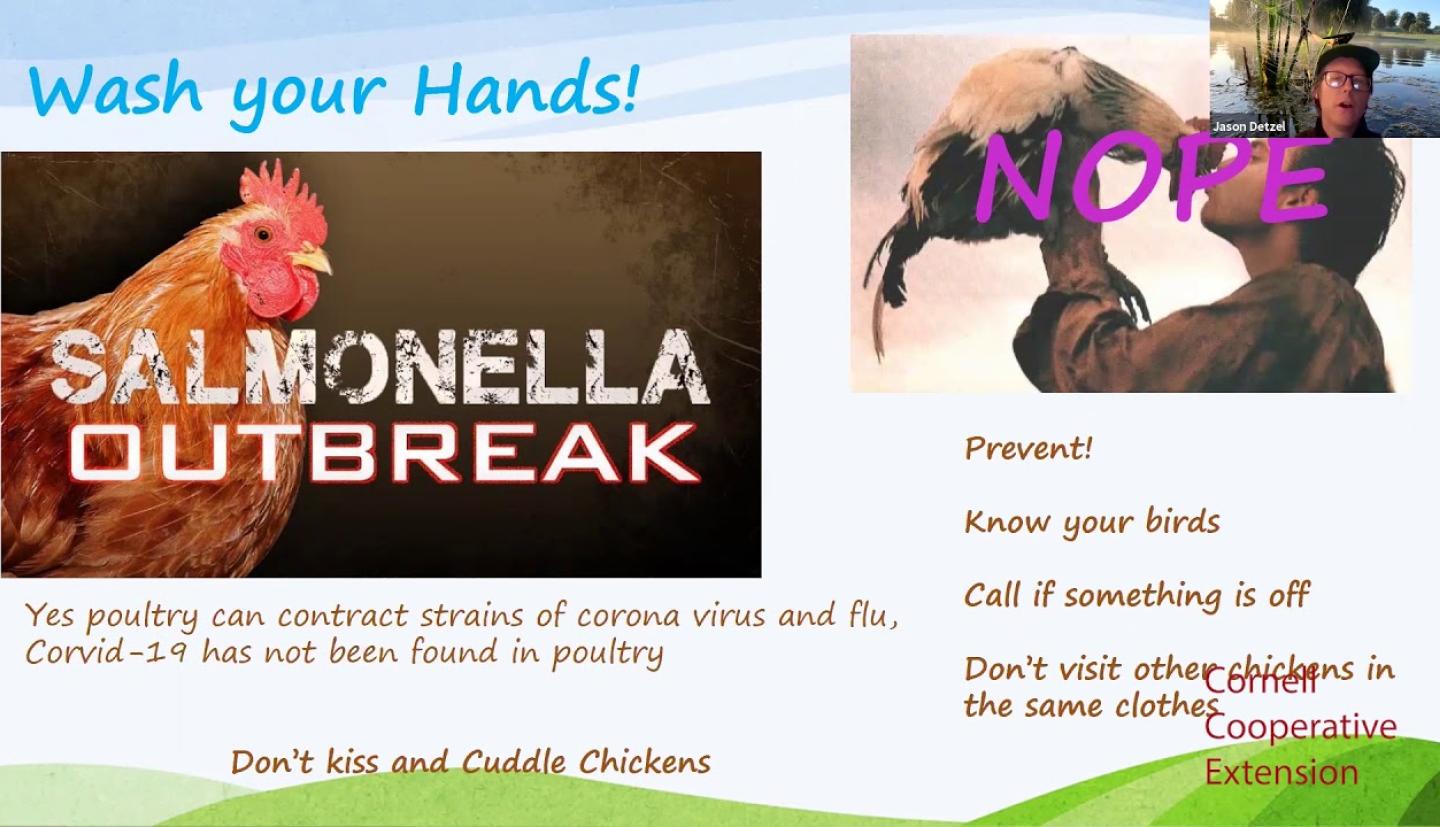
CCE Ulster County collaborated CCE Rockland County to deliver a backyard chickens webinar with Livestock Educator, Jason Detzel that had nearly 300 registrants from 22 NYS counties and ten states. You can catch the replay on YouTube and find more of their poultry resources on the CCE Ulster County website:

Wherever you are in your #backyardchickens journey, CCE can help you raise happy, healthy chicks, and maximize your home egg production. To get involved in chicken education where you live, contact your local CCE association.

Keep Exploring

Charles Midega (left) and Roy Odawa display the Kontiki kiln they modified to make biochar from human feces. Credit: Rebecca Nelson

News

Cornell researchers and Kenyan partners have developed a fertilizer made from human excreta. The product improves soil health and food production, while preventing pollution in informal settlements and the aquatic environment.

  • Ashley School of Global Development and the Environment
  • Global Development Section
  • Agriculture
Edward Harbes IV planting a new apple orchard in 2014.

News

Harbes Farm on Long Island relies on a mutually beneficial collaboration with Cornell researchers, a partnership that has made the family’s three farms key destinations for Long Island agritourism.

  • Cornell AgriTech
  • Cornell Cooperative Extension
  • Cornell Integrated Pest Management