New York Governor Andrew M. Cuomo unveiled his budget plans during the 2020 State of the State and Budget Address in Albany on Jan. 21, 2020.
Kathryn J. Boor, the Ronald P. Lynch Dean of Cornell’s College of Agriculture and Life Sciences, said:
Cornell CALS is grateful for our ongoing partnership with Governor Cuomo as we work together on behalf of the citizens, communities and economies of New York State. The governor’s agenda to strengthen the state’s food and agriculture systems – as reflected in his budget – mirrors Cornell’s commitment as New York’s Land-Grant university to tackle the most pressing challenges facing our state and nation.
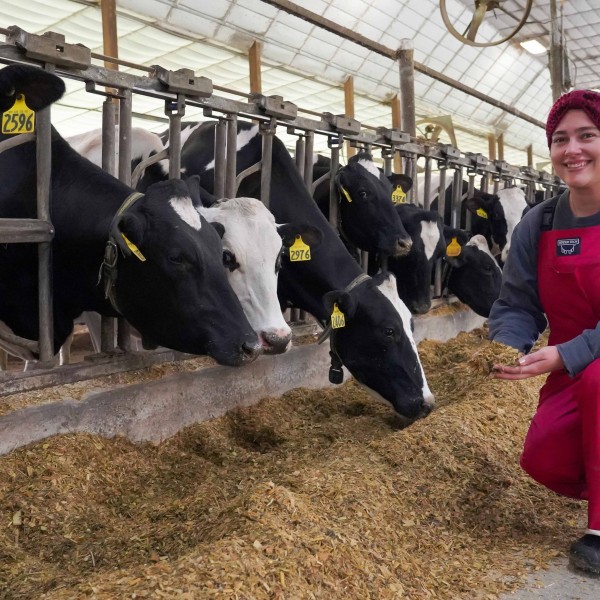
With the inclusion of funding for core priorities such as our PRO-DAIRY and NYS Integrated Pest Management programs, which have provided decades of outreach to New York farms, as well as funding for STEM-based food system education for K-12 students, leadership development in FFA, and Agriculture in the Classroom programs, this budget continues the governor’s support for the food and farm community of today and tomorrow. The governor also initiated support for our research focused on hops, barley and innovative maple products, which has fueled a 91% growth in NY’s maple industry over the past five years.
Also critical is the governor’s emphatic commitment to mitigate the effects of climate change on New York’s farms and communities. This includes support for the Cornell Soil Health and Resiliency program and collaborations between Cornell’s New York State Water Resource Institute and New York Sea Grant to restore and protect our state’s shoreline communities – particularly in the Great Lakes Basin and the Hudson River Estuary.
We are proud to support Governor Cuomo’s vision for a strong economy and a healthy planet, and this state budget is a step in the right direction.