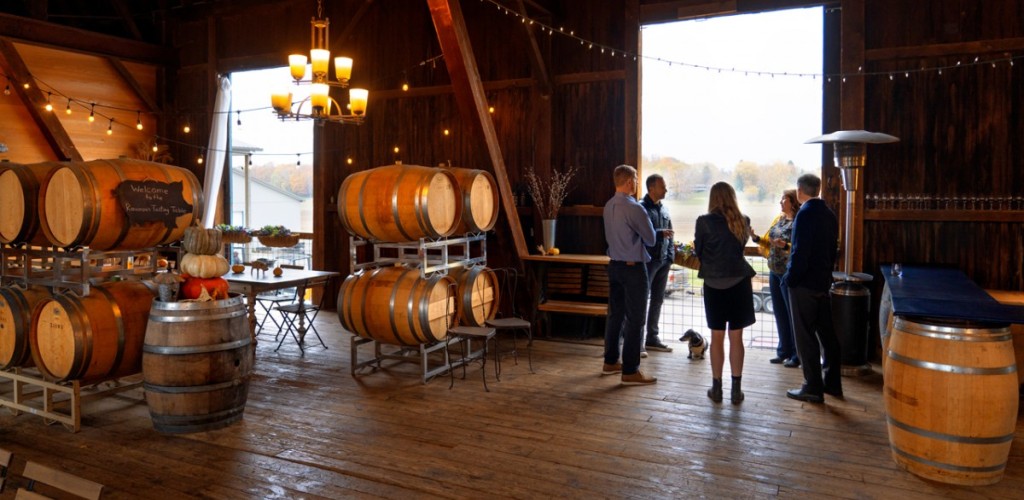
“It’s a bee oasis,” says Scofield, a Cornell doctoral candidate who studies honeybee health. The 50-acre organic farm, owned by the Wegmans grocery store chain, offers honeybees a wide variety of pollens to feed on, she says.
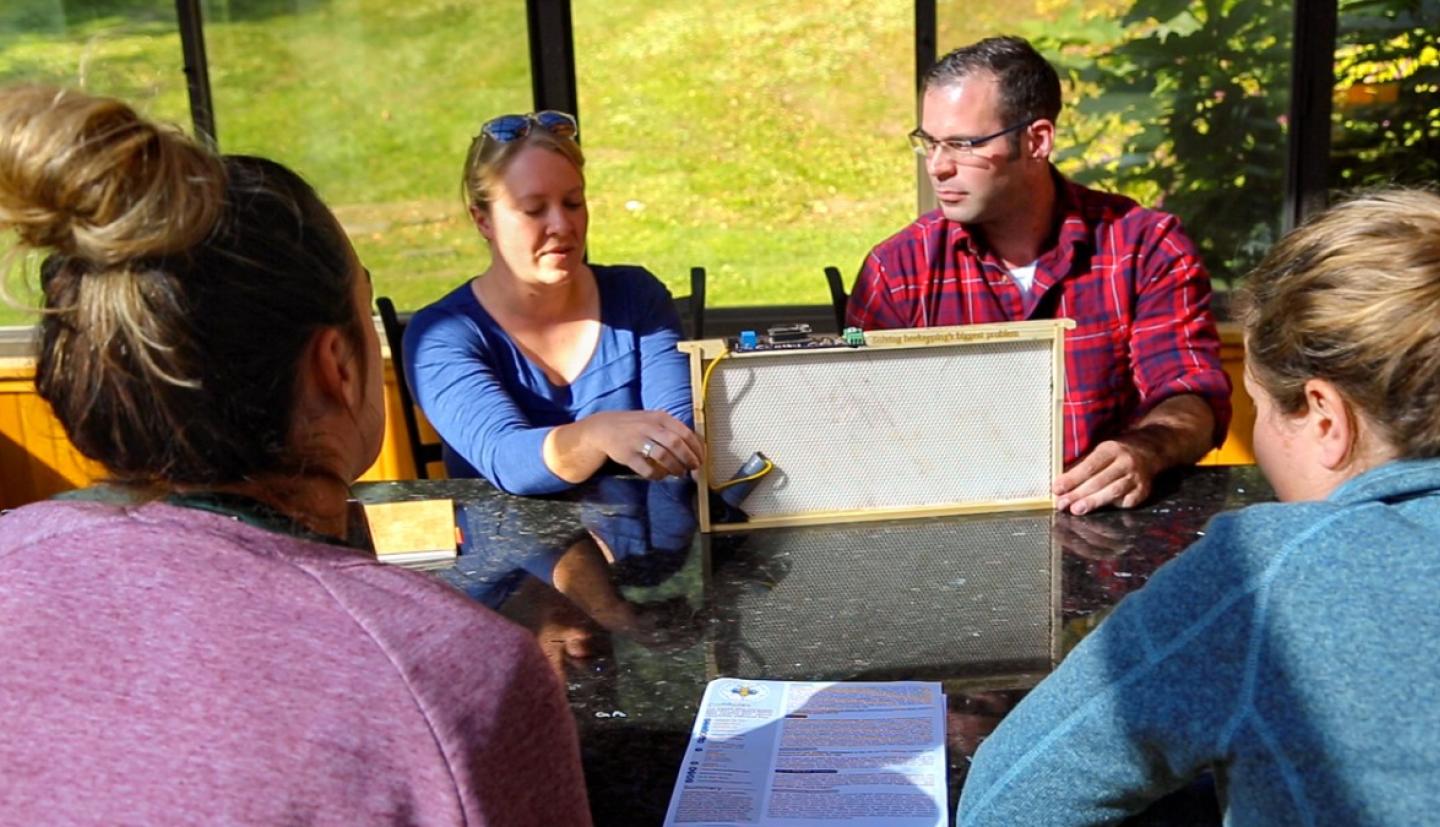
It’s also the perfect place to test just how well Scofield and Oakes’ ingenious invention – a device with a tiny laser that fits in a hive – can zap the honeybee’s public enemy No. 1: the Varroa mite.
Scofield and Oakes visited the farm to ask if Wegmans will allow them to install their device in each of the 40 hives on the farm and nearby orchard, to see how it works in an organic setting.
The parasite, whose Latin name is “Varroa destructor,” not only sucks fat and nutrients from honeybees and feeds on their young. It also spreads at least five debilitating viruses. If more than 3% of a colony is infested, the colony will likely be dead in a year. “They’re really, really good at what they do,” Scofield says of the parasites.
The device kills Varroa mites automatically with a laser powered by a lithium-ion battery. Once a mite attached to a honeybee enters the laser’s field of vision, the laser pulses for a tenth of a second and the mite’s exoskeleton erupts. “It sounds like popping popcorn,” says Oakes, who studies computational biology. “The honeybee feels it – she doesn’t love it – but 15 seconds later, she’s back to normal.”
Oakes and Scofield’s company, Combplex, is among 17 finalists in Grow-NY, a business competition and support program for innovative, high-growth startups in food and agriculture. As part of the competition, finalists receive both mentors and business development trips, and they’ve been fanning out through upstate New York to meet with potential business partners. Vying for $3 million in prizes, winners will be announced at the Grow-NY Food and Ag Summit, Nov. 12-13 in Rochester.