

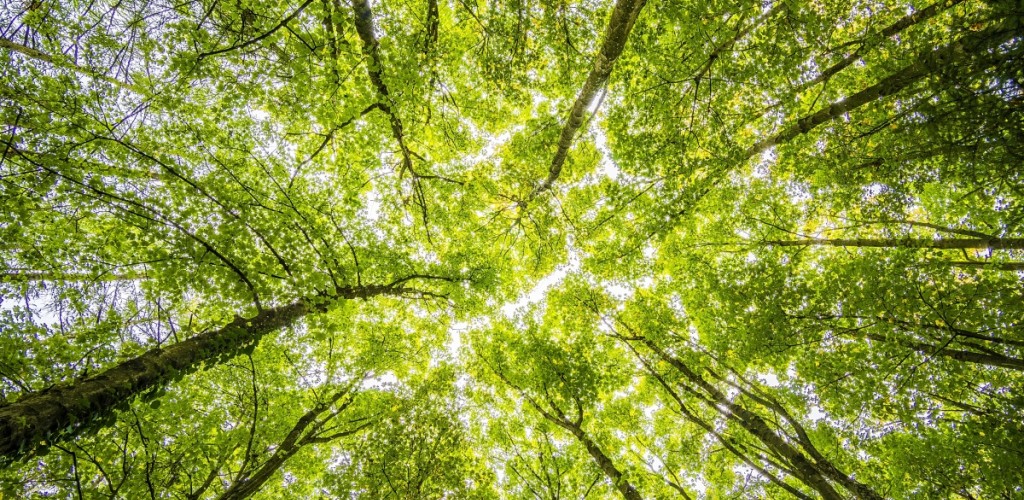
“The Need for Trees,” a new episode of the “What Makes Us Human?” podcast series, explores the critical role trees play in the Earth’s water cycle.
The podcast’s fourth season – “What Does Water Mean to Us Humans?” – showcases the newest thinking across academic disciplines about the relationship between humans and water.
“We pass laws to protect our water sources like lakes and reservoirs, but what many people don’t know is that our access to clean water relies just as heavily on forests,” Taryn Bauerle, associate professor in the School of Integrative Plant Science in the College of Agriculture and Life Sciences, says in her podcast.
Bauerle’s overall interests lie in woody root physiological ecology. The majority of her research focuses on growth and physiological responses of plants to water deficits, such as how roots respond to and modify their environment when faced with water stress. Her research aims to address issues pertinent to both agriculture and forestry, such as stress caused by a limited water supply and fine root responses to herbivore pressures.
The “What Makes Us Human?” podcast is produced by the College of Arts and Sciences in collaboration with the Cornell Broadcast Studios and features audio essays written and recorded by Cornell faculty. New episodes are released each Tuesday through the spring semester, airing on WHCU and WVBR.
The episodes are also available for download on iTunes and SoundCloud and for streaming on the College of Arts and Sciences humanities page, where text versions of the essays are also posted.


