

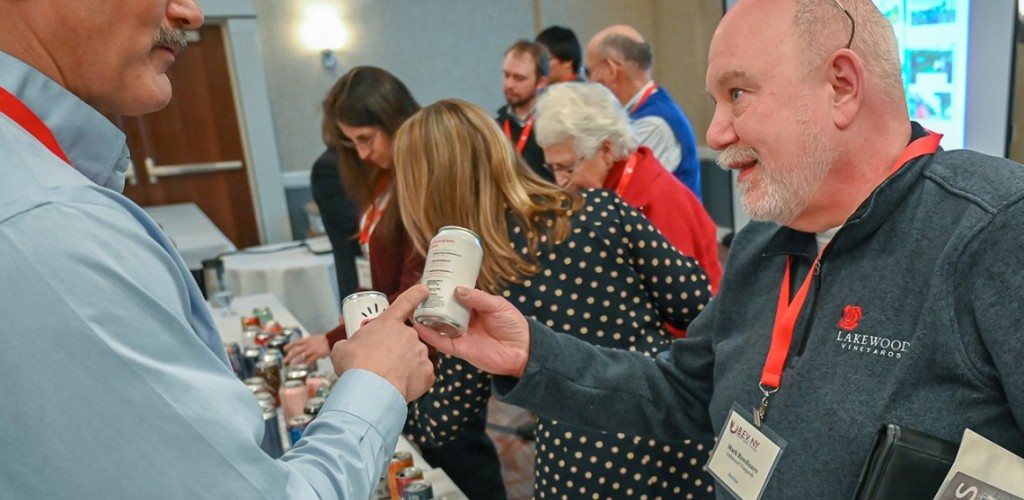
Whether enjoying a hike, a ballgame, a round of golf or a day by the pool, consumers are increasingly turning to aluminum cans as a way to enjoy wine in places that prohibit glass bottles.
As this alternative packaging trend gains steam, Cornell experts are preparing New York vintners to succeed in a competitive canned wine market.
More than 300 winemakers, grape growers, distributors, marketers, educators and others attended the sixth annual B.E.V. NY conference and symposium, held Feb. 27 to March 1 in Henrietta, New York. The event was organized by the Cornell University Enology Extension Laboratory and Cornell Cooperative Extension’s Finger Lakes Grape Program.
“Canned wines open up new opportunities for wine consumers,” said Gavin Sacks, associate professor in food science at the College of Agriculture and Life Sciences. “It works well in casual settings such as picnics or in stadiums where glass might not be appropriate.”
Aluminum packaging has also opened up opportunities for vintners. Chris Missick, winemaker at Villa Bellangelo Winery on the west shore of Seneca Lake, began his first run of canned wine in June 2018. “We did 600 cases last year,” he said. “We’re set to do at least 4,000 this year – 50 percent of our production.”
“Almost all of our wine regions are in areas where beach and lake culture dominate summer activities,” said Anna Katharine Mansfield, associate professor of enology in the Department of Food Science at Cornell AgriTech. “Think of the beaches on Long Island, or boating on Lake Erie or the Finger Lakes. If New York winemakers can get their products in packages conducive to those environments, it will open up whole new market segments.”
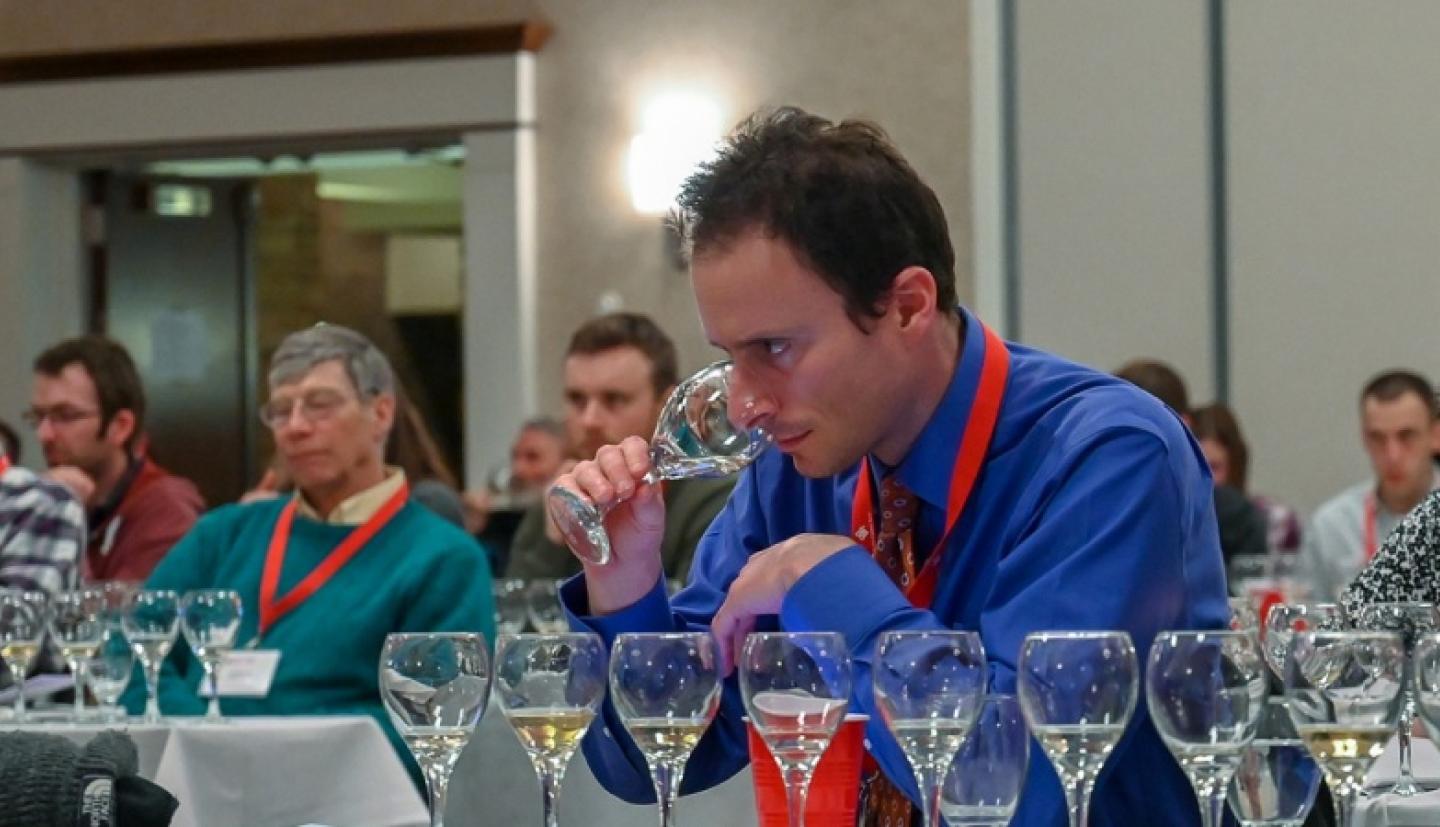
Though ripe with possibilities, new packaging technologies can present new difficulties for vintners, Sacks said. At the conference, he led a session aimed at helping winemakers better understand how to protect aromas, flavors and the long-term shelf life of wine in cans. He hopes his research leads to better guidelines for winemakers on how to avoid packaging-related problems.
“We would like to be able to identify compounds in the wine that are reacting with the beverage can to produce off-flavors,” Sacks said. “We also want to be able to work with beverage can manufacturers, and give them guidance for how to generate the next generation of beverage cans with better, more protective liners on the inside of the can.”
Attendees at B.E.V. NY also learned about vineyard management related to climate change and received updates on compliance issues for websites, intellectual property and New York state liquor laws.
The value of Cornell expertise for the New York wine industry was underscored by awards presented by the New York Wine and Grape Foundation at one of the event luncheons.
Cornell AgriTech received the Research Award, which recognizes major contributions in the area of grape growing, processing and wine research. Alice Wise of Cornell Cooperative Extension Suffolk County received the Grower Award for her dedication and contributions to the Long Island grape industry.
“Cornell expertise and conferences like B.E.V. NY help the New York grape and wine industry innovate and succeed,” said Sam Filler, executive director of the New York Wine and Grape Foundation. “Cornell has been a vital resource to the industry for over 100 years.”


