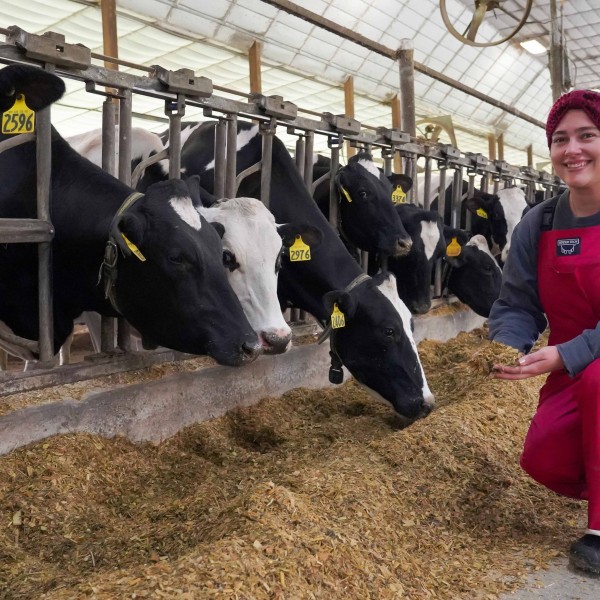
Students from all colleges and majors are invited to participate in Cornell’s inaugural Digital Agriculture Hackathon in the Schurman Hall atrium. The 36-hour event begins March 1 at 5 p.m. and ends March 3 at 2:30 p.m.
The hackathon is an opportunity to explore what technology can do to address challenges in food and agriculture, and take ideas from concept to reality. A schedule and a full list of challenges and judging criteria are listed at the hackathon site.
The weekend features networking with companies creating the agritech industry, $8,000 in cash prizes and conversations with mentors, senior leaders and faculty from Cornell Engineering, the College of Agriculture and Life Sciences, Computing and Information Science and the College of Veterinary Medicine. Hosts also include Cornell AgriTech, Cornell Cooperative Extension, Entrepreneurship at Cornell and the Cornell Institute for Food Systems.
The Cornell Initiative for Digital Agriculture connects top researchers with multidisciplinary practitioners to address global food system challenges, and develops and applies digital innovations designed to improve the sustainability, profitability, resiliency and efficiency of the world’s food systems.