

periodiCALS, Vol. 9, Issue 1, 2019
Plants develop and change constantly throughout their lives: One plant growing in the sun might grow shorter and stockier to support more fruit, while another in the forest might change the size or abundance of its leaves to maximize photosynthesis. Over time, these modifications have resulted in the development and evolution of a breathtaking abundance of forms and functions among plant life.
“Plants can’t get up and walk away, so they have to constantly adapt,” said Chelsea Specht, the Barbara McClintock Professor of Plant Biology in the School of Integrative Plant Science. In her lab and from research field trips conducted around the world, she combines molecular genetics, comparative genomics and evolutionary biology to study diversification in plants and the forces creating and sustaining that diversity.
Understanding how plants have evolved in the past is crucial to understanding how they might adapt in the future—especially under the existential threat of global climate change.
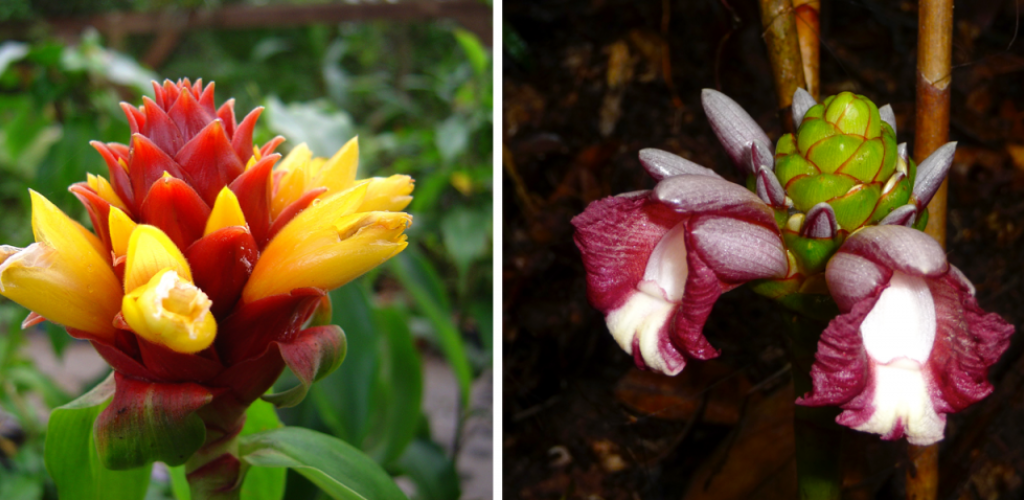
In the Costus genus, for example, plants were once pollinated only by insects. Over time, they evolved certain forms that enabled them to be effectively pollinated by hummingbirds. To understand why the plants evolved that way, among many other questions, Specht’s lab is cataloguing roughly 115 species in the genus. This process will inform questions about how genetic or environmental factors may have interacted to shift the way the plant evolves new species and diversifies its form over time.
“Plants have a whole toolkit of genes that they can deploy to enable them to adapt to different environments and eventually evolve new traits,” Specht said. “Can this evolution happen quickly? We hope so, because it’s going to need to.”


