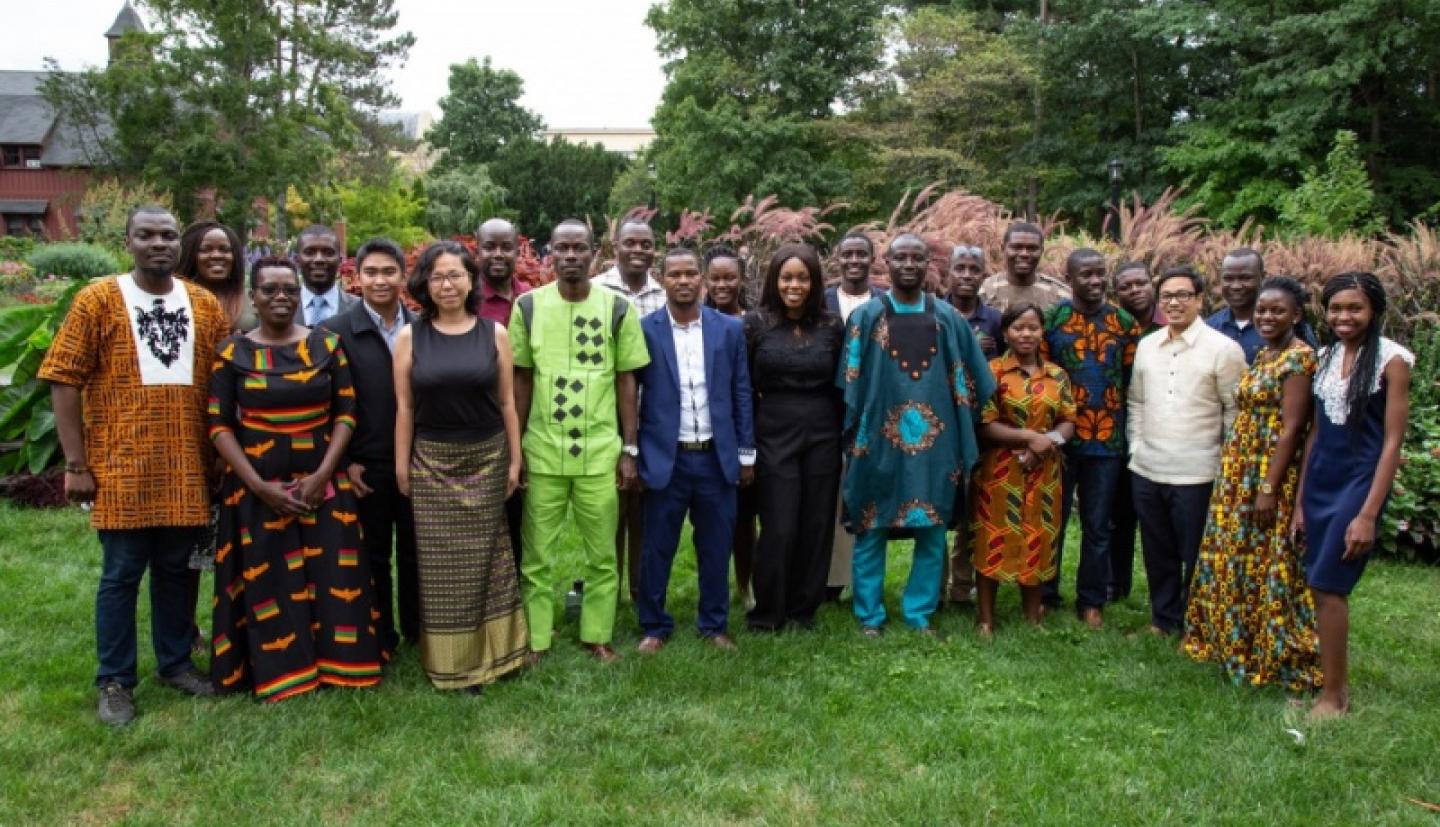
The Cornell Alliance for Science 2018 Global Leadership Fellows will be in Washington, D.C., Nov. 13-16 to share their stories with U.S. and international policymakers in hopes of attracting support to advance agricultural innovation in their countries.
Though the 27 fellows come from a variety of backgrounds – farming, journalism, science, education, law and human rights activism – in Africa and the Philippines, they share a passion for ensuring that agricultural biotechnologies do not bypass their countries.
The trip caps an intensive 12-week training program at Cornell that emphasized the science of crop biotechnology and such skills as public speaking, grassroots organizing and effective communication. The fellows will return home to join a growing global network that champions evidence-based agricultural policies and greater farmer access to improved seeds.
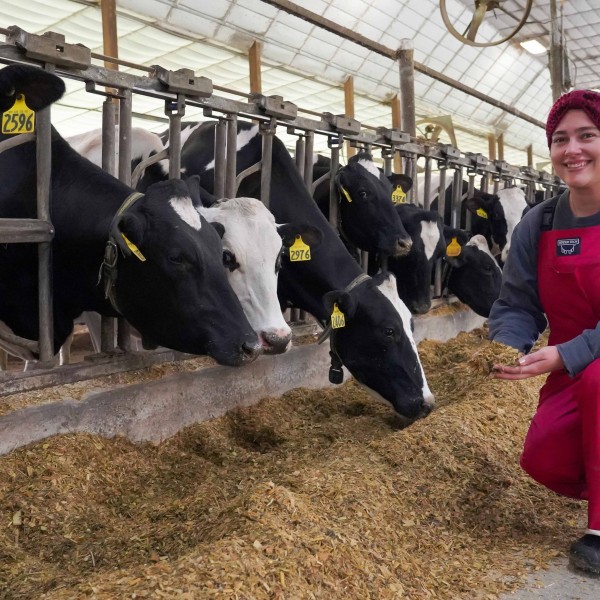
Fellow Zola Madaga, general manager of Enchorro Emuny Dairy in Kenya, is advocating for access to technologies to help the six in 10 African farmers who are women. “Biotech is one of the tools that can address some of her challenges. She can obtain drought-tolerant, pest-resistant varieties of seed that can feed her children, send them to school and break the poverty cycle,” Madaga said.
Added fellow Veronica Mwaba, executive director of Dziwa Science and Technology Trust, a nonprofit organization that promotes science advocacy in Zambia: “Today there is no country in the world that can ignore science, technology and innovation. Some go to bed without food because someone misinformed them about modern technology that can solve their challenges.”
While in D.C., the fellows will meet with officials from the U.S. departments of State and of Agriculture, the World Bank, the African Union and members of Congress, among others.
“The fellows come from very different cultural and professional backgrounds, but they are united by their conviction that innovative agricultural biotechnologies can make a positive difference in their communities,” said Sarah Evanega, adjunct international professor of plant breeding and genetics and founding director of the Cornell Alliance for Science. “This commitment is rooted in their personal experience – experiences they are eager to share with the broader D.C.-based ag community.”
Other fellows are motivated by a desire to reduce agriculture’s environmental footprint while ensuring adequate food production.
Taikee Calleja began his legal career as an environmental attorney in 2000, committed to reducing the intensive use of pesticides in farming. Though the Philippines approved a pest-resistant variety of maize, it has yet to adopt a pest-resistant variety of eggplant, which has significantly reduced pesticide use among eggplant farmers in Bangladesh.
“There is a need for this technology,” Calleja said. “There is a need to protect the environment.”