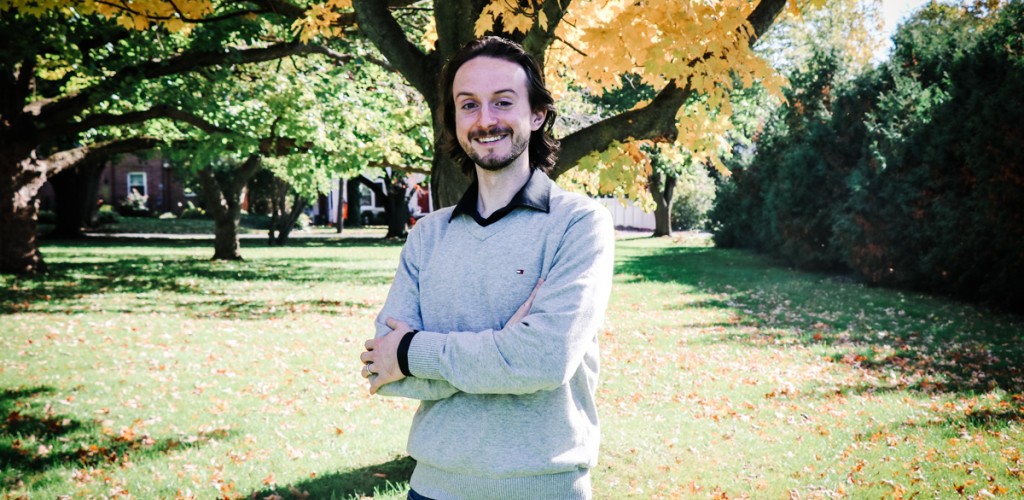
Denis Willet, assistant professor, Department of Entomology
Academic focus: Applied insect chemical ecology — understanding how organisms communicate chemically with their environment and using that knowledge to benefit agriculture.
Previous positions: Data scientist, Goodyear; research entomologist, USDA-ARS
Academic background: B.S. and M.S., earth systems, Stanford University; Ph.D., entomology and nematology, University of Florida
Last book read: Certain to Win by Chet Richards
What do you do when not working? Enjoy life with family
What gets you out of bed in the morning? My two-year-old daughter, and communicating curiosity.
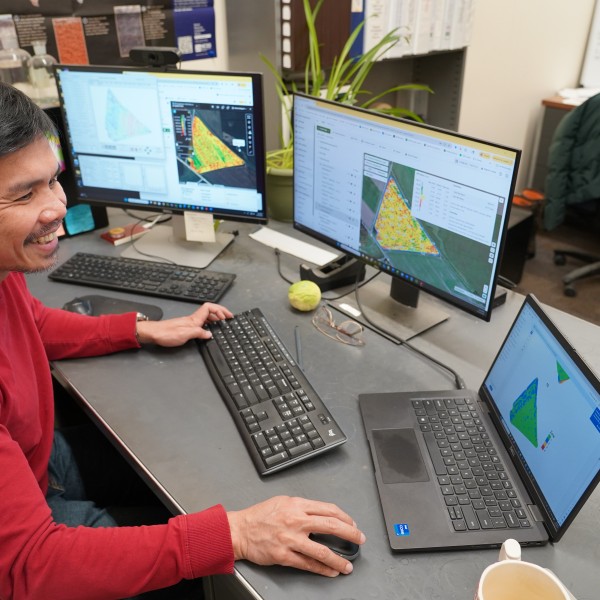
Current research project? Volatile sensors for near real-time chemical communication monitoring.
Current outreach/extension projects? Designing technology using chemical ecology for producer use.
What are three adjectives people might use to describe you? Persistent, curious, dynamic
Courses you’re most looking forward to teaching? Applied statistics for chemical ecology and agricultural research.
If you had unlimited grant funding, what major problem in your field would you want to solve? There are no problems - just opportunities. Grant funding is not a limitation on problem solving. The unlimited grant funding should be invested in education and technology development.
What most excites you about Cornell CALS and Cornell AgriTech? Opportunity to develop the future of agriculture. This is an incredible environment for team creativity and technology development.