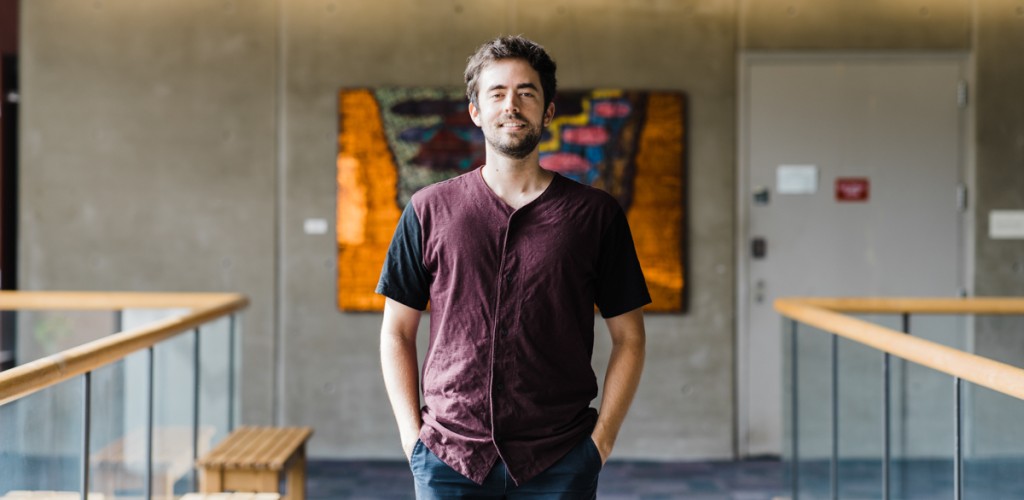
Andrew Moeller, assistant professor, Department of Ecology and Evolutionary Biology
Academic focus: Evolutionary biology
Previous positions: Miller Research Fellow, UC Berkeley, 2015-18
Academic background: B.S., biology, University of South Carolina, 2010; Ph.D., ecology and evolutionary biology, Yale, 2015
Last book read: The Possessed
What do you do when not working? I like to play music and spend time with family and friends.
What gets you out of bed in the morning: The possibility of discovering new things about nature!
Current research project? I am studying the relationships between microbes and their multicellular hosts. Currently, projects are focused on understanding the genes and evolutionary adaptations that enable symbiosis between mammals and gut bacteria.
Current outreach/extension projects? I am hoping to pursue a range of outreach projects through the Museum of Vertebrates.
What are three adjectives people might use to describe you? Earnest, focused, absent-minded
Course you’re most looking forward to teaching? Evolutionary biology
If you had unlimited grant funding, what major problem in your field would you want to solve? I would begin a comprehensive search for life in the solar system.
What most excites you about Cornell CALS? I'm most excited about meeting new people and the opportunity to pursue interesting research.