For couples hoping for a baby via in vitro fertilization, chances have improved. A process that once took hours now takes minutes: Cornell scientists have created a microfluidic device that quickly corrals strong and speedy sperm viable for fertilization.
Conventional methods to separate vigorous, motile sperm is tedious and may take up to several hours to perform. “Trying to find the highly motile sperm has been difficult to do, but this improves the chances of insemination,” said chemist Alireza Abbaspourrad, Cornell’s Yongkeun Joh Assistant Professor of Food Chemistry and Ingredient Technology.
Taking advantage of sperm’s ability to go against the flow – a process called rheotaxis – Abbaspourrad, Soon Hon Cheong, Ph.D. ’12, assistant professor at Cornell’s College of Veterinary Medicine, and Meisam Zaferani, a doctoral student in the field of chemistry, have devised a microfluidic channel through which the sperm swim. They added a microscopic corral – shaped like a “C” – that features a retaining wall that attracts the strongest swimmers.
“The older method is tedious, time-consuming and not efficient. It’s the time that laboratory technicians and physicians expend that makes the process expensive,” said Abbaspourrad. “With this method, it’s five minutes instead of several hours.”
The microfluidic device is simple to use: Rheotaxis is the key. “Here, we took advantage of sperm’s natural tendency to redirect against fluid flow, once the sperm reach a certain velocity,” said Cheong. “Once the sperm detect interference, they can use it to swim upstream. That’s when we can trap them. We could separate the good sperm from the not-so-strong in a reasonably elegant way. We are able to fine-tune our selection process.”
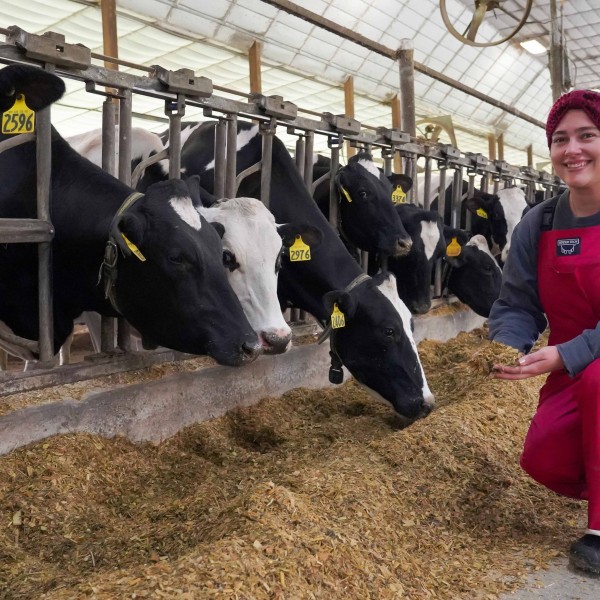
Zaferani said that these findings represent a broad range of applications beyond humans, such as using the device to separate motile bovine sperm for the dairy and beef industries. “The unprecedented efficiency of our device in comparison to previous studies and its benign, passive nature make it favorable for sperm separation,” he said
The study, “Rheotaxis-Based Separation of Sperm with Progressive Motility Using a Microfluidic Corral System,” published in the Proceedings of the National Academy of Sciences July 30. Production of the microfluidic channel was performed at the Cornell NanoScale Science and Technology Facility, which is supported by the National Science Foundation.