

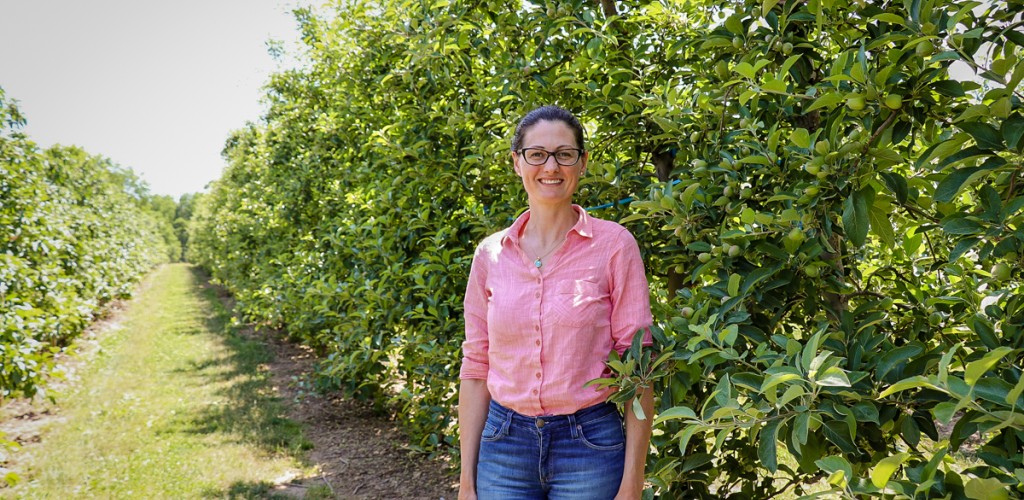
Poliana Francescatto has been named one of the nation’s top young researchers in the fruit and vegetable industries by Fruit Growers News.
The Cornell research associate was recognized as a next generation leader in the “40 under 40” category. She was lauded for her studies on the use of plant growth regulators to improve orchard management of temperate tree fruit crops for the benefit of New York state tree fruit growers.
Along with her research trials in orchards at Cornell, she works directly with growers in New York on practical applications they can use to modernize fruit production practices.
She joined the College of Agriculture and Life Sciences in 2015 as a postdoctoral researcher with Terence Robinson, professor in the Horticulture Section of the School of Integrative Plant Science.
Based at the New York State Agricultural Experiment Station in Geneva, New York, her program seeks new, efficient and profitable strategies to improve and standardize fruit orchard practices to deliver more uniform, high-quality fruit, according to Francescatto.
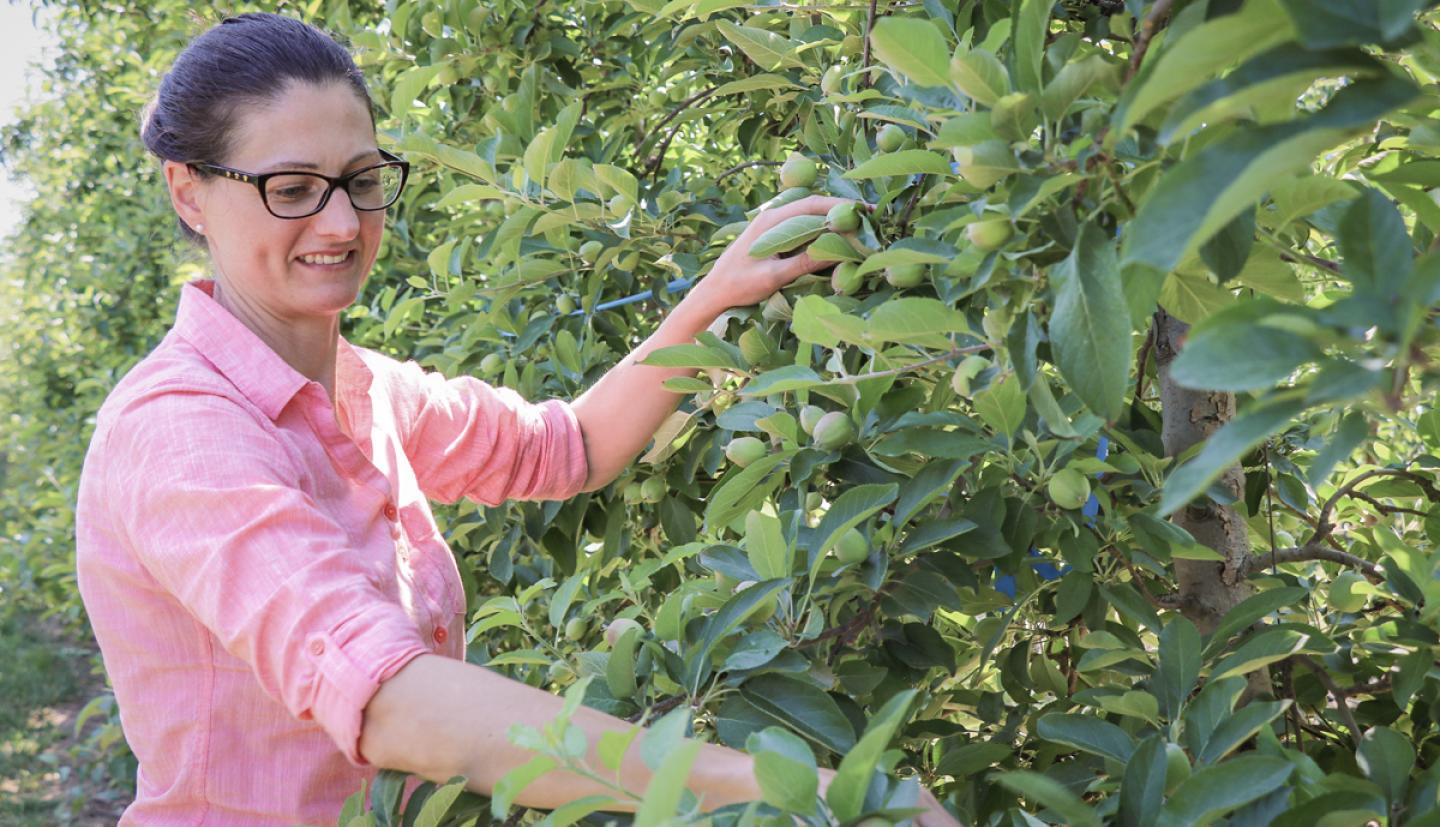
As an applied fruit physiologist, she focuses on how plant growth regulators and crop load management can be used in the orchard. Her program focuses on pome fruits like apples and pear, and stone fruits, like cherries and peaches. Her research priority areas have focused on fruit thinning, improved fruit finish and flower bud formation.
“I grew up in an apple growing family in Brazil, and my parents continue to be growers today,” said Francescatto. “Because of that, I understand the impact research has on bettering people’s livelihoods and how it improves fruits delivered to consumers. This award means more than words can describe.”


