While most social media users want their chosen social platforms to be free from harassment and pornography, they also want to view the content they choose to see.
But content moderators – those who censor or promote user-posted content – have never been more important or controversial. In his new book, “Custodians of the Internet: Platforms, Content Moderation, and the Hidden Decisions that Shape Social Media,” Tarleton Gillespie investigates how social media platforms police what we post online, and the large societal impact of these decisions.
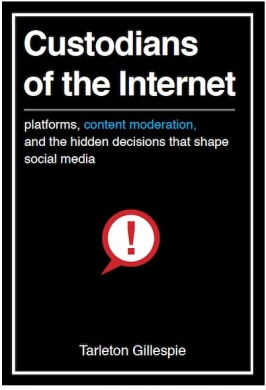
Custodians of the Internet
Gillespie, adjunct associate professor in the Department of Communication and in the Department of Information Science, writes that content moderation receives too little public scrutiny even as it shapes societal norms and creates consequences for public discourse, cultural production and the fabric of society. Based on interviews with content moderators, creators and consumers, the book contributes to current debates about the public responsibilities of platforms, from data privacy to political propaganda.
“I have been writing about the impact of platforms and the digital transformation for 15 years,” said Gillespie. “This book explains how content moderation works: from how the platforms think of their responsibilities, to the way they create and articulate the rules, to the labor behind the scenes, to the efforts to automate it all. Content moderation has never been ancillary and after-the-fact; it is crucial and definitional to what platforms do. Given that fact, what are those companies’ responsibilities?”
Gillespie is a principal researcher at Microsoft Research New England. He co-founded the blog Culture Digitally. His previous book is the award-winning “Wired Shut: Copyright and the Shape of Digital Culture.”