

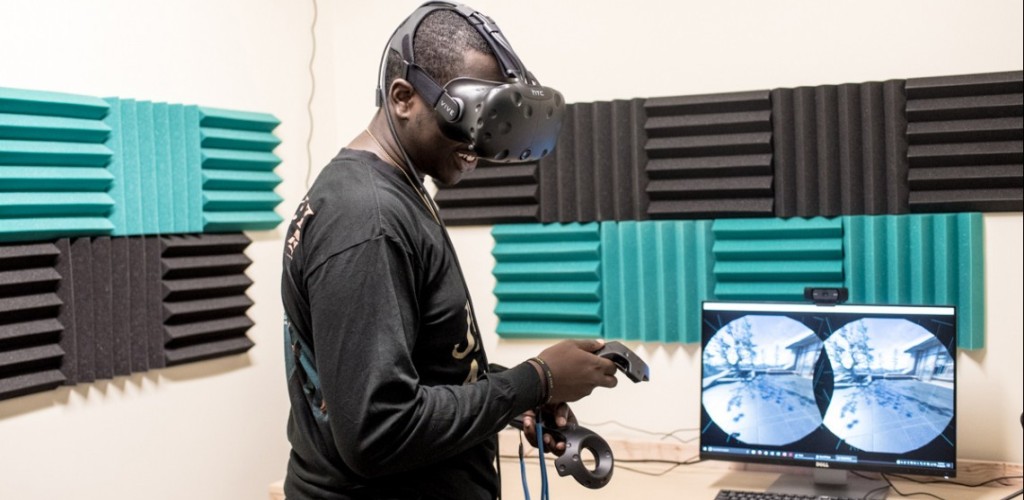
The mannUfactory is a place where any person can find the tools to make just about anything.
Cornell University Library’s makerspace, in 112 Mann Library, offers Cornellians and Ithaca College students and community members the use of equipment ranging from cutting-edge devices for 3-D printing and virtual reality to low-tech supplies like yarn, buttons and glue.
It’s also a collaborative space where people can come together and exchange knowledge, whether they’re producing an item for a class project, as part of their research or just for fun. It’s open to all, regardless of college, major or Cornell affiliation.
“Everybody needs creativity. Everybody needs to experiment, and everybody needs to learn how to try and to fail,” said Camille Andrews, Mann Library’s emerging literacies librarian. “The makerspace introduces people to various tools and technologies they might not otherwise encounter.”
The mannUfactory will celebrate its grand opening Feb. 1 from 2:30 to 4 p.m., with food, making activities and a virtual reality demonstration.

Among the tools and software available in the makerspace are soldering kits, sewing machines, mini-computing kits such as Arduinos and Raspberry Pis, hand tools, large-format printing on materials such as fabric or vinyl, and video and audio editing equipment. Use of the equipment is free, except for 3-D and specialty poster printing and the making of more than 20 buttons.
The mannUfactory is open for walk-in hours from 2 to 7 p.m., Monday through Thursday. Patrons can also schedule consultations if they are interested in building skills in a specific area; workshops will be held throughout the semester.
Melanie Lefkowitz is staff writer, editor and social media coordinator for Cornell University Library.


