

Olaf F. Larson, a pioneer in rural sociology research in the 1930s and a Cornell faculty member for 71 years, died Nov. 14 in Mount Dora, Florida. He was 107 years old and had been Cornell’s oldest living emeritus professor.
During a telephone interview last summer, Larson was asked to explain his longevity and quipped: “That’s a secret.” And then he laughed, before providing ideas on living a long life.
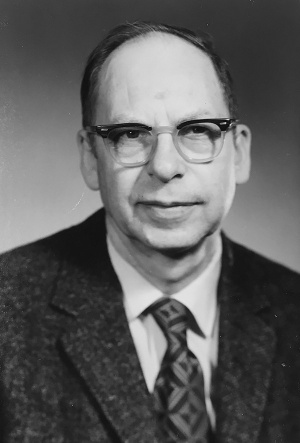
Larson joined the Cornell faculty in the Department of Rural Sociology (now the Department of Development Sociology) in 1946 as an associate professor, rising to full professor in 1949; he served as department chair for 11 years, from 1957 to 1966.
Twice a Fulbright scholar, he also directed Northeast Regional Center for Rural Development. In 1954, he was voted into the Sociological Research Association, and was among the first members of the Rural Sociological Society. In the early 1960s, he helped to organize the first World Congress of Rural Sociology.
He co-authored a book “Sociology in Government: The Galpin-Taylor Years in the U.S. Department of Agriculture, 1919-1953” (2003), with Julie Zimmerman, Ph.D. ’97.
Larson published two books after age 100: “Opening Windows Onto Hidden Lives: Women, Country Life, and Early Rural Sociological Research” (2010), with Zimmerman and his autobiography, “When Horses Pulled the Plow” (2011).
Before joining Cornell in 1946, Larson worked as a regional sociologist for the Division of Farm Population and Rural Life for the U.S. Department of Agriculture’s Bureau of Agricultural Economics, where he conducted research on low-income rural families. He had been an assistant and an associate professor at Colorado State University from 1935 to 1938.
He earned a bachelor’s (1932), a master’s degree (1933) and a doctorate (1941) all from the University of Wisconsin, Madison.
Larson was born Feb. 26, 1910, on his parents’ farm in Fulton, Wisconsin. He is survived by two sons.


