

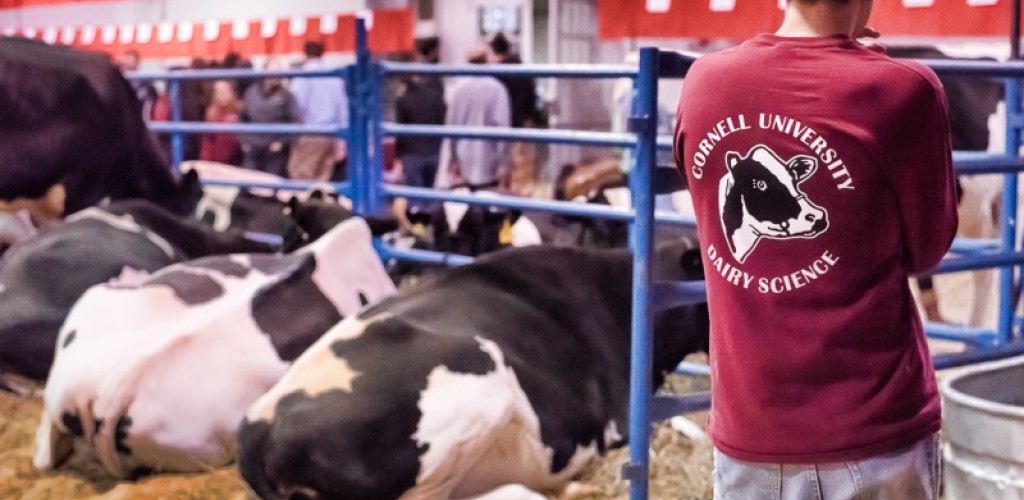
Cornell animal science students are throwing open the barn doors Friday, Nov. 3 to teach the public about the dairy industry and the animals that make it all possible.
Dairy Day, a free event held twice a year by students in the Cornell University Dairy Science (CUDS) Club, will take place 5:30-7:30 p.m. in the Livestock Pavilion on Judd Falls Road near Stocking Hall.
About 100 cattle will be at the event as CUDS members teach visitors how cows are fed and managed on a modern dairy farm. Those in attendance can watch cows being milked and ask students questions about dairy farming. Informational displays about dairy nutrition, bedding, milking processes, and the production of dairy foods will be shown by students, and there will be trivia and dairy samples at this family-friendly event.
“Now more than ever people care about how their food is made and where it comes from,” said Madison Stevens ’18. “With Dairy Day, we want to show people what cows, farming and farmers themselves are like.”
Dairy is a major component of the New York agricultural economy. There are more than 621,000 dairy cows in the state, which surpasses the human populations of Buffalo, Rochester and Syracuse — combined.
“Often people outside of agriculture don't have the opportunity to get a first-hand perspective of dairy, and we want to give them the chance to understand how milk is made and the exceptional care that farmers take of their cows,” Stevens said.


