

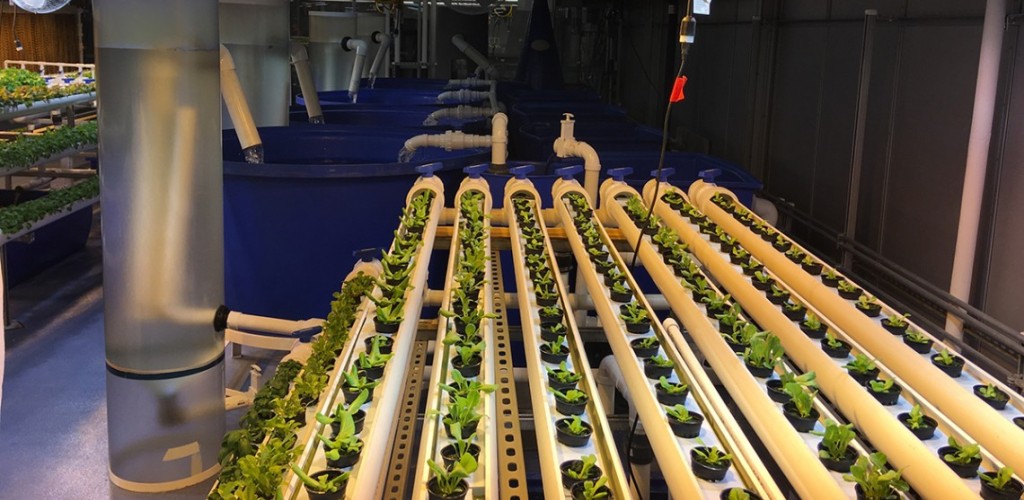
Atop a roof overlooking Manhattan’s skyline at sundown Oct. 25, more than 300 public officials and proud parents of Food and Finance High School students toured a first-of-its-kind aquaponics greenhouse.
Philson A.A. Warner, founding director of the Cornell Cooperative Extension – New York City (CUCE-NYC) Hydroponics, Aquaculture, Aquaponics Learning Lab, offered lively, personal tours of the newly opened greenhouse. The structure is used to grow lettuce and fish through a natural process that conserves energy and the environment.
“The youngsters learn to do more with the sciences,” Warner said of his teenage students, whom he called “Cornell colleagues.”
Eight computers monitor “the weather situation above us,” to help control indoor temperatures, moisture and ideal humidity for growing vegetables, Warner said.
“This is what we call a green, green, green greenhouse,” he said, noting it produces “clean, safe, fresh foods. ... Nothing goes to waste.”
Even its solar panels are producing surplus energy that is fed into the grid.
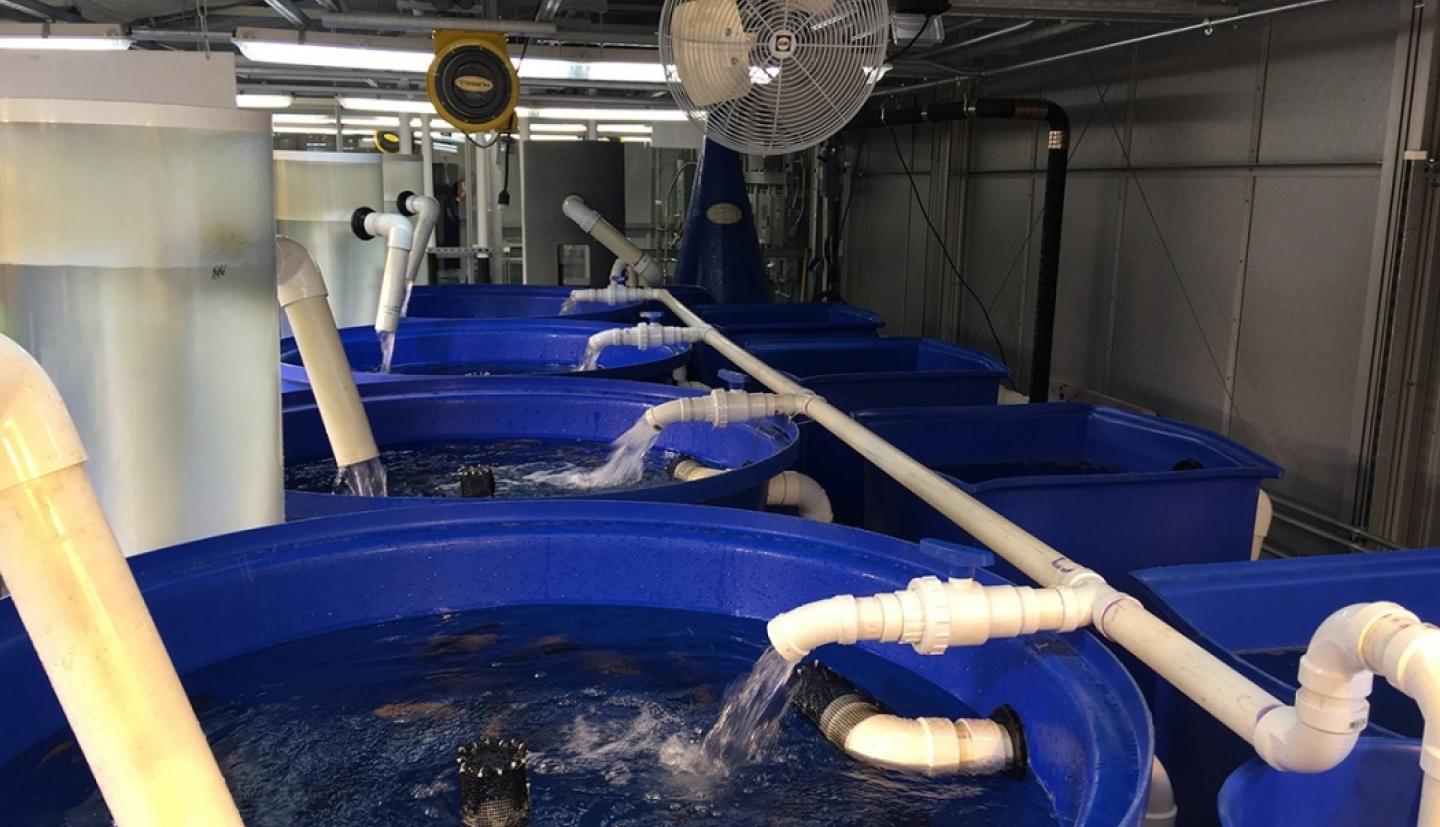
Heads of lettuce that can take up to 10 weeks to grow outdoors are cultivated in just three weeks at the school on West 50th Street. About 8,000 pounds of tasty fish spawned monthly are another benefit of the scientific project.
As part of the greenhouse’s grand opening ceremony, dozens of high school students greeted guests and served crab cakes, vegan meatballs, fancy desserts and other hors d’oeuvres that they cooked in the school’s kitchens.
Jennifer Tiffany, Ph.D. ’04, executive director of CUCE-NYC, heaped praise on everyone who helped produce the hands-on learning environment and thanked the “brilliant students” who served as caterers and provided warm hospitality for the event.
“What an amazing, amazing community of young people,” Tiffany said during the ceremony.
Warner designed the 1,664-square-foot greenhouse, which is now part of the New York City Department of Education’s Park West Educational Campus. The project was financed through private donations, the New York City Council and the Manhattan Borough President’s Office.
Manhattan Borough President Gale Brewer said she was very proud to have been instrumental in approving and helping secure public and private funding for the project. “You are training people for the future,” she said.
“You could be in the Bronx and they are talking about the fish” produced at the Manhattan high school, Brewer gushed. “Without Cornell, this would not have been possible. This is a very exciting project.”
The Food Education Fund, a nonprofit foundation, also has been a key partner in developing and sustaining the learning labs. Nan Shipley, chair of the board of the Food Education Fund, proudly pointed out that the Food and Finance High School has a 91 percent graduation rate, with most of its students advancing to college or full employment in related fields.
About 400 students are enrolled at Food and Finance High School. The school’s curriculum includes paid internships at restaurants and other food service businesses. The opening of the greenhouse marked the latest expansion of ongoing learning lab programs in a long-standing partnership with Cornell University.
Jon Craig ’80 is a writer based in New York City.


