John Wallace
John Wallace, assistant professor, School of Integrative Plant Science, Horticulture Section
Academic Focus: sustainable weed management in vegetable and fruit crops
Previous Positions: post-doctoral scholar, Weed Ecology and Management Lab, Pennsylvania State University, 2013-17; research support scientist, Invasive Plant Ecology and Management Lab, University of Idaho, 2005-13
Academic background: B.S., Turfgrass Science, Pennsylvania State University, 2002; M.S., Environmental Science, University of Idaho, 2005; Ph.D., Environmental Science, University of Idaho, 2013
Last book read: “The Slow Professor: Challenging the Culture of Speed in the Academy” by Maggie Berg and Barbara Seeber
In his own time: Raising three young girls with my wife takes up most of my time, but I enjoy hunting, fishing and playing music when I get the chance.
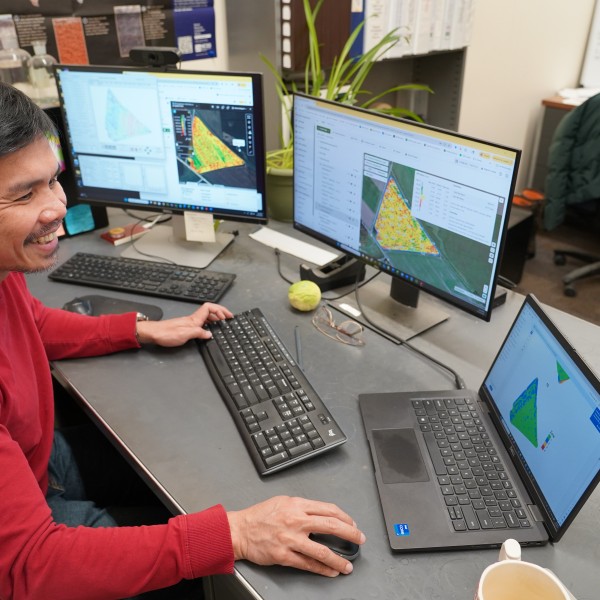
Current research project: Most of my research focuses on developing integrated weed management strategies that are compatible with the goals of conservation agriculture.
What most excites you about Cornell CALS: The opportunity to work with a lot great people in the School of Integrative Plant Science and the diversity of agricultural production systems in the state of New York.
► Meet all our new faculty