Cornell is No. 14 among the world’s universities in the 2018 QS World University Rankings, released June 7.
That is two spots up from last year’s ranking of No. 16. And it is up five rungs from its No. 19 ranking in 2015.
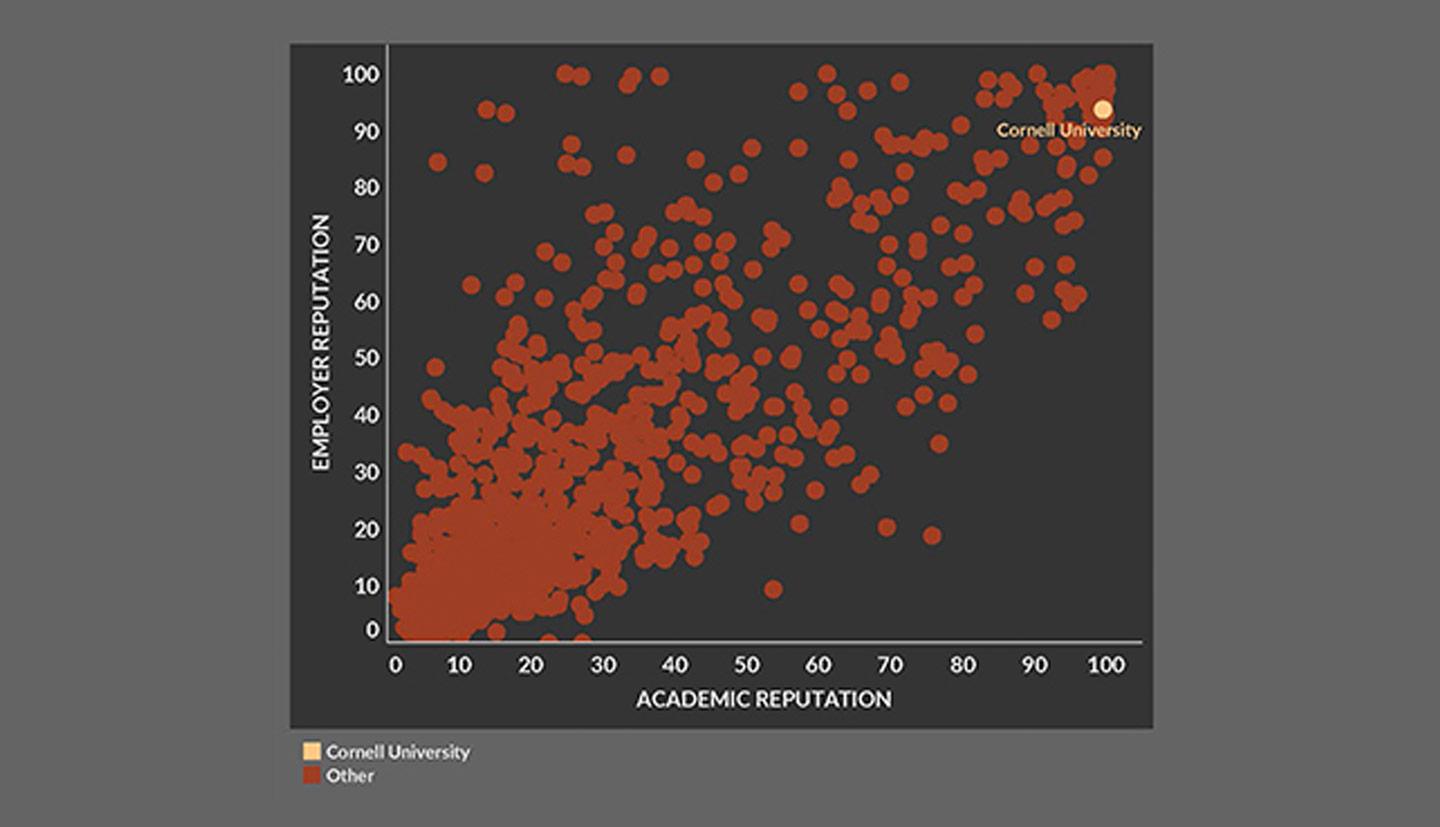
QS analyzed over 75 million citations from more than 12 million papers, 115,000 survey responses from employers and academics, and considered more than 4,000 universities before evaluating 980 of them.
Of those 980, Cornell ranks in the top 2 percent. Considering there are about 26,000 universities globally, Cornell ranks in the top 1 percent of universities in the world, according to QS.
The annual rankings are based on six indicators:
- academic reputation, worth 40 percent of the score;
- citations per faculty, 20 percent;
- student-to-faculty ratio, 20 percent;
- employer reputation, 10 percent;
- international faculty, 5 percent; and
- international students, 5 percent.
The latter two indicators are proxy measures for how attractive the institution is to international faculty and international students.
QS weighted the academic reputation indicator most heavily. That indicator was Cornell’s strongest of the six measures, earning a score of 99.6 out of a possible 100. Cornell gained the most ground compared with last year in its international students indicator, scoring 79.2.
Overall, Cornell earned a score of 90.7 out of a possible 100.
Earlier this spring, QS released its 2017 subject area rankings, in which Cornell’s veterinary science programs were ranked No. 2 in the world, and its agriculture programs were ranked No. 3.
Other Cornell subject areas in the top 20 included: hospitality and leisure management, No. 11; biological sciences, No. 14; statistics and operational research, No. 16; English language and literature, No. 19; environmental sciences, No. 19; and politics and international studies, No. 19. Cornell’s subject area rankings can be found here.