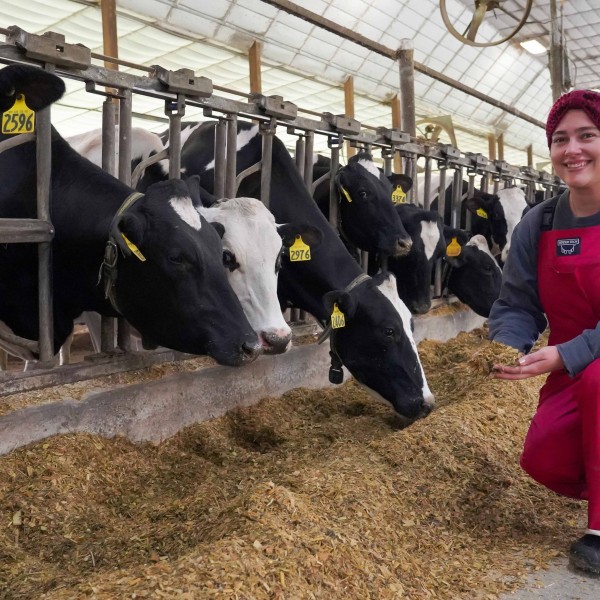
Cornell animal science students are on a winning streak, earning first place at the North American Intercollegiate Dairy Challenge for the second year in a row.
Seniors Grant Feldpausch, Lauren Hill, Clyde Sammons, and Jamie St. Pierre competed along with 34 other university groups at this year’s challenge, held March 30-April 1 in Visalia, CA. Animal science professor Mike Van Amburgh and Ed Facer '16 coached the team drawn from students in the Cornell Dairy Fellows Program. The seniors in the program are responsible for choosing the team to represent them at this prestigious competition.
“Our Dairy Fellows Program prepares our students to compete in the challenge while at school and then, once they graduate, to be leaders in the technologically advanced and complex U.S. and global modern dairy industry,” Van Amburgh said.
The challenge activity allows students to integrate their understanding of management, nutrition, facilities, and economics to develop thoughtful and forward-thinking solutions to improve dairy farm profitability and productivity. The teams were evaluated on the quality of their farm analysis presentation by a panel of five judges, including dairy producers, veterinarians, finance specialists, and seasoned agribusiness personnel.
Dairy students from the U.S. and Canada competed to improve their dairy management skills in key areas like reproduction, nutrition, cow comfort, and milking protocols. The competition provided networking opportunities with other students and industry experts, and is sponsored by agribusinesses that support the overall dairy industry.
Last year, a Cornell team took first place at the competition held in Syracuse.