Wait your turn, cows. Cornell now milks the sun for energy. The university formally opened three additional solar farms in December that will generate large amounts of electricity and help the campus achieve its carbon neutrality goals.
“We’re making substantial, meaningful progress on Cornell’s Climate Action Plan – and one way is to obtain more electricity from solar power,” said Sarah Zemanick, director of the Campus Sustainability Office.
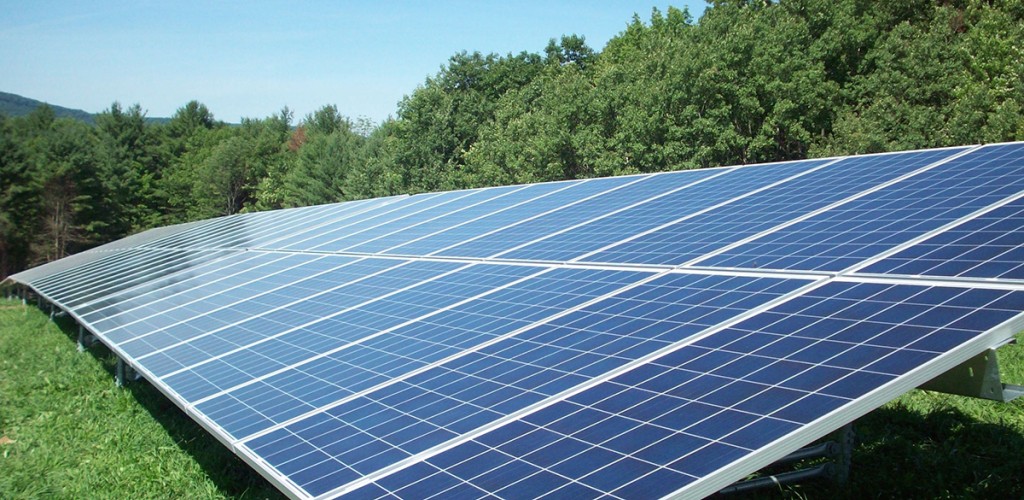
One of the new solar farms is located at Cornell’s Ruminant Center in Harford, New York – home to about 500 research cows and other farm animals. Sited on poor agricultural land, the facility, which opened Dec. 20, features 20 acres of 9,333 photovoltaic panels that annually will produce 3.2 million kilowatt hours and reduce greenhouse gas emissions by 610 metric tons.
The two other solar farms went live Dec. 30 at the Cornell Agricultural Experiment Station at Musgrave Research Farm in Ledyard, New York. The combined Musgrave East and Musgrave West facilities, each with 9,044 photovoltaic panels, will produce about 6.5 million kilowatt hours annually, reducing greenhouse gas emissions by 1,220 metric tons.
With the new arrays, plus Cornell’s Lansing and Geneva solar farms that opened in 2014 and 2015, respectively, solar power is providing 7 percent of the campus’s electricity needs.
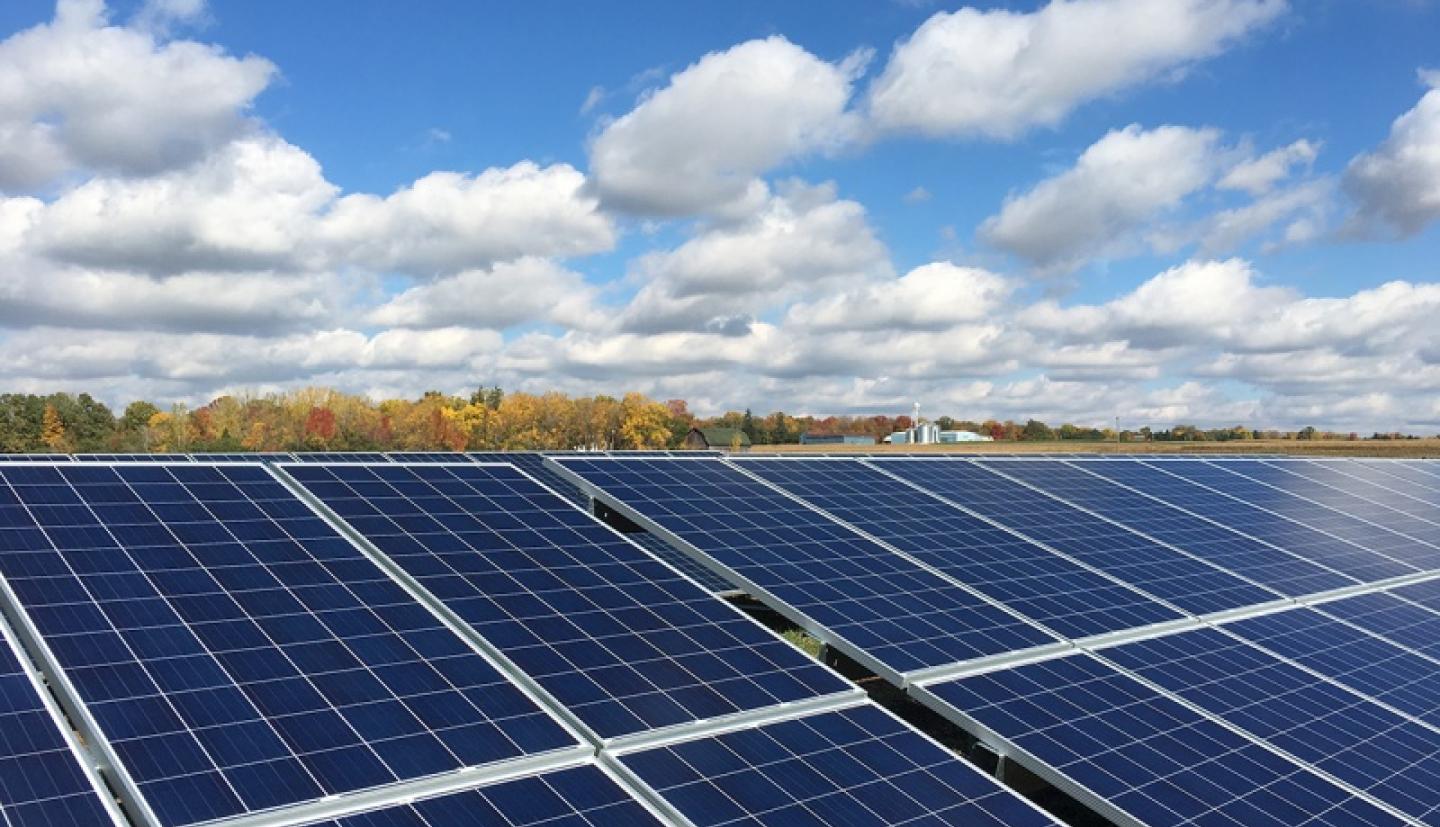
Due to net-metering (where Cornell gets credit for generating electricity) rules and tariffs, peak output to the electric grid for solar farms in New York is capped at 2,000 kilowatts of alternating current, or AC. At the new solar farms, the direct current (DC) generation capacity is at nearly 3,000 kilowatts, allowing the solar farm to capture more off-peak, early morning and late evening sunshine than in previous Cornell projects.
“Our project design allows us to make more electricity during less-productive hours of the day, which in turn, helps to capture more energy,” said Matt Kozlowski of Cornell Infrastructure Properties and Planning, who managed the project.
In addition to helping meet Cornell’s sustainability goals, the new solar arrays align with the Southern Tier’s regional plan to reduce carbon emissions and strengthen the local economy, said Zemanick. Also, the solar farm projects are helping meet New York state’s ambitious Clean Energy Standard.
About 20 percent of the funding was provided by the New York State Energy Research and Development Authority grant, with the remaining cost financed by private investors. Private developer Distributed Sun and Building Energy Asset Management will own and operate the arrays. Cornell will purchase the solar farm’s electricity through an agreement with the company.