

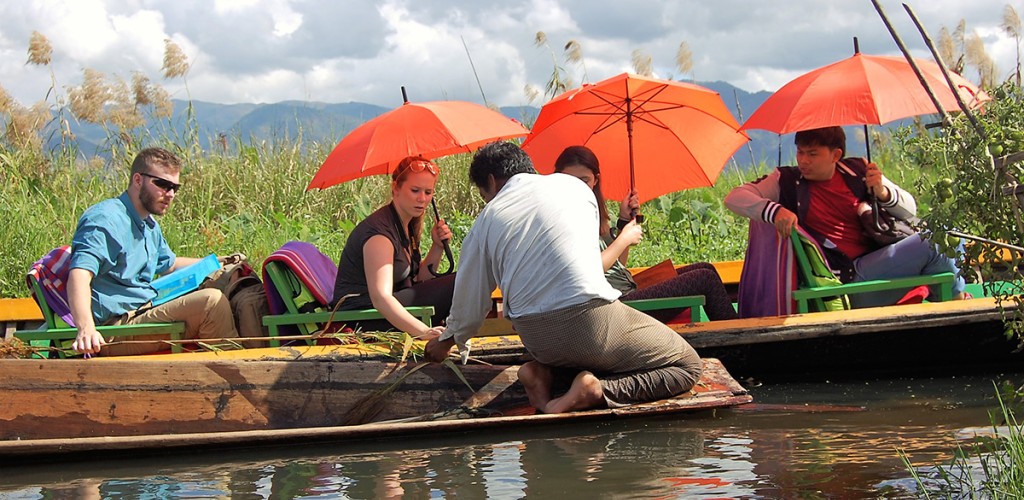
For the first time, 29 students in the International Agriculture in Developing Nations course had the opportunity to undertake a field study tour of Myanmar Jan. 1-16. It was the 49th class trip, through which students have visited Puerto Rico, Dominican Republic, Mexico, Costa Rica, Honduras, and India.
“We decided to go to Myanmar this year because of the enormous changes underway in the country,” said Ronnie Coffman, international professor of plant breeding at Cornell and director of International Programs in the College of Agriculture and Life Sciences. “Agriculture plays an important part in this emerging economy, and this trip enabled students to see, firsthand, the challenges and opportunities faced by farmers.”
The group surveyed a range of agroecologies and production environments, traveling throughout the central dry zone, Inle Lake, and Ayerwaddy Delta. Meetings with farmers gave students insight into various cultivation systems, from hydroponic tomato farming to small-scale melon production, while visits to agribusinesses highlighted the increasing trade and knowledge exchanges between Myanmar and its neighbors. The group also learned about alternative livelihoods, such as lotus weaving and lacquerware manufacturing, and engaged in Myanmar culture with visits to pagodas, temples, and traditional puppet shows.
Twelve Burmese students from Yezin Agricultural University, Pathein University, University of Yangon, and University of Medicine 2, Yangon, also participated in the trip, along with representatives from the Myanmar Institute for International Development.
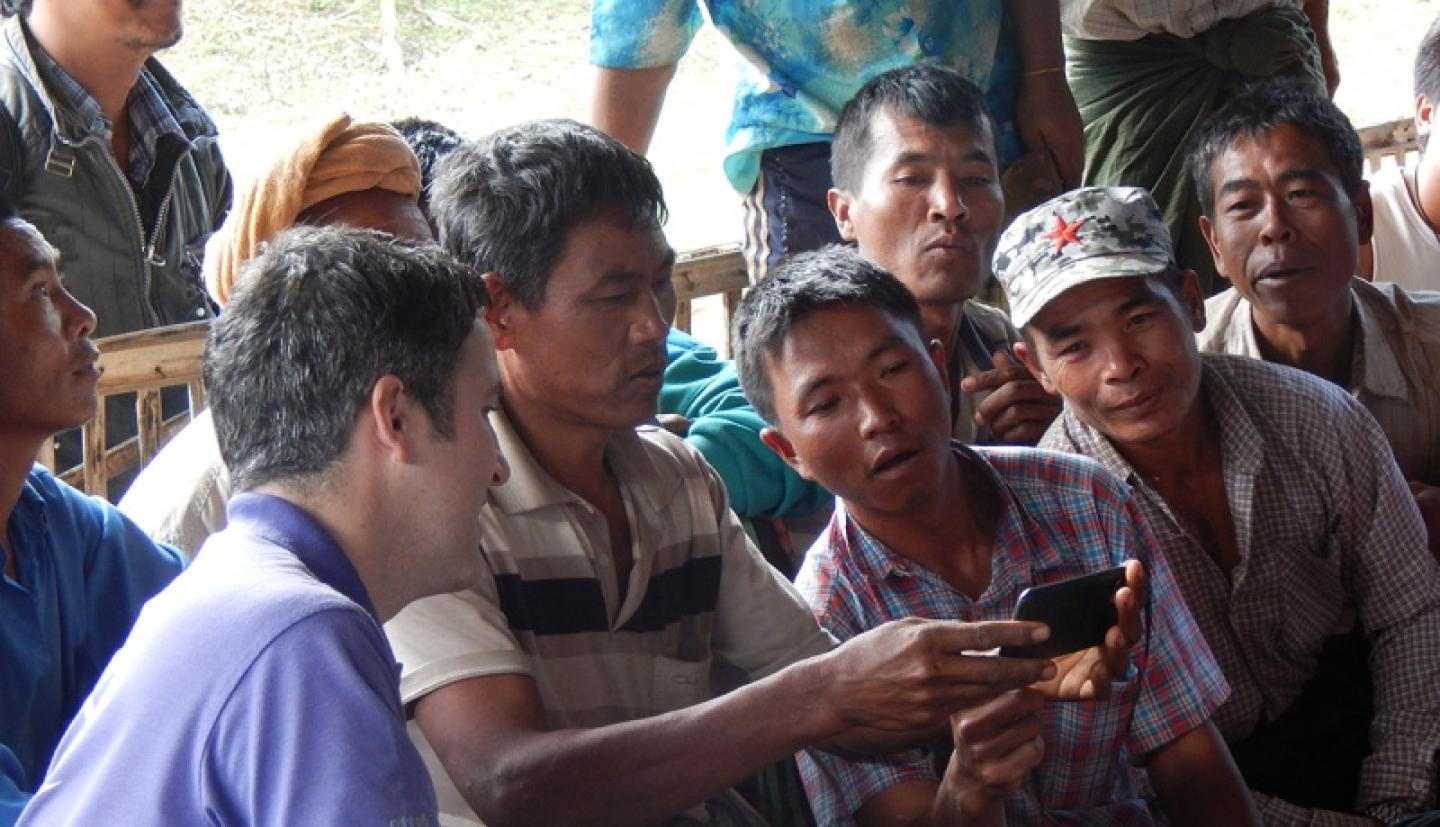
“I had a lot of fun exchanging knowledge and cultural experiences with the Cornell students,” said May Thu, a master’s student in pharmacology at Pathein University. “Agriculture and rural development is not my major, but I gained a lot of new, useful knowledge.”
After spending the fall semester learning about Myanmar in class, Cornell students gained new insights on the ground. “It’s one thing to be sitting in a classroom discussing shifting rain patterns and projected yield losses in a place like Myanmar, but an entirely different thing to be sitting in front of 20 farmers who have all patiently gathered to meet you and welcome you to their community and realize that their livelihoods depend on consistent rainfall,” said Jesse Puka-Beals ’18, a Cornell agricultural sciences major.
Students will complete papers and presentations on their trip, in continued partnership with the Burmese students, and they maintain a class blog. The 50th class trip in 2018 will take place in India, with plans to return to Myanmar in 2019.
Emma Quilligan is a Master of Public Administration student in international development.


