This holiday season will be even merrier — and warmer — for nearly two dozen Geneva school children thanks to Cornell’s New York State Agricultural Experiment Station (NYSAES).
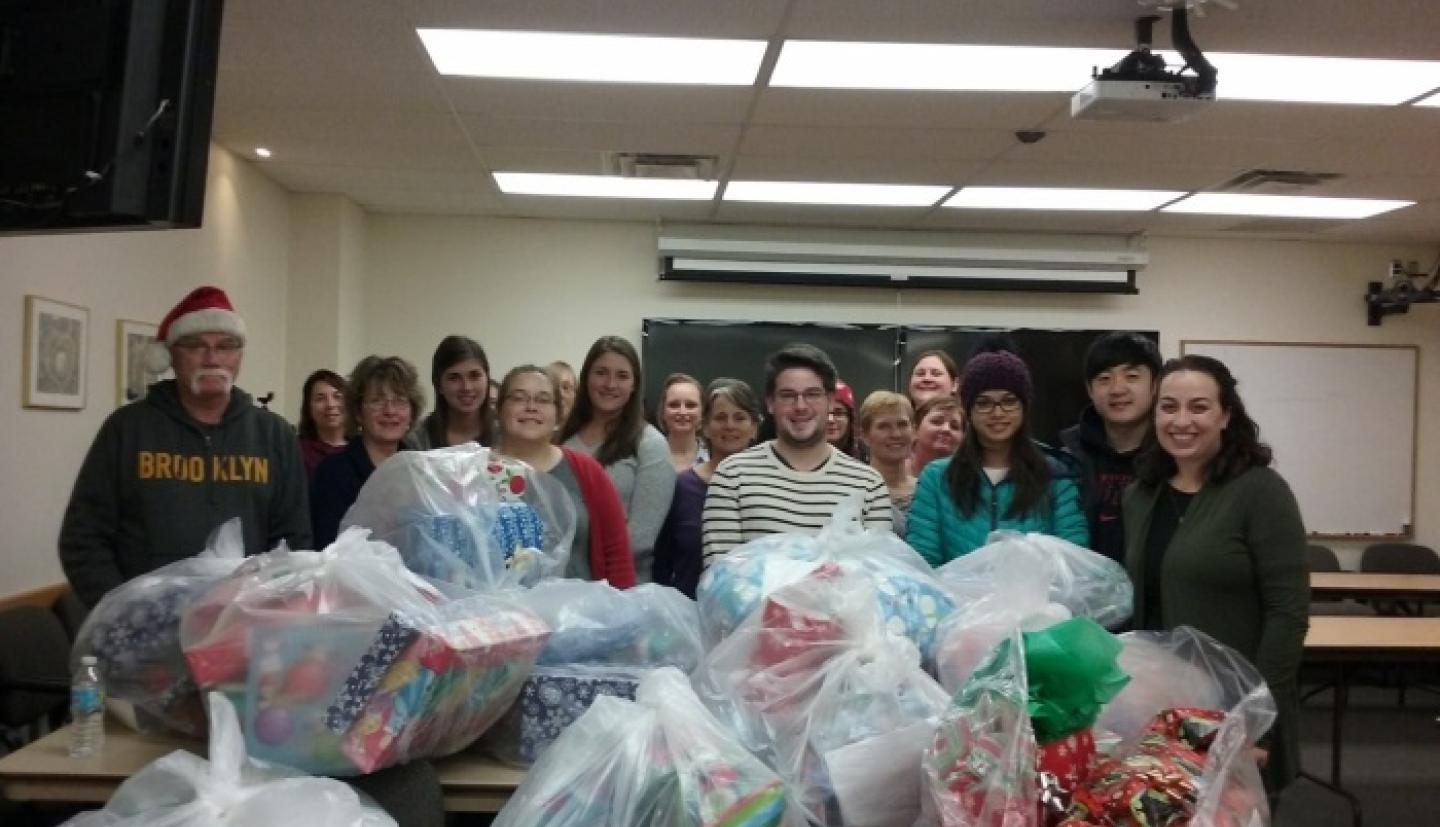
Members of the Station community sponsored 23 children from 12 families in the Geneva City School District as part of the Cornell University Elves Program. The Elves Program was founded in 1989 to benefit elementary school students who are in greatest need.
This is the 5th year members of NYSAES have taken part in the program by providing local children with a new outfit of clothes, pajamas, a winter hat, gloves, and a toy.
The support comes from across the Geneva campus: staff, faculty, students, including those in the Student Association of the Geneva Experiment Station (SAGES), as well as members of the New York State Integrated Pest Management and the U.S. Department of Agriculture Agricultural Research Service based in Geneva all took part.
This year the community also purchased new boots and winter coats for almost all of the children, said Beth Demmings, a postdoctoral associate and VitisGen project manager.

“Each year I am blown away by the overwhelming generosity of this small campus to support families in the greater community of Geneva,” said Demmings, who co-coordinated this year’s event with Jessica Townley.
Station members wrapped the gifts on Dec. 14 during a lunch hosted by the office of Susan Brown, the Goichman Family Director of the NYSAES and the Herman M. Cohn Professor of Agriculture and Life Sciences.
All of the gifts will be delivered to West Street School this week.