

Cornell University has been selected to host the national 2019 Science Olympiad, which will bring 2,500 high school students from across the U.S. – budding scientists, all armed with a love of learning – to detect diseases, launch helicopters and ruminate about rocks in a weekend-long competition.
The Science Olympiad is a national group that aims to boost science education in elementary and secondary schools. The group develops the foundation for an educated workforce, by creating technologically literate scholars through science tournaments.
In the three-decade history of Science Olympiad, Cornell will become the first Ivy League school to host the group’s top tournament.
“Science Olympiad is an incredible confidence booster. For high school student participants, it provides so much experience and so much learning, it’s something that you can’t take away,” said Alessandra Taboada ’18, co-chair of the Cornell Science Olympiad student club. “Working as a volunteer, you get to see the high school students bloom. They don’t even know what they’re capable of – and then they do it.”
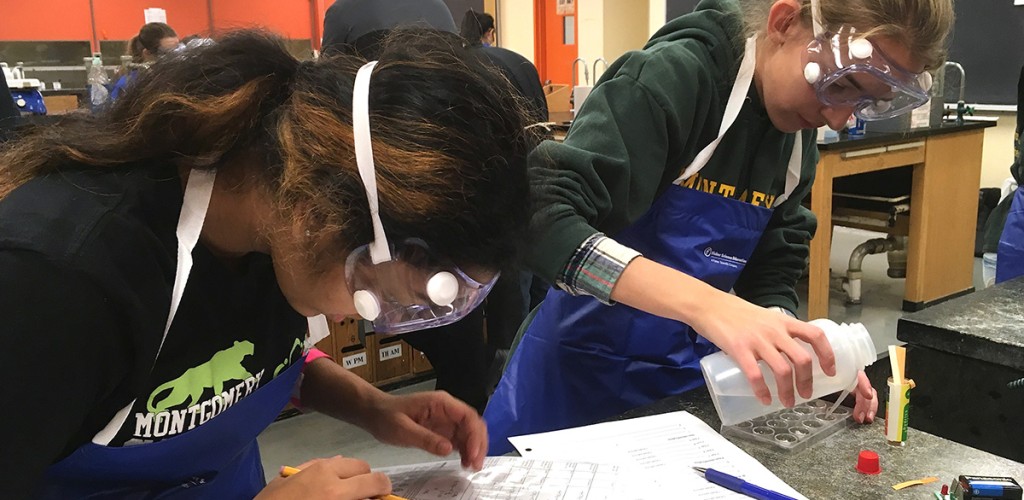
Cornell hosted a regional invitational Science Olympiad tournament Dec. 3, where about 800 students from eight states competed in 25 competitive categories that ranged from anatomy to wind energy.
In the hovercraft competition, for example, students built vehicles to float on air and speed down a track. For the helicopter competition, they designed balsa wood frames featuring Mylar rotor blades – all powered by rubber bands.
Savvas Papadopoulos ’18, the Cornell club’s co-chair, recalls launching a self-propelled balsa wood plane during his first Science Olympiad tournament experience. “I’d lie on the floor and watch it go around,” he said. “The feeling that you get to know that you built that – and then won this, this and this – is absolutely incredible. It’s a great opportunity for these students to experience science. It shaped my major choice – engineering.”
Papadopoulos pointed out that nothing is perfect. Students learn from testing, retesting and making mistakes. “You make a lot of friends in Science Olympiad – but things sometimes go wrong and the students all laugh about it and savor their experiences.”


