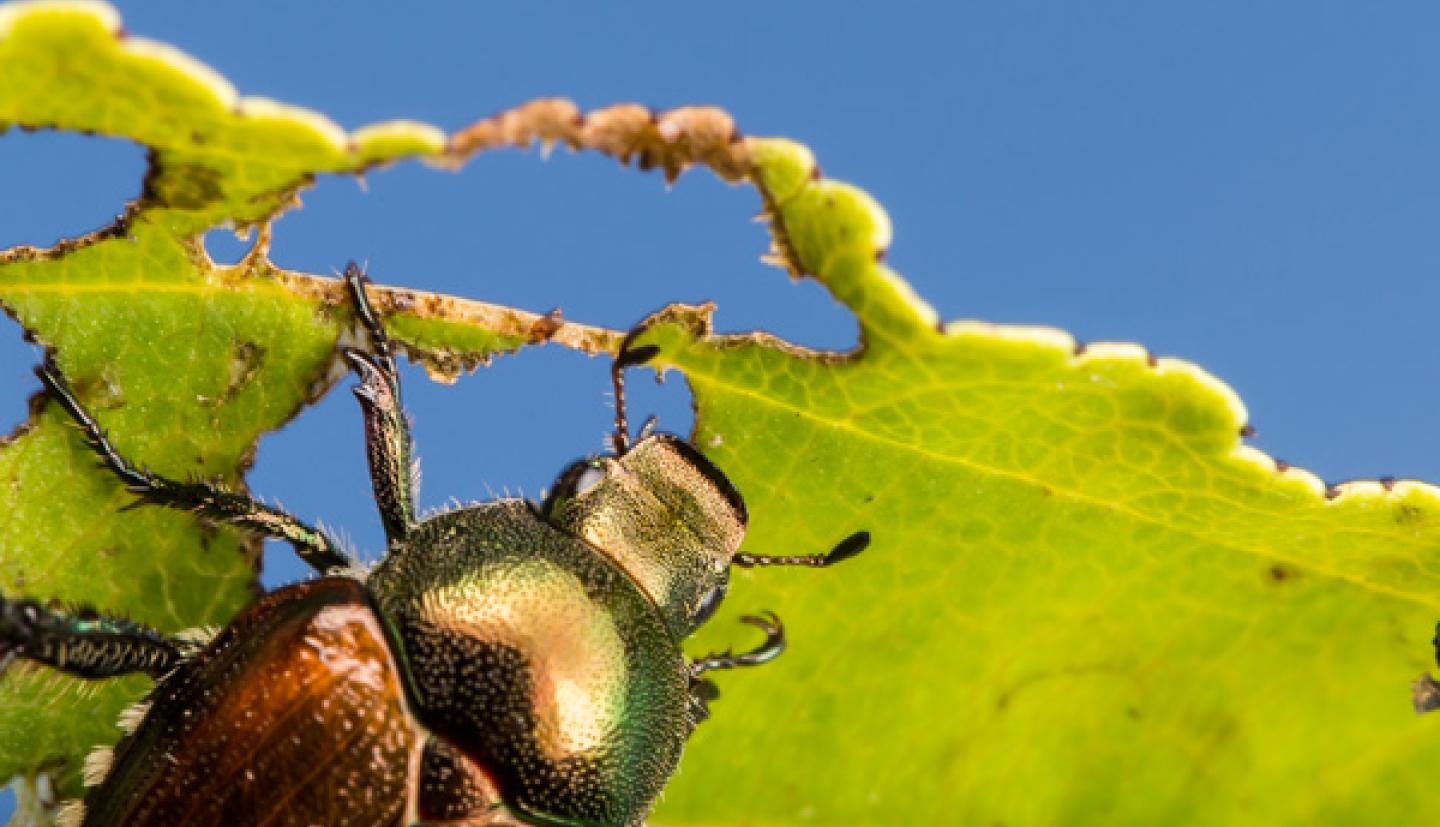
Pest control doesn’t always mean pesticides. William Wetzel, a postdoctoral researcher in the Department of Entomology, found that a varied crop in agricultural ecosystems can deter pests, pointing to potential ways to deter problem insects without relying on pesticides.
Wetzel’s article "Variability in plant nutrients reduces insect herbivore performance," published today in Nature, explores why natural ecosystems with high plant diversity have fewer plant-feeding insects compared with agricultural systems.
Wetzel examined the physiological data for 53 species of insects and found that insects have narrow ranges of nutrient levels at which they thrive. When certain insects encounter monoculture fields typical of modern agriculture, they tend to do well if the crop has an optimal nutrient level for that insect. When insects are in a more natural system loaded with feeding options containing nutrient levels outside the optimal range, the insects do surprisingly poorly.
Wetzel likens this to a buffet—when the insect repeatedly finds something it likes, it thrives, but if the buffet has too many options that the insect doesn’t like, it does poorly. The results, according to Wetzel, indicate that insects in a variable population of plants are harmed much more by low quality plants with the wrong nutrient levels than they are benefited by high quality plants with the high nutrient levels.
“From the perspective of natural ecosystems, this means that plants suppress their insect enemies by being variable, not just by being low quality on average as is typically thought,” Wetzel said. “For agriculture, this means that planting fields with higher plant nutrient variability could contribute to sustainable pest control.”