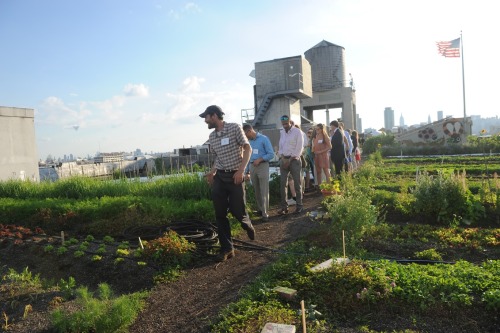
The skyline view from Brooklyn Grange’s rooftop is delectable, but fresh organic produce from the organization’s one-acre rooftop Flagship Farm is even more delicious.
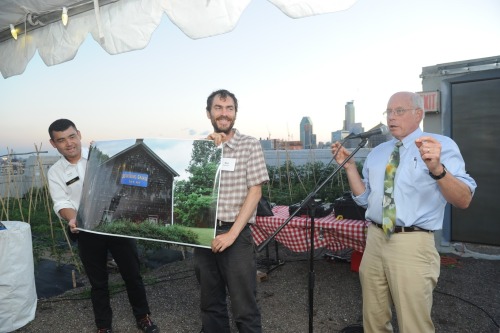
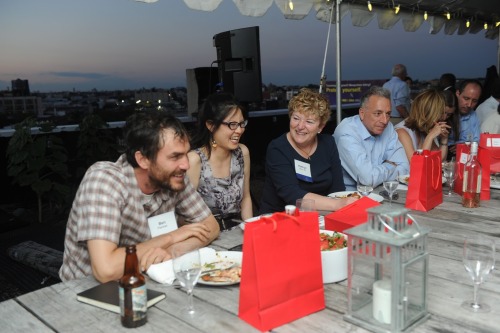
Director David Lodge and ACSF faculty fellows joined with the College of Agriculture and Life Sciences on June 29 for a farm-to-table dinner showcasing Cornell’s work on local food systems and sustainable agriculture. More than 50 Cornell alumni and friends toured the facility and learned about Brooklyn Grange’s successful model for urban farming and collaborations with Cornell researchers.
Brooklyn Grange grows more than 50,000 pounds of organic produce each year at the world’s largest rooftop soil farms, located on two roofs in New York City, and distributes the vegetables and herbs to local restaurants, CSA members, and the public. Since its founding in 2010, the organization has become the United States’ leading green roofing business, providing urban farming and green roof consulting and installation to clients worldwide.
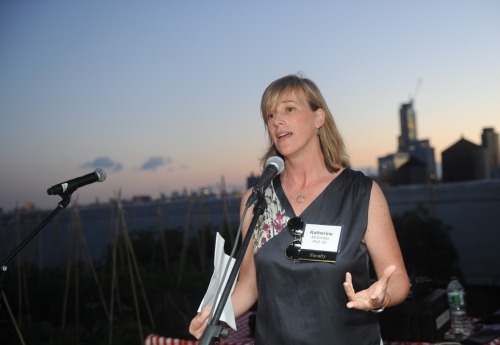
Brooklyn Grange operates at the intersection of sustainable agriculture, economic and environmental sustainability, and urban resiliency—all top research concerns for the Atkinson Center. After dinner, plant ecologist Thomas Whitlow gave a presentation about engaging communities in urban horticulture. Sustainable communities expert Katherine McComas closed the evening. She remarked:
Tonight provided a taste of the innovative and impactful partnerships that are transforming the world around us in profound ways—the partnership that here, tonight, has helped to create new spaces for food, agriculture, sustainability, education, and community development right in the center of our most urban environments.
The event was hosted by Cornell’s Northeast Corridor Alumni Affairs and Development program. Event photos provided by Diane Bonderaff Photography: