A team of Cornell food science students developed a new beverage combining the smooth texture of drinkable yogurt with mint-flavored pearls that pop in the mouth. Their creation, dubbed “Yojito,” has won the grand prize at a prestigious product development competition.
Michelle Duong, Belen Vila, Linran Wang and Jiyu Zhu took home top honors and a $10,000 prize at the Idaho Milk Processors Association (IMPA) Conference Aug. 14 in Sun Valley, Idaho.
Their product, Yojito, is a lime drinkable yogurt with mint popping boba. Most often associated with the tapioca pearls found in bubble tea, popping boba are small, edible spheres made from fruit juice concentrate or flavor extracts. Inspired by the mojito, the product is a dairy drink packed with protein and other nutrients that combines the refreshing flavors of mint and lime.
But it’s the popping boba that really makes the drink stand out.
“The popping boba add textural contrast and a surprising flavor element to consumers’ experience, as consumers can pop the boba and release the flavors inside it whenever they want to,” said Duong.
Duong compared the consistency to caviar, and the popping to bubble wrap. But instead of air, the Yojito releases a burst of sweet and flavorful fruit juice with each sip.
“When popped, the bubble will burst releasing the encapsulated mint liquid, thus giving the consumer a refreshing mint aftertaste,” said Vila.
The Cornell team created the flavorful pearls via a process called reverse spherification. After adding calcium to the flavor extract or fruit juices, the solution is then dripped into a sodium alginate bath. A chemical reaction between the calcium and the alginate forms a thin gel layer around the mint-flavored liquid, which Zhu said “is quite exciting because it gives the consumers a physical illusion of a solid but actually it is a liquid.”
For the competition, team members handmade each boba individually using syringes. While popping boba are common in bubble teas and have been added as toppings to frozen yogurts, the team had to reformulate the popping boba so that it retains its shape and flavor on the shelf inside the relatively acidic liquid of the yogurt drink.
Along with the unique consumer experience, the prototype involves intriguing uses of two dairy byproducts. Since 2010 when Greek yogurt consumption surged in the U.S., producers have grappled with how to deal with the acid whey, a byproduct drained by yogurt makers to produce the thicker texture found in Greek-style yogurt.
Yojito uses acid whey and whey protein, another byproduct that is often powdered and sold as a dietary supplement. Acid whey increases the smooth texture of the drink by decreasing the viscosity and provides the hint of acidity expected in a yogurt. In addition, acid whey has minerals which bolsters the nutritional profile of the drink. The high protein content of the whey protein adds another element that appeals to consumers, according to Wang.
Olga Padilla-Zakour, professor and chair of the Department of Food Science, said “we are so proud of our students winning this competition with Yojito. This is clearly an innovative dairy beverage based on science and market trends that also addresses sustainability issues. It is very rewarding to see the recognition of the breadth and depth of the work performed by the team, and the high standards that our students set-up for themselves when representing Cornell Food Science.”
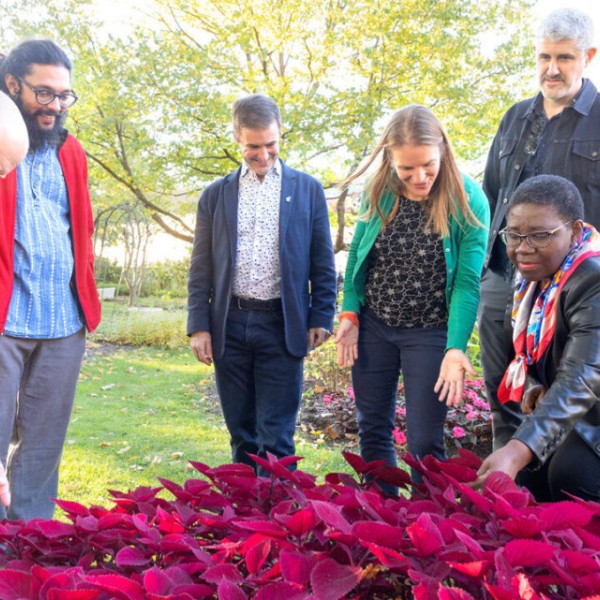
Top photo: Linran Wang (left), Jiyu Zhu, Belen Vila and Michelle Duong, took the grand prize in the Idaho Milk Processors Association new product development competition.
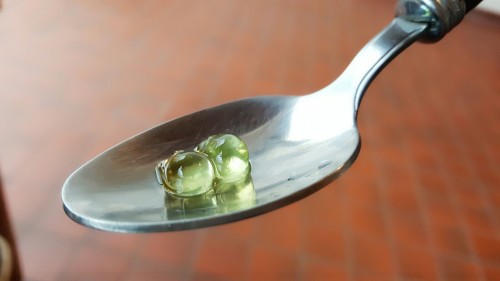
Middle photo: Popping boba are small, edible spheres made from fruit juice concentrate or flavor extracts that pop when chewed.