

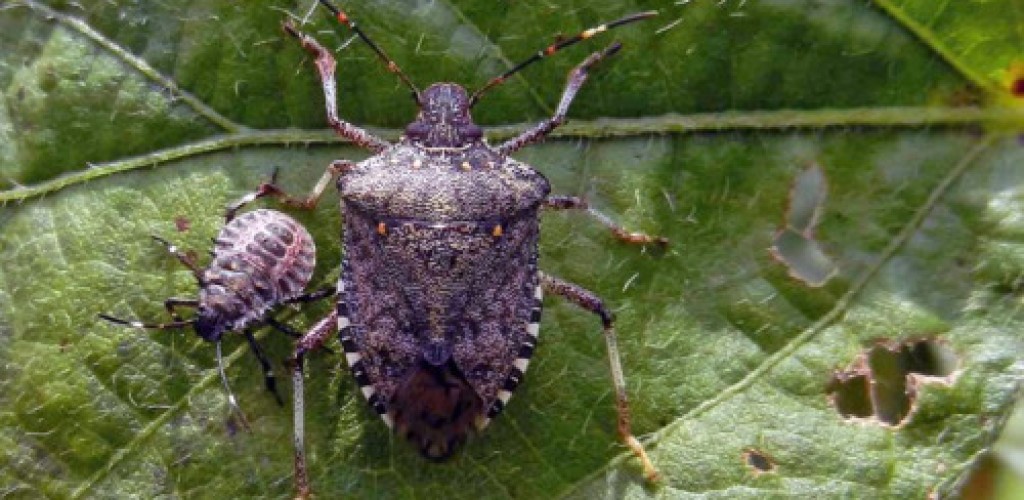
Originally from Asia, brown marmorated stink bug (BMSB) was first detected in Pennsylvania in 1990 and spread to most states in the US. It is abundant in the mid-Atlantic states, with increasing numbers in NY State. BMSB has a very large host range, including many important vegetable and fruit crops. In NY it has mainly been problematic in apples and vegetables grown in the Hudson Valley. In 2012, BMSB caused an estimated $1 M in damage to the apple crop in the Hudson Valley. Cornell researchers are involved in developing monitoring programs, estimating economic thresholds, testing conventional and alternative control methods including insecticides, attract and kill and behavioral modification.
Learn more about these insects here: http://www.stopbmsb.org/stink-bug-basics/life-stages/
Swede midge
Swede midge is a pest of crucifer crops and was first detected in North America in Ontario, CN in 2000. Feeding by the maggots of this small fly causes abnormal growth of the plants making them unmarketable. The first discovery of swede midge in the US was in 2004 on a broccoli farm in Niagara County, NY. It now is present in most counties in New York State, threatening the state’s crucifer industry valued at ca. $100m annually. To deal with this problem, NYSAES entomologists developed management tactics that have been adopted by industry and have worked with CCE personnel on outreach education, including developing a website with the latest information, http://web.entomology.cornell.edu/shelton/swede-midge/. These efforts have prevented catastrophic losses to the NY crucifer industry and have been adopted by other states.
Leek Moth
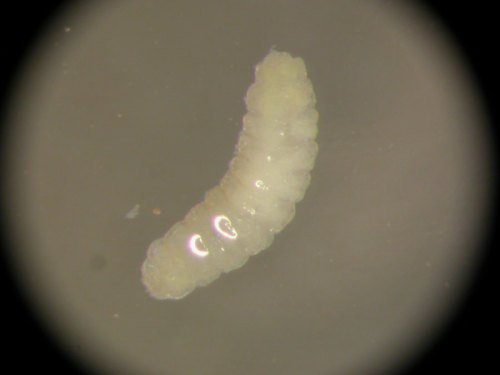
Leek moth is a pest of members of the Allium family including onions, garlic, leeks, chives and shallots. The larvae feed on crop foliage, stunting plant growth and compromising the storage life of the crop. This insect is native to Europe and was first found in North America in 1993 in Ontario, Canada. The first discovery of leek moth in the US was in 2009 in a home garden in Plattsburgh, NY. Leek moth is present in 10 northern NY counties, where it has caused severe damage to leeks, garlic and onion valued at nearly $80M annually. Entomologists developed management tactics that are being used by the industry. In conjunction with Cornell Cooperative Extension a website http://web.entomology.cornell.edu/shelton/leek-moth/ on leek moth has been developed. These research and extension efforts have reduced or prevented losses to both the NY Allium industry and that of other states.
Learn more about leek moths at: http://web.entomology.cornell.edu/shelton/leek-moth/damage.html
Invasive Crane Flies
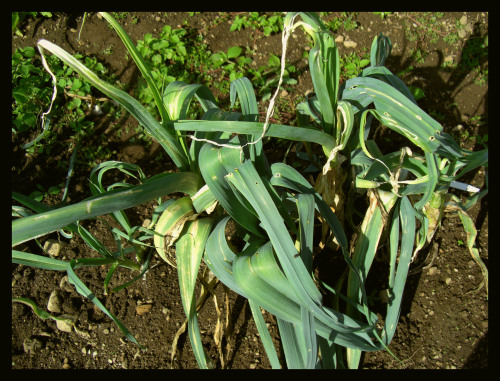
The European crane fly (Tipula paludosa) and Marsh crane fly (Tipula oleracea), collectively referred to as European crane flies (ECF), were first detected in the Northeast in 2004 in Western NY and are now established as pests of managed turfgrass and other specialty crops, pastures, and forage productions systems. ECF thrive in diverse turf settings including golf turf, sod farms, lawns, and sports fields, and they can cause significant damage to the roots, crowns, stems and foliage of turfgrass. Research at NYSAES is focusing on strategies for managing ECF on school sports fields using entomopathogenic nematodes (EPNs). Currently, EPNs are the only treatment option available for managing ECF on school grounds, and while past research showed that EPNs are effective for managing crane fly larvae, it is not known how well EPNs will perform against crane flies under the conditions unique to sports turf soils. The aim of this research is to clarify decision making criteria for school grounds managers regarding the use of EPN’s against this important pest.


