

In a competition for funds among New York’s Regional Economic Development Councils, the Southern Tier won $500 million over the next five years in New York’s Upstate Revitalization Initiative, including a project that taps CALS expertise in plant science for the innovation economy.
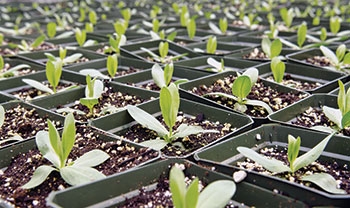
As part of the council’s strategy to substantially expand agricultural technology to help the region become a major food producer and distributor, Cornell’s proposed Plant Science Innovation and Business Development Center likely will receive about $20 million over five years from this award, possibly breaking ground in 2017. It will advance plant science research, enhance controlled-environment agriculture, examine renewable energy and create numerous well-paying jobs.
Kathryn J. Boor, the Ronald P. Lynch Dean of the College of Agriculture and Life Sciences, said she was thrilled to learn of the Southern Tier’s award.
“While we have always worked across our own campuses and throughout the regions with academic partners such as Binghamton University, the University of Rochester and the Rochester Institute of Technology, we are proud to continue these collaborations—as well as establish new ones—as an integral part of this truly transformative initiative, which will establish New York state as the world-recognized leader in agriculture and food-processing technology.”


