Cornell’s New York State Agricultural Experiment Station (NYSAES) will be home to a comprehensive center combining food safety research and training for New York growers and producers, offering a farm-to-fork bulwark against foodborne illness in compliance with new, stricter federal regulations.
The Institute for Food Safety at Cornell, located on the NYSAES campus in Geneva, N.Y., was announced Dec. 15 with a $2 million state grant that establishes a center for training and applied research to check the rise of foodborne illness. The institute will help growers and processors comply with the demands of the U.S. Food and Drug Administration’s Food Safety Modernization Act, a 2011 bill that shifts the focus from contamination response to prevention.
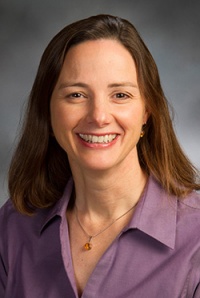
Elizabeth Bihn, Ph.D. ’11, whose research focus is reducing microbial risks in fresh fruits and vegetables, will serve as executive director. She has an extensive background promoting public health through on-farm practices to reduce the risk of foodborne illness from contamination in the field, during harvest and during transport.
“This is a great opportunity to focus on our strengths to better serve New Yorkers who need food safety training and expertise to support their farms and processing businesses,” Bihn said. “There are very few places that can truly provide food safety expertise farm to fork like the Experiment Station.”
Kathryn J. Boor, the Ronald P. Lynch Dean of the College of Agriculture and Life Sciences, applauded the work of state Sen. Michael Nozzolio ’73, M.S. ’77, R-54th Dist., for his work securing the grant.
“The long-term vision is for the Institute for Food Safety at Cornell to become the pre-eminent source of scientific research, training and outreach in dairy and produce safety in the U.S. and beyond,” Boor said. “It is thanks to Sen. Nozzolio’s unflagging support that the college will be able to do truly transformative work in advancing food safety technology and innovation.”