Drawings by agricultural sciences major Olivia McCandless ’17
Text by Amanda Garris Ph.D. ‘04
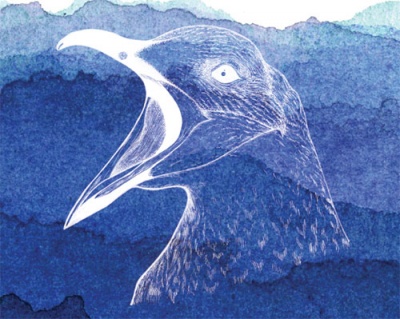
Herring Gulls
Think that herring gulls make a racket? The feeling is mutual. Sarah MacLean ’13 and ornithologist David Bonter discovered that a recording of a human voice—when no human is in sight—causes severe anxiety, an adaptive fight or flight response for a species decimated by 19th century appetites.
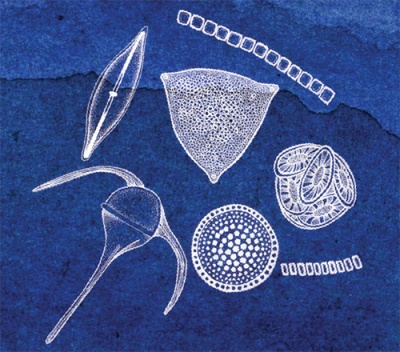
Phytoplankton
You can thank the ocean for every other breath you take. According to oceanographer Bruce Monger, although we associate photosynthesis with fields and forests, about half of the entire planet’s net photosynthesis is performed by marine phytoplankton, enriching the earth’s atmosphere with oxygen.
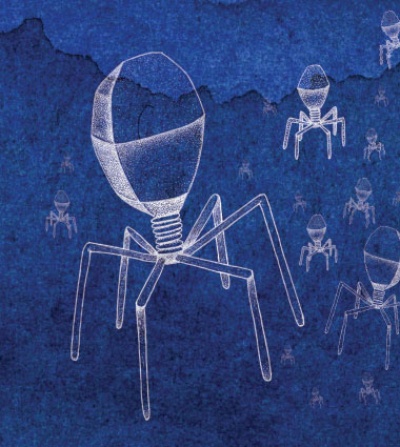
Viruses
Viruses are the silent assassins of the sea. Each day, they kill over half of the microbes in the ocean, according to microbiologist Ian Hewson. And they are legion: Earth’s marine viruses stacked end to end would reach Alpha Centauri, 4.22 light years away.
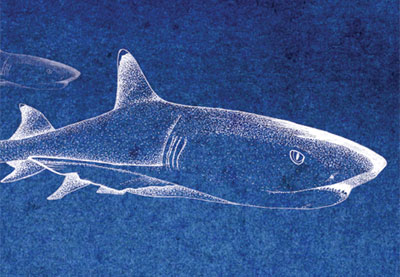
Shark Teeth
Shark teeth may be perfect for predation, but their millisecond precision is honed by a sixth sense: electroreceptors that detect muscle contractions of potential prey. According to evolutionary biologist Willy Bemis, the ancient trait—common in early vertebrates—was lost in our land-loving ancestors.
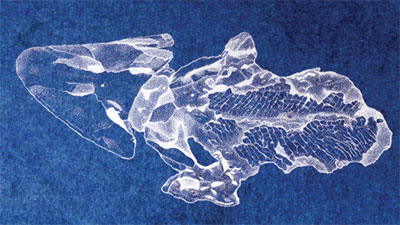
Paired Lungs
Paired lungs were an archaic innovation, present in the shared ancestor of the fishes and the footed. However, according to evolutionary biologist Amy McCune, they didn’t arise in the sea. They more likely evolved in stagnant freshwater, where the specialized organ boosted oxygen extraction.