

Though only 2 percent of the U.S. population is Jewish, more than 40 percent of packaged food and beverages in the U.S. were labeled as kosher in 2014, according to Lubicom Marketing Consulting.
And now, the Cornell Dairyis on board, having officially gone kosher April 18.
“We try to strive for inclusiveness,” said Deanna Simons, quality manager at Cornell Dairy. “Part of our mission is teaching, research and extension, so it serves us to be more inclusive and maybe reach a part of the Cornell community that we haven’t been able to reach before.”
Kosher foods must comply with traditional Jewish dietary and processing laws, and in the case of dairy, products must come from kosher animals and may not contain non-kosher additives, meat products or their derivatives. The Torah permits only animal species that both chew their cud and have cloven hooves; cows are by nature kosher.
The decision to shift the dairy’s practices has been brewing since 2014, ever since Joe Regenstein, professor emeritus of food science and an expert in kosher laws, suggested Cornell Dairy might go kosher. The idea seemed doable to Simons and Tim Barnard, Cornell Dairy plant manager, both of whom worked in the dairy industry prior to coming to Cornell. They found kosher certification is common among U.S. dairies.
The transition at Cornell Dairy requires some adjustments, said Barnard.
“All the ingredients that we put in our ice cream, for example, are now kosher-certified,” he said. “So it takes more time and a little more effort to find suppliers who are compliant.”
The same will be true for ingredients used when researching new products, he said.
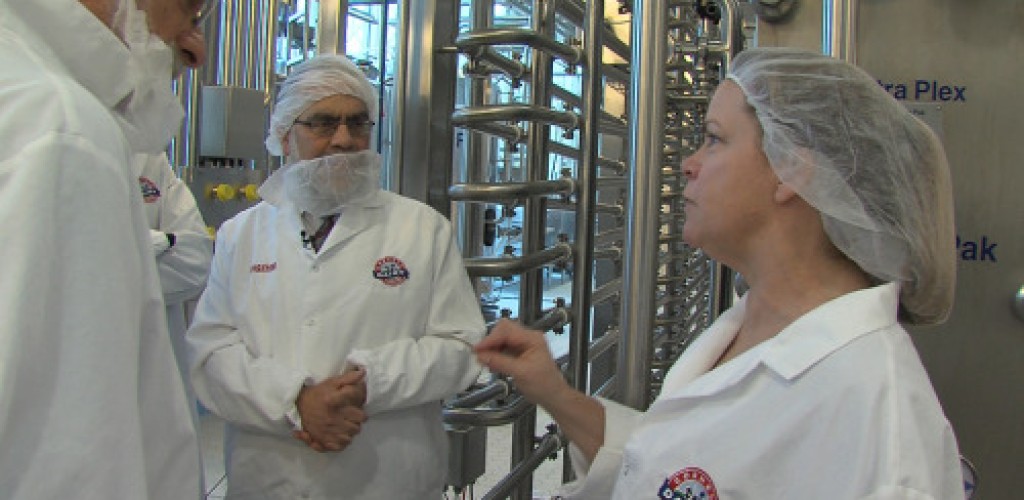
A rabbi, representing the Orthodox Union, the organization that certifies close to 70 percent of all kosher foods in the U.S., came to the dairy April 18 and supervised the equipment kosherization process. To kosherize the equipment, dairy staff ran boiling hot water through all the systems that are normally heated above 110 degrees, Regenstein said. The rabbi also checked that all the ingredients in the warehouse are now certified kosher.
The Cornell College of Veterinary Medicine manages about 700 milk-producing cows. The dairy uses that milk to make pasteurized and chocolate milks, ice cream and yogurt, which are sold on campus, in the dining halls, and at the Dairy Bar in the newly renovated Stocking Hall on campus.


