

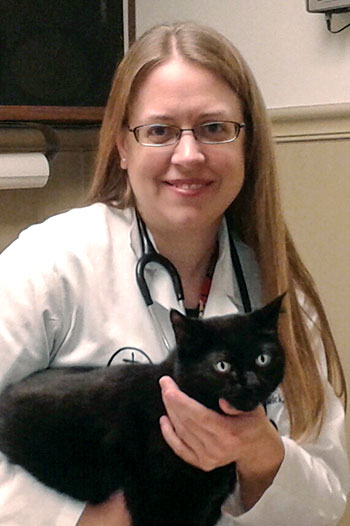
Those who know me well know that I cherish my trips back to Ithaca and that I visit as often as possible. In fact, even though I live in metro Washington, D.C., I am often asked if I live in the 14850 zip code (perhaps as a result of my enthusiastic campus photo and status sharing on Facebook?). There is just something about being back at Cornell—interacting with students and faculty, appreciating the familiar and the new aspects of campus—that has a positive, energizing effect on me.
I have volunteered as an alumna in various capacities for Cornell over the last 20 years, but only in the last few have I made my way “home” to CALS-specific volunteerism, to give back to the community which had such a formative role in my education. There is a tremendous amount of momentum in the college, from research to outreach; CALS truly is a microcosm of Ezra Cornell’s “Any person … any study” motto. Additionally, new developments in technology are making it easier for CALS alumni, students and faculty to connect with each other to create an even stronger synergy.
It is my honor to serve as president of the CALS Alumni Association for 2015-16. I hope that you, too, will find your way back home to CALS over the coming months and share the wisdom of your path with others (http://cals.cornell.edu/get-involved/alumni/association/). One of our great assets as an Alumni Association is the diversity of our collective backgrounds and experiences, which can benefit students and alumni alike. Please reach out to me if I can help facilitate these interactions in any way, or if you have suggestions for how we can serve the needs of current and future alumni. I would love to hear from you at alv1 [at] cornell.edu (alv1[at]cornell[dot]edu).
-A’ndrea Van Schoick, CALS ’96, DVM
2015-16 CALS Alumni Association President


