Citrus greening disease has put the squeeze on growers in recent years, stunting fruits, cutting yields and forcing upwards the price consumers pay for fruit and juice at the grocery store.
Now two College of Agriculture and Life Sciences (CALS) alumni are helping to fund a Cornell research effort aimed at defeating the disease crippling citrus plants worldwide.
Kenneth and Sara Geld, both ’81, donated $10,000 to the lab of Michelle Cilia, adjunct assistant professor of plant pathology, in a bid to map out the entire genetic makeup of a problem vexing the citrus industry.
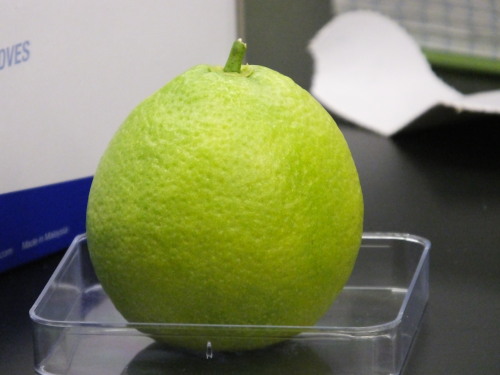
Citrus greening disease is a bacterial infection that causes trees to grow small, unripe fruits. The disease is caused by the bacteria Candidatus Liberibacter asiaticus, which is transmitted to plants by an insect, the Asian citrus psyllid.
While citrus greening has been prevalent throughout Asia since the 1900s, it only began appearing in the U.S. and Brazil in 2005. It has since spread to an estimated 70 percent of citrus trees in Florida. The disease has also spread to Texas, Mexico and, in 2012, to California.
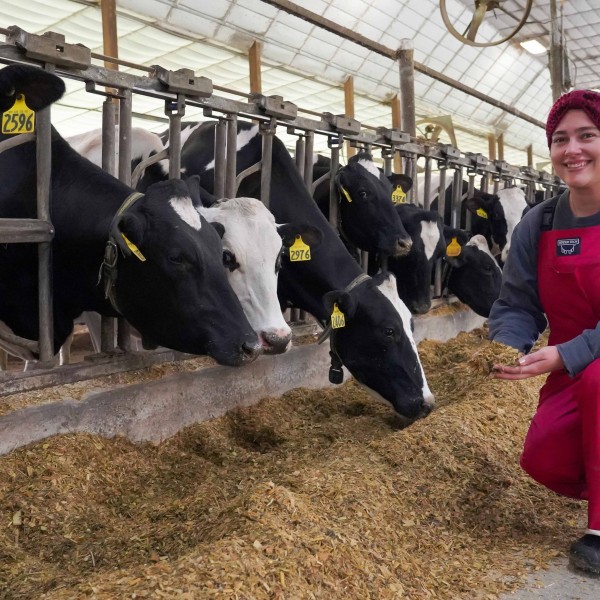
Ken Geld retired as CEO of Louis Dreyfus Commodities Brasil and as chairman of the board of directors of Biosev in 2013. The Gelds are now orange growers in Brazil, and they’ve felt the effects of citrus greening firsthand.
“Controlling greening is the single most important cost item in orange production: It represents between 15-20 percent of production costs,” Ken Geld said. And although the disease does not affect the quality of juice obtained from harvested fruit, it greatly decreases a tree’s productivity.
“The increase in production cost increases the price to the final consumer, which negatively affects overall demand, ultimately reducing the size of the industry and eliminating growers,” he said.
Some farmers have tried to control the disease by spraying more pesticide to kill the psyllids, but that method hasn’t been effective.
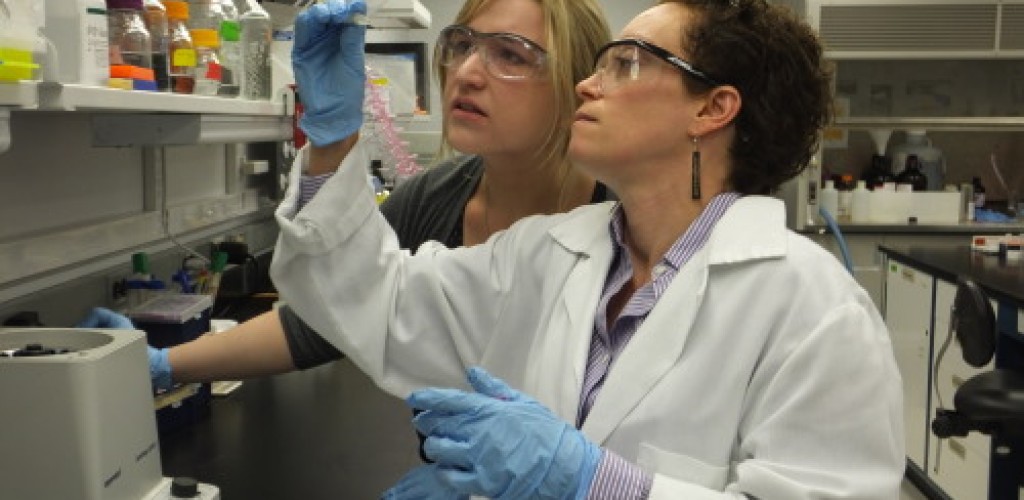
Cilia’s lab is taking a comprehensive, whole-system view of the problem, by mapping every gene, protein and metabolite in all three pieces of the puzzle: bacterium, insect and tree. Ken Geld, who is also a member of the CALS Advisory Board, said he felt compelled to donate to Cilia in particular because of her comprehensive take on the disease.
“When we are in Ithaca for the CALS Advisory Board meetings, I like to connect with teachers and students. Professor Cilia had just started leading this research project to combat citrus greening,” Ken Geld said. “There has been a huge research effort behind resolving the citrus greening disease, with limited success. Professor Cilia and her team are taking a novel, multipronged approach.”
Cilia is also combating citrus greening as part of a USDA Crop Research Initiative grant, along with John Lis, Cornell Professor of Molecular Biology and Genetics, and Robert Shatters of the USDA ARS station in Fort Pierce, Florida.
“The Gelds contribution to our lab will enable an extraordinarily bright graduate student at Cornell, Miss Annie Kruse, to pursue a high-risk, high-gain objective aimed at developing interdiction molecules that block the transmission of the citrus greening pathogen,” Cilia said. “Their insights as citrus producers are valuable to our team as we move our research plans forward. We feel grateful for their support of our ideas and their generous gift.”
Cilia also holds joint appointments as a research molecular biologist at the USDA Agricultural Research Service and as an assistant professor at the Boyce Thompson Institute.
Krisy Gashler is a freelance writer for the College of Agriculture and Life Sciences