

Last year, fellow alumni elected Liz Everett ’97 and Mike Troy ’81 to serve four-year terms on Cornell’s Board of Trustees, the governing body responsible for charting the university’s academic and financial direction. Though Everett and Troy have been active alumni for years, the trustee role offers them a broader platform for helping to ensure the continuity, balance and value of a Cornell education.

For the university, financial sustainability remains an overarching concern. Everett said that less government funding for everything—from scholarships, to research, to training—requires more creative thinking about how to fund Cornell’s priorities.
Troy, a retired partner at Goldman Sachs, said that the board will need to take a critical look at those priorities in light of financial constraints.
“I have two sons at Cornell. I teach here as a visiting lecturer,” he said. “Ultimately, the economic model has to deliver excellence. I want to ensure that my kids and future students have the same overall, balanced experience between academics and extracurricular activities.”
Troy said that another major challenge is to correct a tuition system where wealthier students pay full tuition, low income students qualify for substantial financial aid, and many middle income students fall through the cracks. But a fix may mean making tough decisions about Cornell investments in other areas.
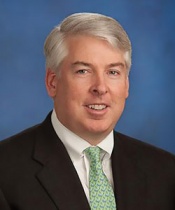
“We may not be able to be all things to all people,” he said.
For Everett, failing to act to increase access to a Cornell education could threaten the diversity that she said is not only a main driver of Cornell’s founding vision of “any person, any study” but also its future.
“The value of diverse experiences and perspectives on campus, not just race and gender, is immense. Engaging students, professors and researchers to find solutions outside of their silos is why we’ve had so much success,” she said.
Everett, who also spent her career in finance, said CALS excels in embracing this approach, citing the top-ranked Charles H. Dyson School of Applied Economics and Management’s multifaceted programs and creation of the new School of Integrative Plant Science. It’s a model Everett believes also could keep alumni connected by showcasing the diverse paths—beyond development—for getting and staying involved.
“It’s a lifelong reinvestment,” she said. “We want people to be engaged with their time and expertise.”


