By Alex Koeberle ’13
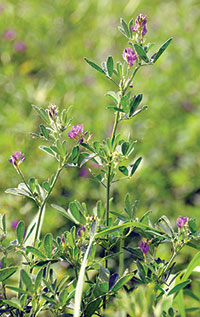
New York farmers foraging for alfalfa varieties have three new, robust options. Developed by professor of plant breeding Donald Viands; senior research associate Julie Hansen ’80, M.S. ’88, Ph.D. ’89; and research support specialist Jamie Crawford ’01, the varieties were selected for higher yields, forage quality, and insect and disease resistance. A major accomplishment is the resistance of Seedway 9558 SBR to the root-crippling alfalfa snout beetle, the result of a collaborative effort of the team with entomology professor Elson Shields as well as plant scientists, entomologists, extension educators, and farmers who tested it across the state. Seedway 315LH combats the potato leaf hopper, an insect that can drastically decrease yields, and Seedway 215CR increases pasture field longevity, a project spearheaded by the late Royse Murphy, professor emeritus of plant breeding. All varieties are currently available to growers in New York and the Northeast through Seedway, Inc.